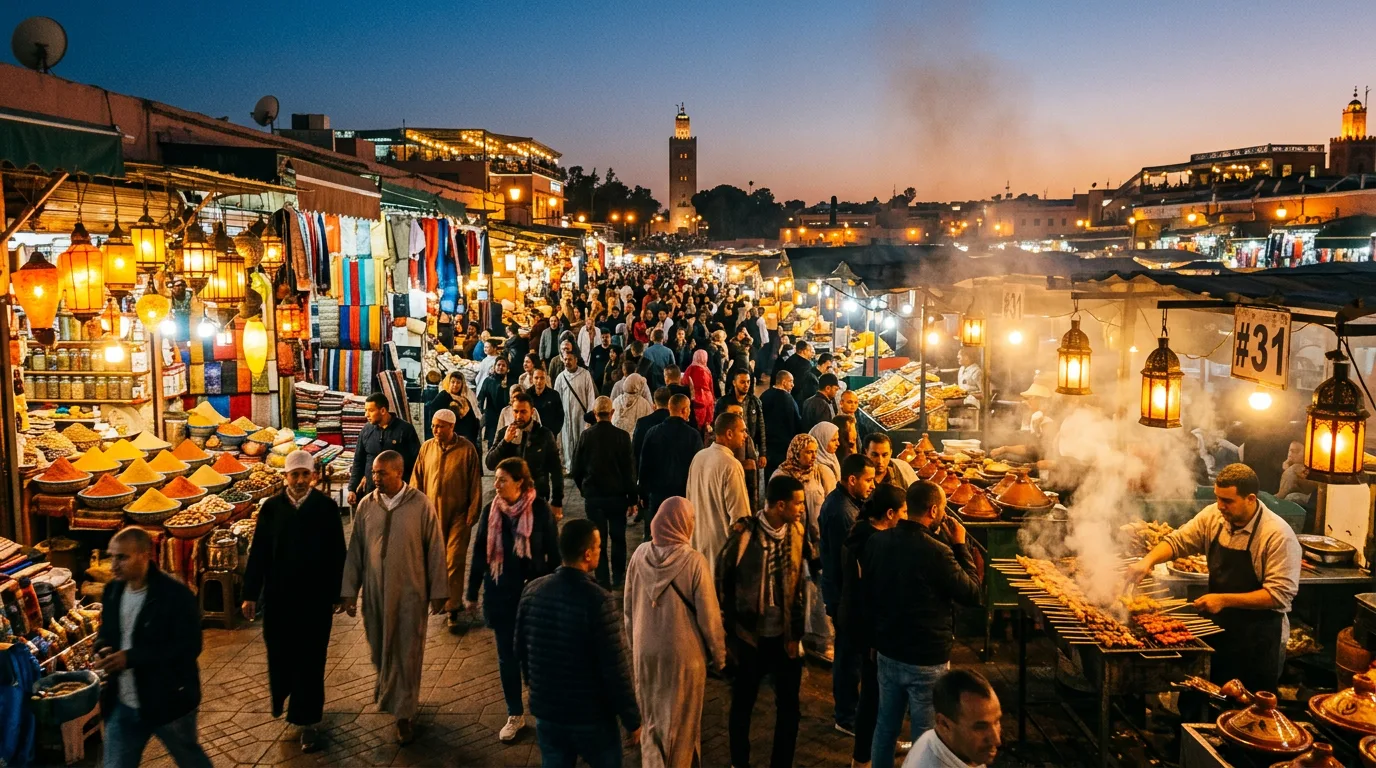
March to May and September to November are the best months for Marrakech — and they line up neatly with the prime High Atlas trekking seasons, so you can pair city days with the mountains in comfort. Summer is hot but workable; winter is mild, crowd-free and snow sits on the peaks above.
In this guide
Why does the season matter so much in Marrakech?
Marrakech sits at 450 m on the Haouz plain, sheltered from the Atlantic by the very mountains you'll be trekking. That gives it a semi-arid climate with sharp seasonal swings: spring and autumn are glorious for both city and trail; summer is genuinely hot in the lowlands while the high routes stay walkable; winter is mild and sunny by day but cold at night, with the Atlas peaks under snow. The medina's lanes give shade but trap heat in July and August, when afternoons top 38°C — all the more reason to gain altitude.
Spring — March to May
Spring is many travellers' favourite season in Marrakech. Daytime temperatures run from 18°C in early March to 28°C in May; evenings are pleasant for rooftop dining. The rose harvest in the Dadès Valley (late April to early May) coincides with perfect Atlas trekking conditions. Hotel and riad prices are at their seasonal peak in April; book ahead.
Ramadan (which falls in February–March in the late 2020s) changes the city's rhythm during spring some years — fewer street food options during the day, but extraordinary evening atmosphere around the Jemaa el-Fnaa. Confirm Ramadan dates before booking.
Summer — June to August
June is transitional — still comfortable in the first two weeks, then hot. July and August are the hottest months: midday temperatures of 38–42°C are common, and the afternoon medina is punishing. The city is less crowded than peak season, prices drop at many riads, and evenings cool to a tolerable 24–27°C. If you visit in summer, structure your day early (7–10 am) and late (5–9 pm), and treat 11 am to 4 pm as rest time.
- Advantage: fewer tourists, lower riad prices, vibrant evening culture
- Disadvantage: oppressive afternoon heat in the medina; Sahara desert excursions become unpleasant
- Strategy: base in a riad with a pool; do sightseeing early morning and after 5 pm
Autumn — September to November
Autumn is Marrakech at its most balanced. September is still warm (28–32°C) but the worst heat has broken; October and November are ideal walking temperatures (20–26°C daytime, cool evenings). The Marrakech International Film Festival typically takes place in late November or early December, bringing a different energy to the Palmeraie and medina hotels. Autumn is also prime Sahara season — comfortable desert days and cold, clear nights.
Winter — December to February
Winter in Marrakech is underrated. Days are sunny and pleasant at 16–20°C; evenings and nights are cold (5–10°C) and require a warm layer. The medina is at its quietest, riads offer genuine off-season rates, and the Atlas mountains above Imlil hold photogenic snow visible from the city rooftops. The Sahara's best season begins now — cold desert nights are part of the experience. Christmas and New Year bring a brief price spike; January and February are the quietest, cheapest months of the year.
Frequently asked
What is the hottest month in Marrakech?
July is typically the hottest month, with average highs of 38–42°C. August is equally hot. Both months see the city at its quietest and cheapest for accommodation.
What is the best month to visit Marrakech for trekking?
April, May, September and October are the standouts — comfortable city temperatures, long days, and the High Atlas in fine condition with snow-free Toubkal trails. They're the ideal months to combine Marrakech with the mountains.
Is Marrakech cold in winter?
Days are mild and sunny (16–20°C); evenings and nights are cold (5–10°C). Pack a warm layer for after sunset. Snow is rare in the city itself but visible on the Atlas peaks.
Can you visit Marrakech in August?
Yes, but go in knowing the heat is real. Structure days around the cool hours (early morning and evening), choose a riad with a pool, and avoid overloading your itinerary with midday sightseeing.
Is Marrakech busy at Christmas?
The last week of December is one of Marrakech's busiest periods — riads fill quickly and prices spike. Book early. January through February is the quietest and most affordable time of year.
Planning a trip?
Let our team handle the details.
Tell us your dates and style and we'll send a written itinerary and a transparent quote within 24 hours.
Request an itineraryKeep reading
Planning
The Best Time to Visit Morocco
For trekking the High Atlas, April–June and September–October are the prime windows — snow has cleared from the Toubkal trails, the valleys are green and the nights are crisp rather than brutal. The rest of Morocco shifts season by season, but the mountain calendar is what should anchor a trekking trip.
Planning
Things to Do in Marrakech: The Essential Guide
Marrakech is the gateway to the High Atlas — the city where almost every Toubkal trek begins and ends, 90 minutes from the Imlil trailhead. It's also a sensory feast in its own right: a medieval medina, restorative hammams, rooftop dinners and a square that comes alive each night. Here is how to spend your city days either side of the mountains.