Mount Toubkal 2-Day Summit
Imlil · High Atlas
The classic express Toubkal trek: hike from Imlil (1,740m) to the refuge, then a pre-dawn alpine start to the 4,167m summit. Challenging, high-altitude — strong day-walkers only; mule-supported.

The catalogue · 10 private trips
Atlas Trekking Co. runs private, guided treks in Morocco's High Atlas from Marrakech and the Imlil trailhead: one-day hikes from $70, the 2-day Mount Toubkal summit (4,167m) from $320, and 4–7 day routes such as the M'Goun traverse and a Toubkal + Sahara combo. Operated by Serenity Morocco Tours.
10 private trips

Imlil · High Atlas
The classic express Toubkal trek: hike from Imlil (1,740m) to the refuge, then a pre-dawn alpine start to the 4,167m summit. Challenging, high-altitude — strong day-walkers only; mule-supported.

Imlil · Toubkal massif
A five-day acclimatised circuit of the Toubkal massif crossing passes over 3,500m before summiting Jbel Toubkal (4,167m). Challenging high-altitude trekking; full mule support and refuge/gîte nights.

Aït Bougmez · M'Goun massif
A six-day traverse of the remote M'Goun massif in the central High Atlas, summiting Jbel M'Goun (4,068m) and walking the famous river gorges. Challenging high-altitude trekking far from the crowds; mule-supported camping and gîtes.

Imlil · High Atlas
A relaxed guided day hike from Imlil (1,740m) through walnut groves and Berber villages with tea in a local home. Easy walking — about 3–4 hours and 300–400m of gentle ascent; suitable for most fitness levels.

Aït Bougmez · central High Atlas
Four moderate days in the green Aït Bougmez 'Happy Valley', staying in Berber gîtes and walking high pastures and side valleys. Moderate trekking at 1,800–2,900m with no summit pressure; mule support throughout.

Imlil · High Atlas
A three-day winter mountaineering ascent of Jbel Toubkal (4,167m) on snow and ice using crampons and an ice axe. Challenging — requires good fitness and a willingness to learn winter skills; led by qualified guides.

Imlil · Asni · Ourika foothills
A scenic day combining three High Atlas valleys — Asni, Imlil and the Ourika foothills — with a gentle guided walk and a Berber lunch. Easy: roughly 2–3 hours of relaxed walking plus scenic driving.

Ourika valley · Setti Fatma
A guided hike to the seven waterfalls above Setti Fatma in the green Ourika valley, just an hour from Marrakech. Moderate: about 2–3 hours over rocky, sometimes steep ground with boulder steps.

Toubkal massif · Ourika watershed
A seven-day high-level traverse linking the mountain lakes of Tamda and Ifni with a string of passes over 3,000m and an optional Toubkal summit. Challenging high-altitude trekking; mule-supported camps and gîtes.

Toubkal · Aït Ben Haddou · Merzouga
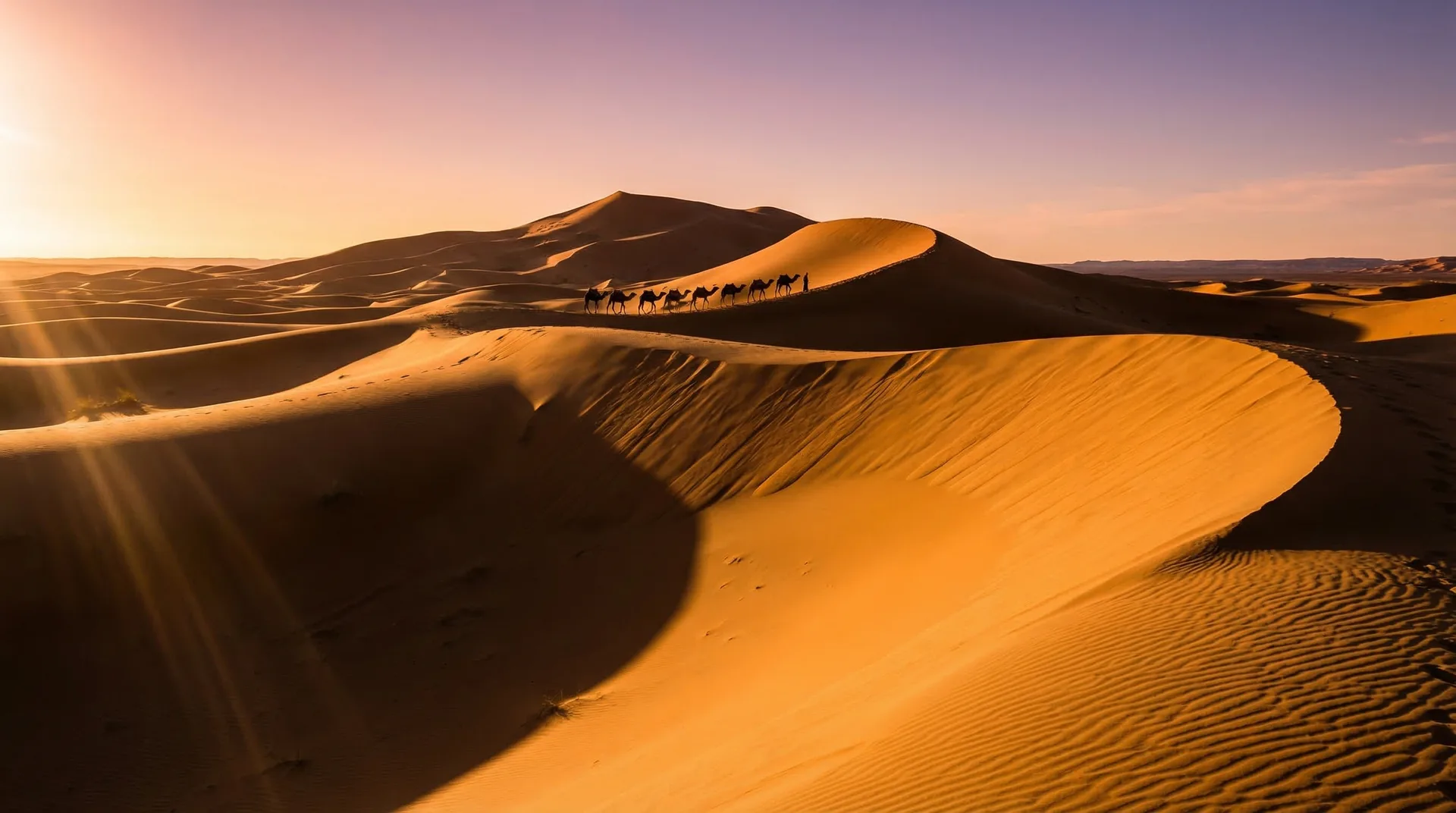
A seven-day adventure pairing a guided summit of Jbel Toubkal (4,167m) with a desert crossing to an Erg Chebbi dune camp. Challenging high-altitude trekking followed by easy desert days; mule and 4x4 support.
Frequently asked
Late spring through autumn (roughly April to October) is the main trekking season, with the longest settled weather. Summer is hot in the valleys but the high ground stays cooler. In winter the upper peaks — including Toubkal — hold snow and ice, so a winter ascent becomes a mountaineering objective needing crampons, an ice axe and the experience to use them.
Toubkal (4,167m) is the highest peak in North Africa. In summer conditions the standard route is a strenuous walk-up on steep, rocky ground rather than a technical climb — no ropes are normally needed — but it is long, high and demands good fitness. The main challenges are the altitude and the sustained ascent. In snow it is a different, more serious undertaking.
A qualified local mountain guide is standard practice and is required for Toubkal, both for safety and to support the Berber communities of the valleys. On multi-day routes, mules (with a muleteer) typically carry tents, food and the bulk of your kit between camps and gîtes, so you walk with a light daypack. Day hikes can often be done with just a guide and no pack animals.
Most Atlas trekking happens between roughly 1,500m and 4,167m, high enough that altitude can affect you. The usual advice is to ascend gradually, allow a night at altitude (commonly at the refuge below Toubkal) before summit day, stay well hydrated, and not rush. If you have a longer itinerary, the extra acclimatisation day makes a noticeable difference to comfort and success.
Bring broken-in hiking boots, layers for big day-to-night temperature swings, a warm insulating layer and hat for the cold mornings, a windproof and waterproof shell, sun protection (high-altitude sun is strong), a refillable water supply and a headtorch. For multi-day trips a warm sleeping bag is useful at the refuge and camps. Pack light, since mules carry the main load and you carry a daypack.