Destinations · 42 curated guides
The best places to visit in Morocco.
Nine destinations cover ninety percent of what travellers come to Morocco for — from Marrakech to the Sahara dunes, Fes to Chefchaouen and the Atlantic coast. Each guide gives you the real number of days, the right time to visit, and a quote on request.
42 destinations
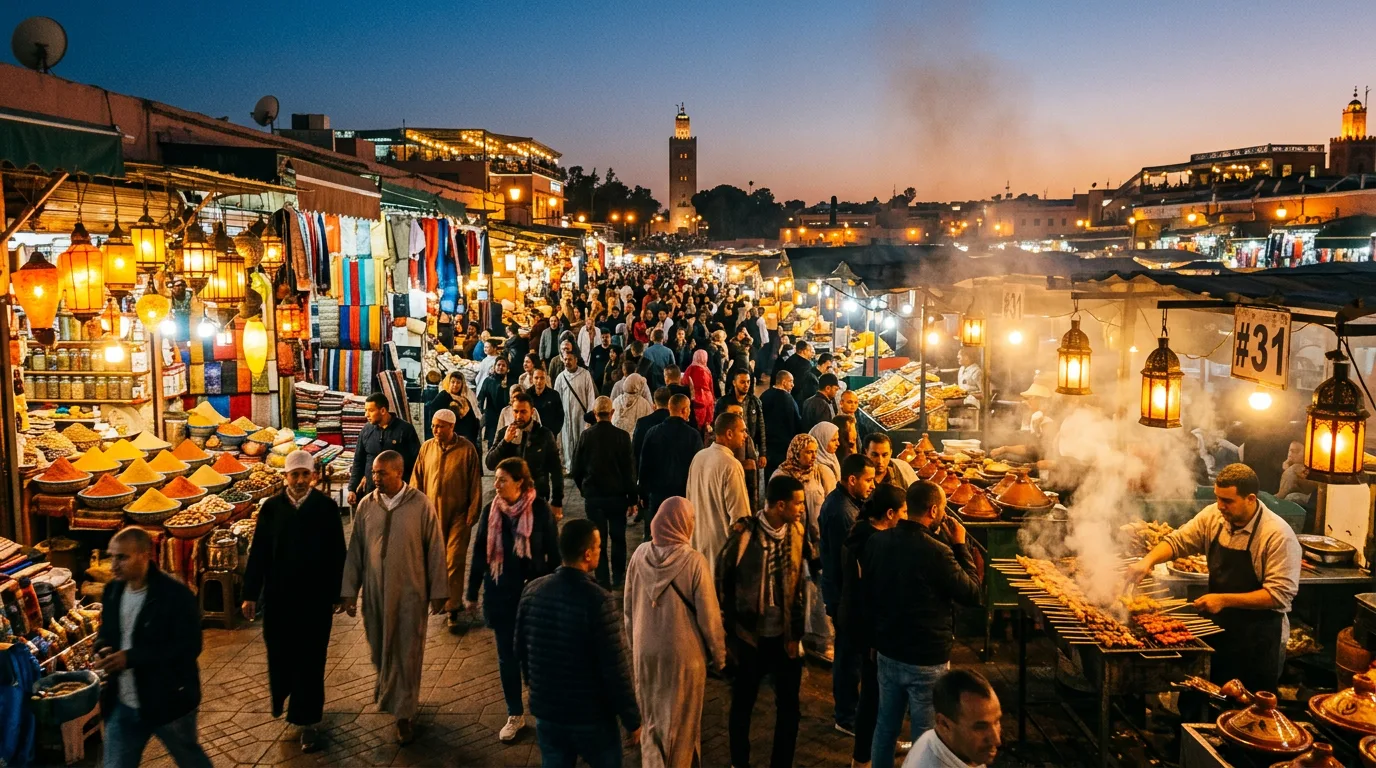
Marrakech
The red-walled trailhead city — where every High Atlas trek begins and ends.
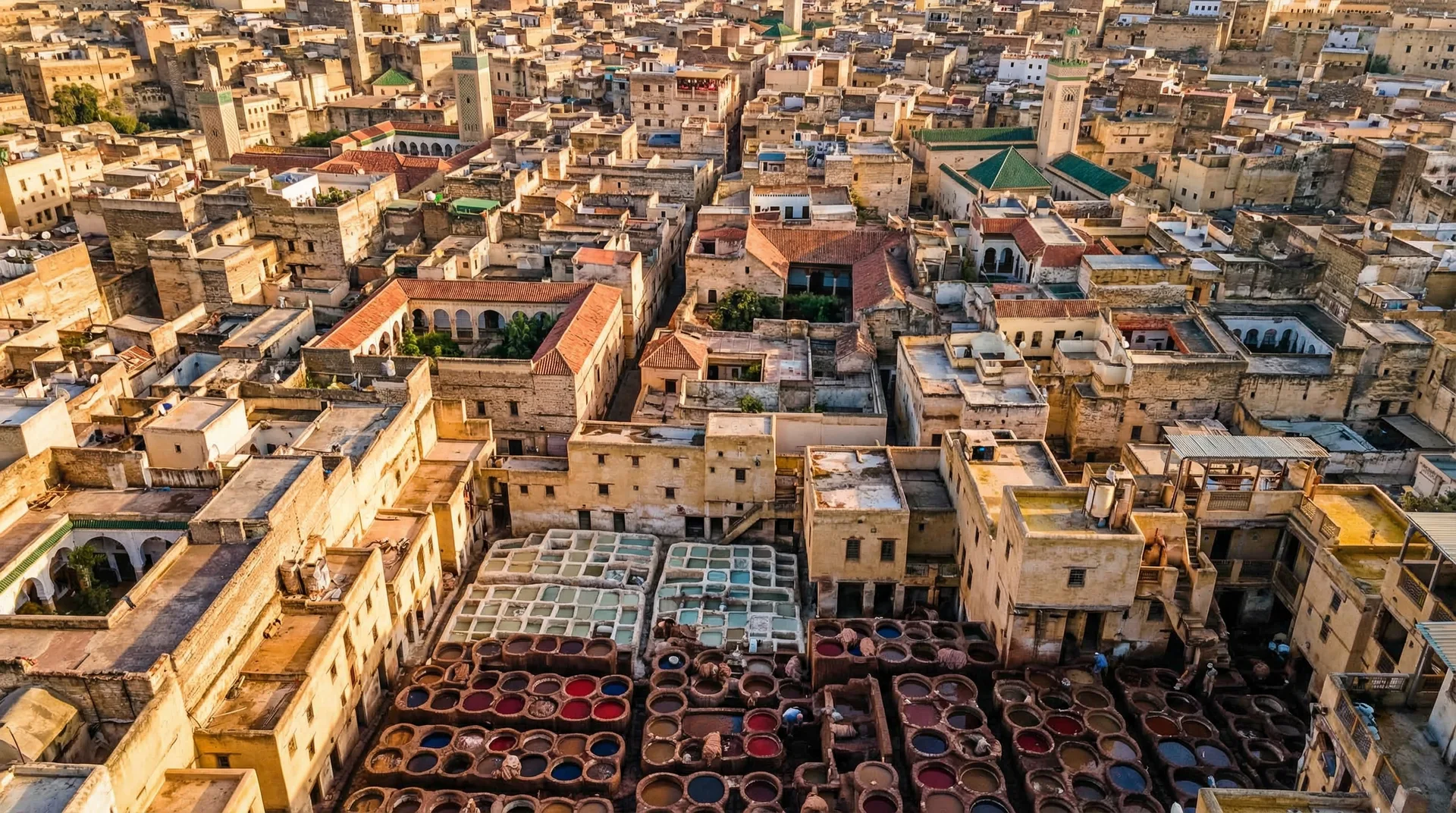
Fes
Morocco's medieval craft capital — the cultural counterweight to a week in the mountains.
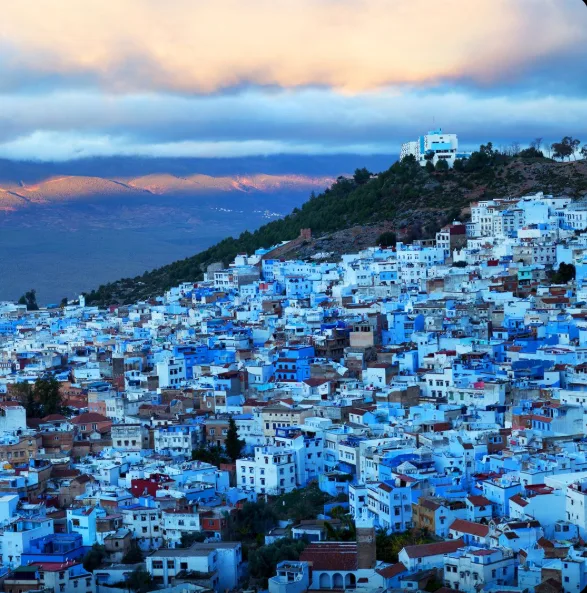
Chefchaouen
Trekking gateway to the Rif — a cobalt mountain town beneath Talassemtane's forested peaks.
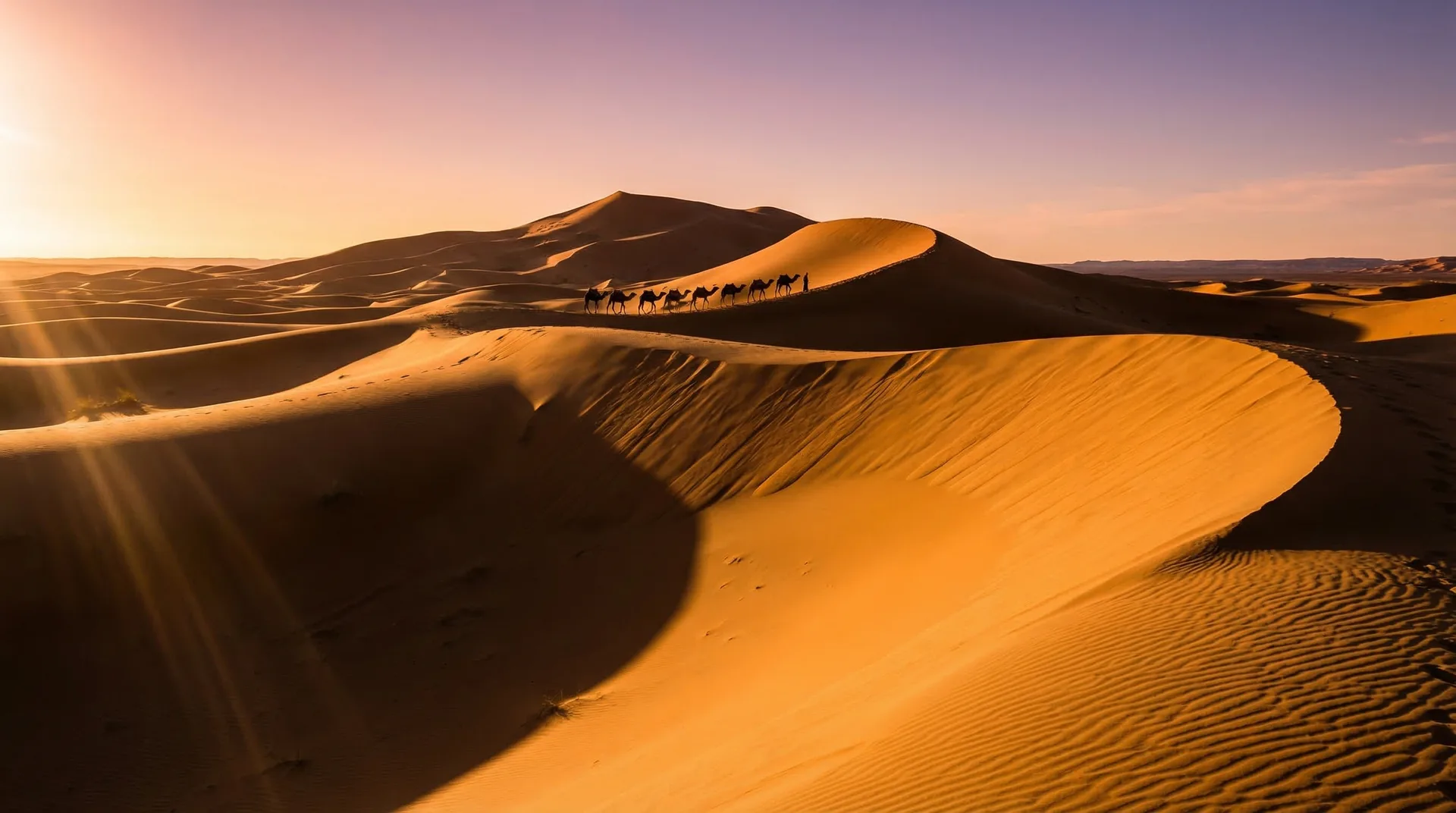
Sahara & Merzouga
The desert counterpoint to the High Atlas — 150m dunes and silent camps to bookend a mountain trek.
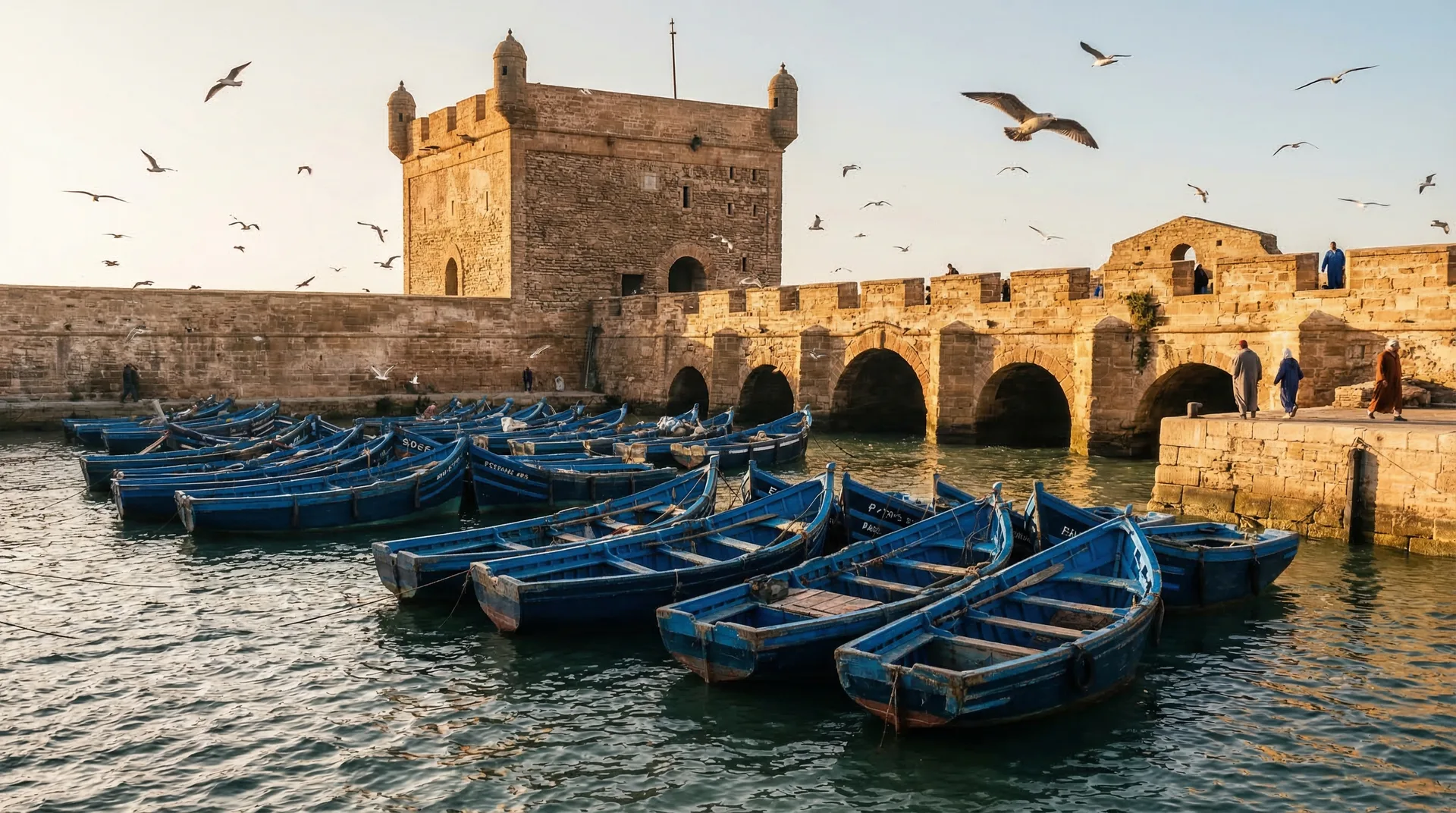
Essaouira
Sea-level wind-down after the summits — Atlantic ramparts, fishing boats and the freshest seafood in Morocco.
Atlas Mountains
The roof of North Africa — Berber footpaths, mule trains and the climb to Jbel Toubkal at 4,167m.
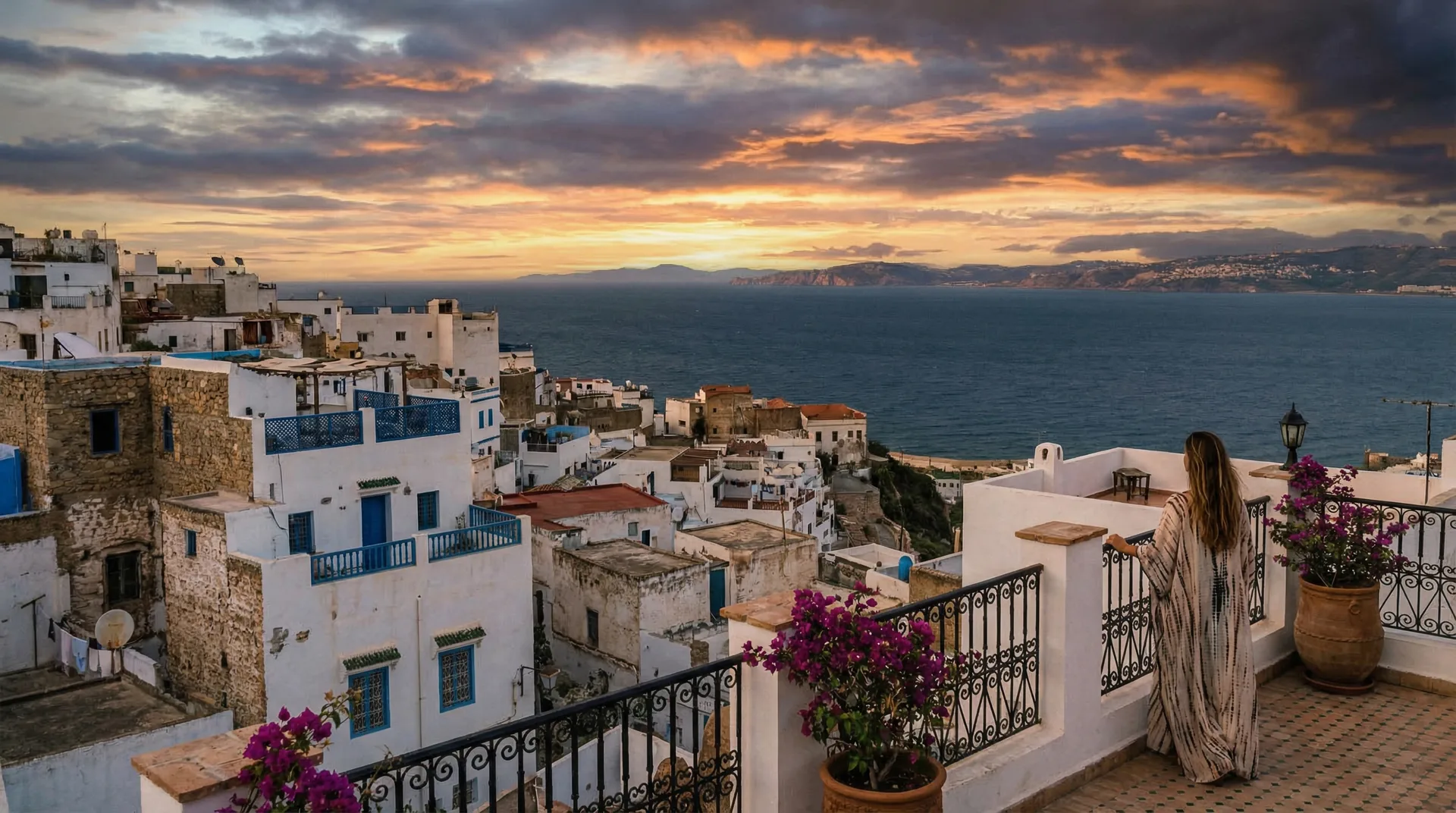
Tangier
Northern gateway to the Rif — ferry port, kasbah and the launch point for Chefchaouen and Akchour.
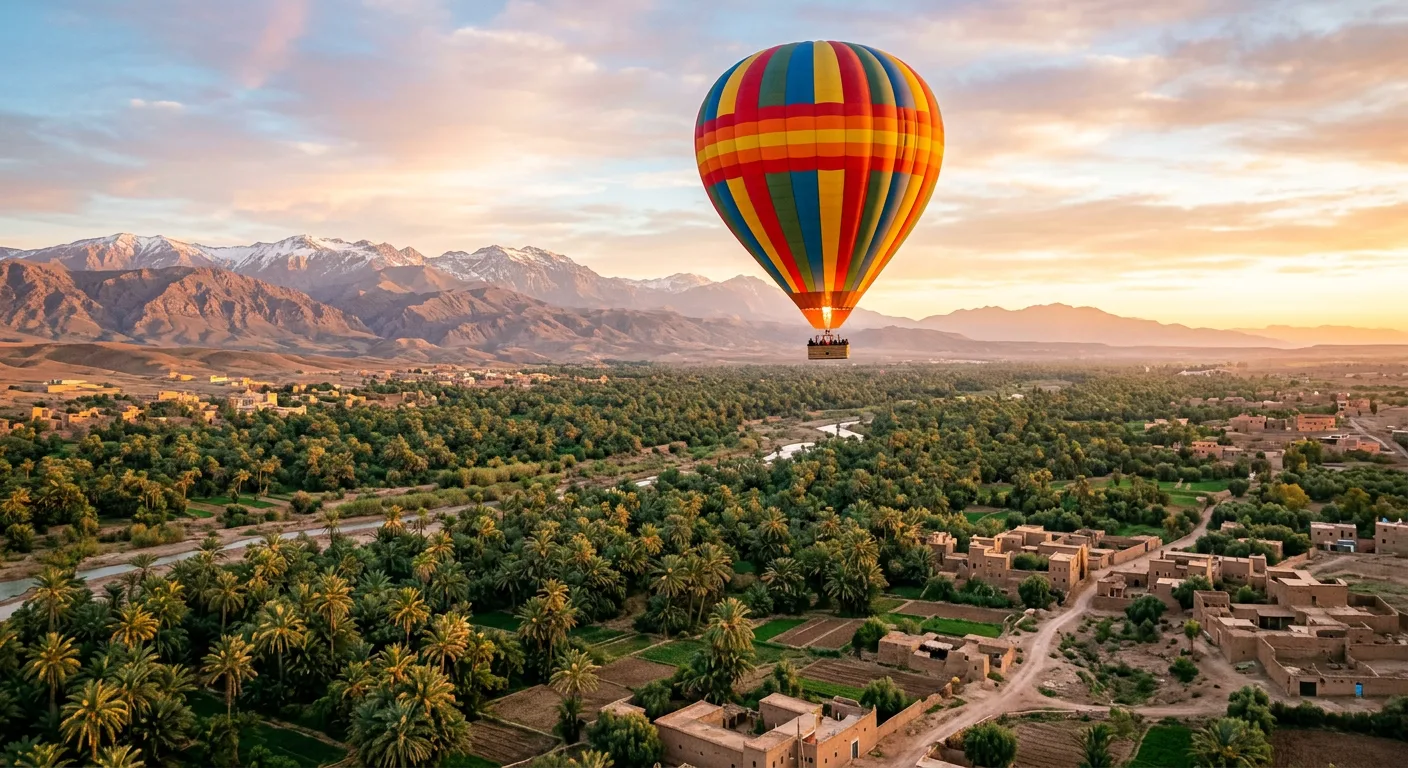
Ouarzazate & Aït Ben Haddou
Where the High Atlas spills into the desert — kasbah country over the Tizi n'Tichka pass.
Casablanca
The landing port for most Atlas trekkers — art deco, the Hassan II Mosque, then onward to the mountains.
Rabat
An easy, unhurried capital — the calm first or last day to bookend a mountain trek.
Meknes
A heritage day between trails — Moulay Ismail's monumental city and Roman Volubilis next door.
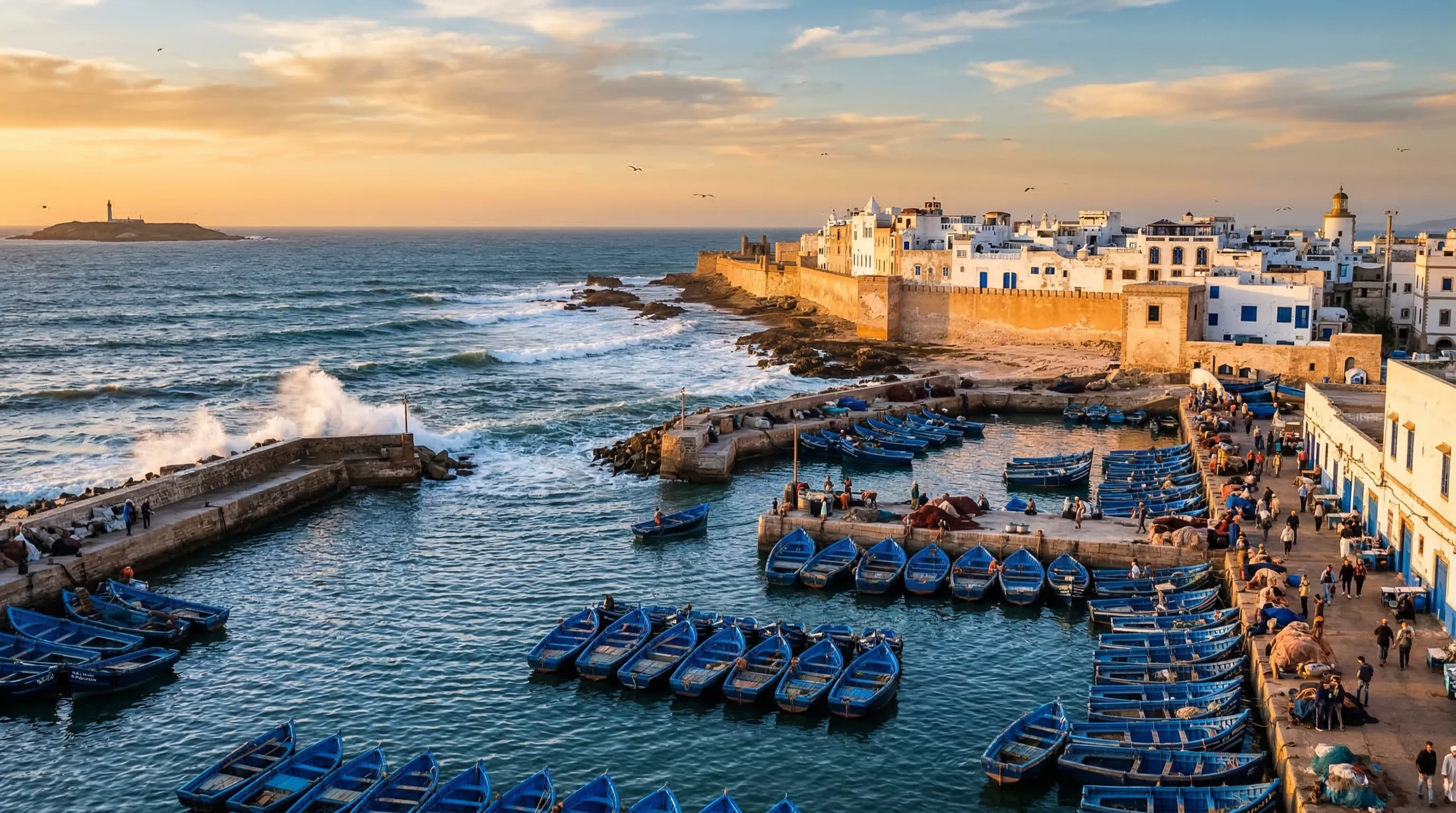
Agadir
The Atlantic decompression after the summits — golden sand below, and the trailheads of Paradise Valley and the Anti-Atlas behind.
Dadès & Todra Gorges
Canyon walking on the desert side of the High Atlas — a 300-metre limestone slot, the rose-valley trails and the southern foot of the M'Goun traverse.
Ouzoud Falls
A 110-metre Middle Atlas gorge walk — the country's highest cascades, a wooded canyon trail and wild Barbary macaques on the path down.
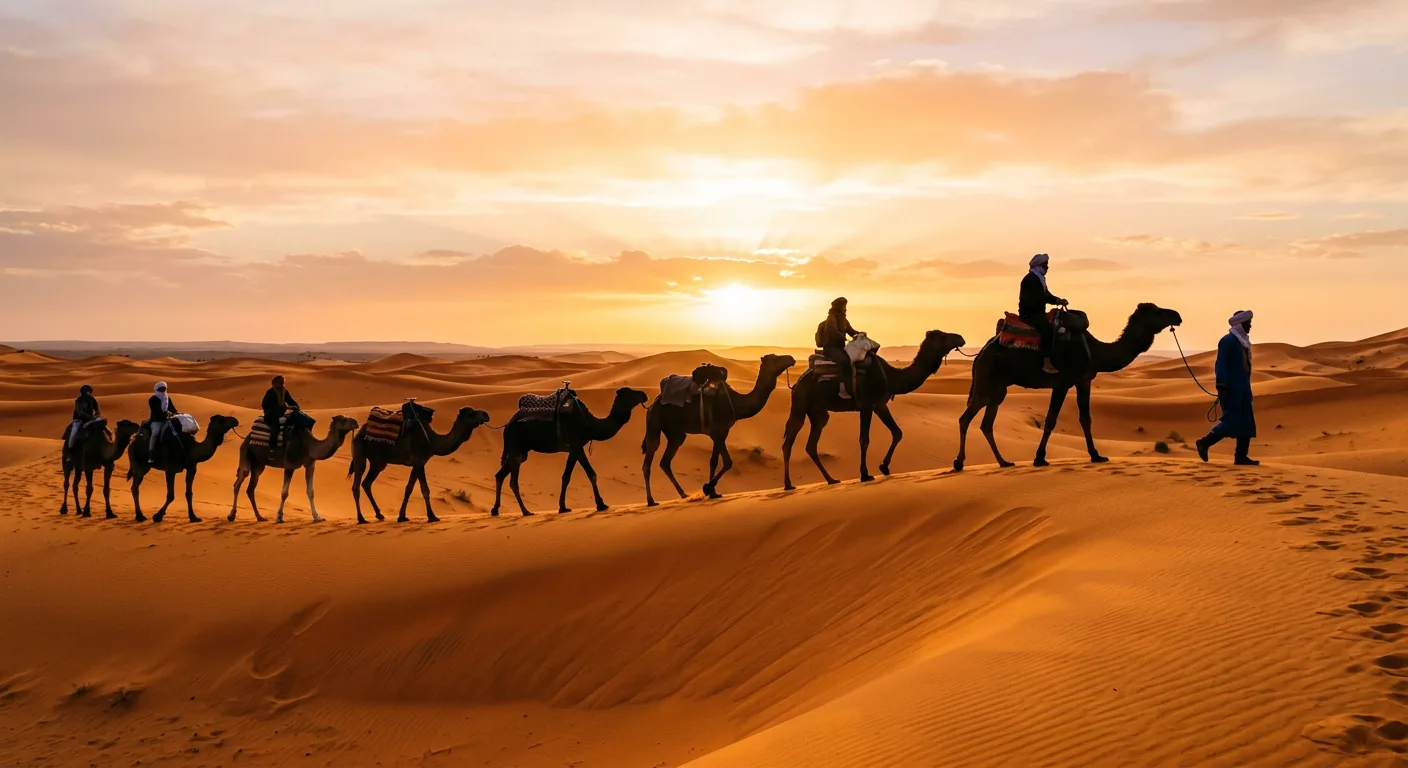
Agafay Desert
A stone-desert evening 40 minutes from the trailhead — rolling khaki hills, a tented camp and the snow line of the High Atlas at sunset.
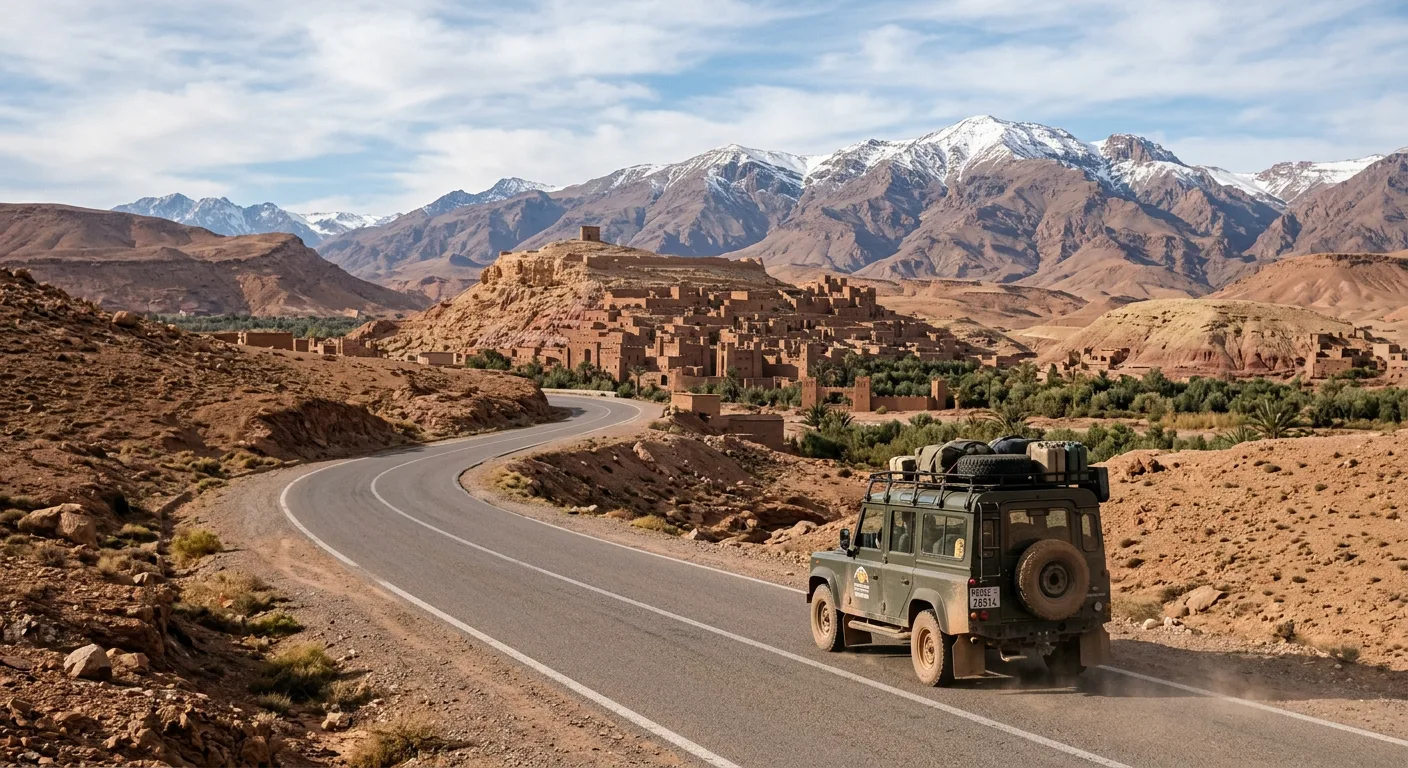
Ourika Valley
The High Atlas trekking valley closest to Marrakech — Berber footpaths, the Setti Fatma cascades and the gentlest first steps onto the mountain.
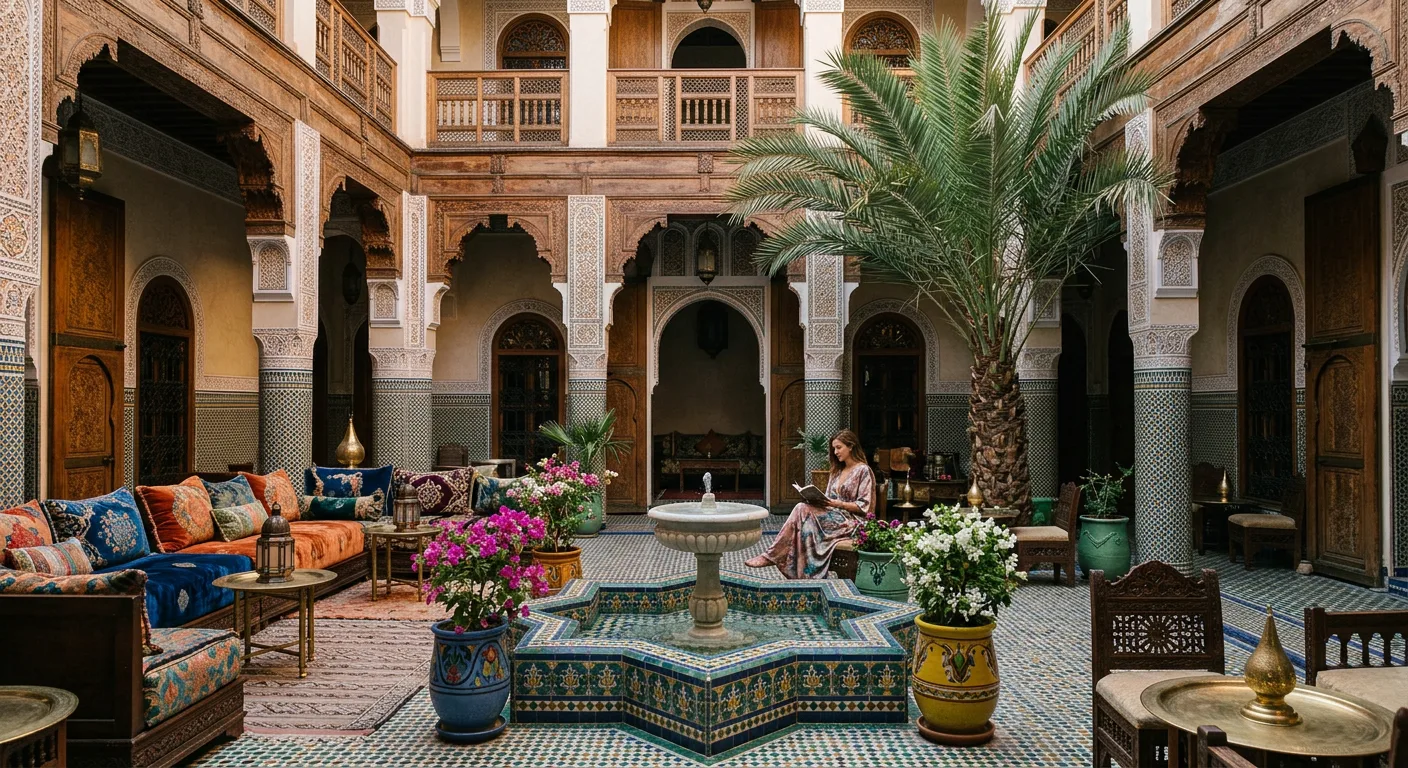
Asilah
The Atlantic wind-down on the northern Rif loop — whitewashed ramparts, painted murals and a flat, sea-level medina near Tangier.
Zagora
Gateway to Erg Chigaga — a palm-lined oasis town at the threshold of the deep Sahara.
Imlil
Imlil is the High Atlas trekking village that puts North Africa's highest summit within two days' walk.
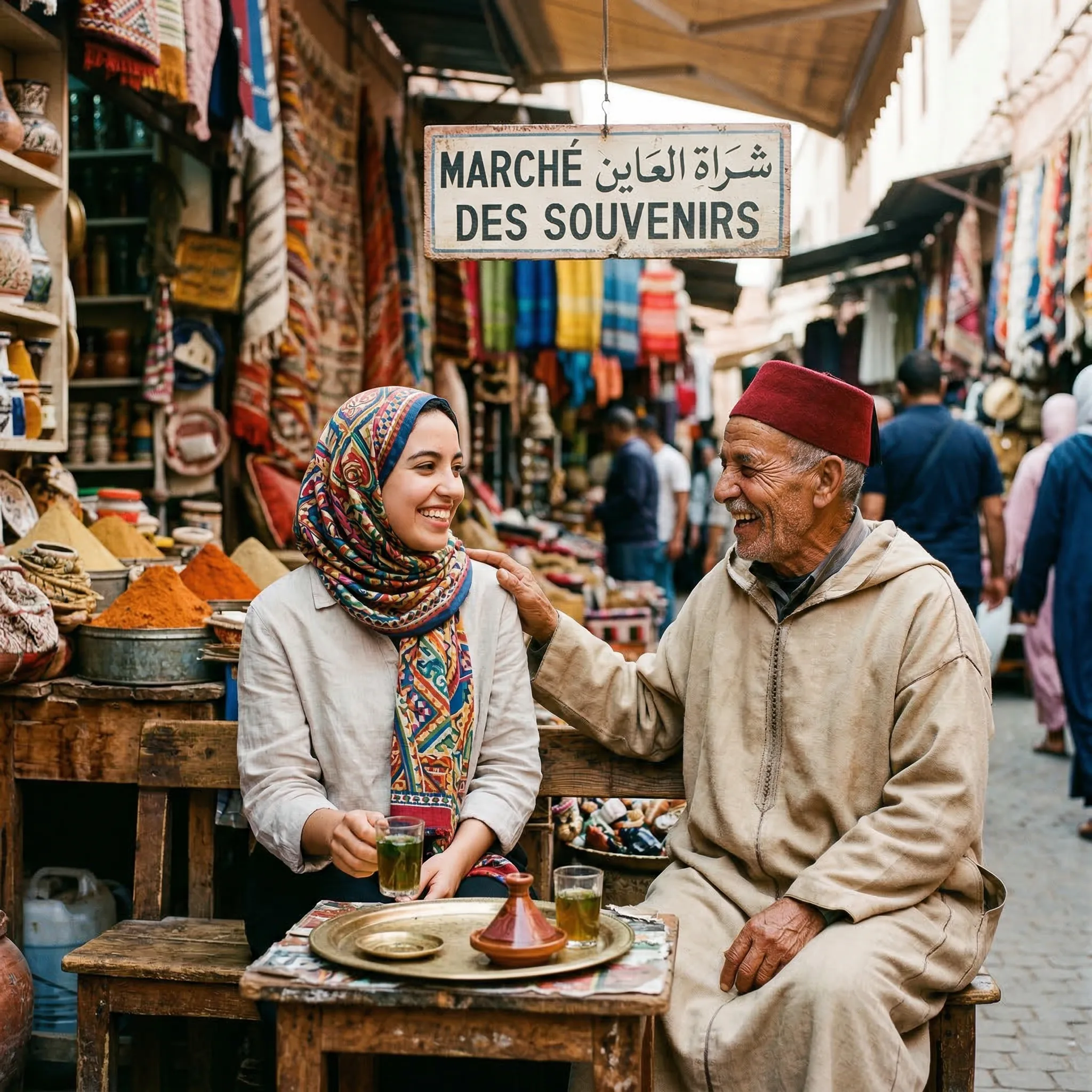
Taroudant
Taroudant is the 'little Marrakech' of the south — a walled Saadian city of ochre ramparts and souks in the Souss plain.
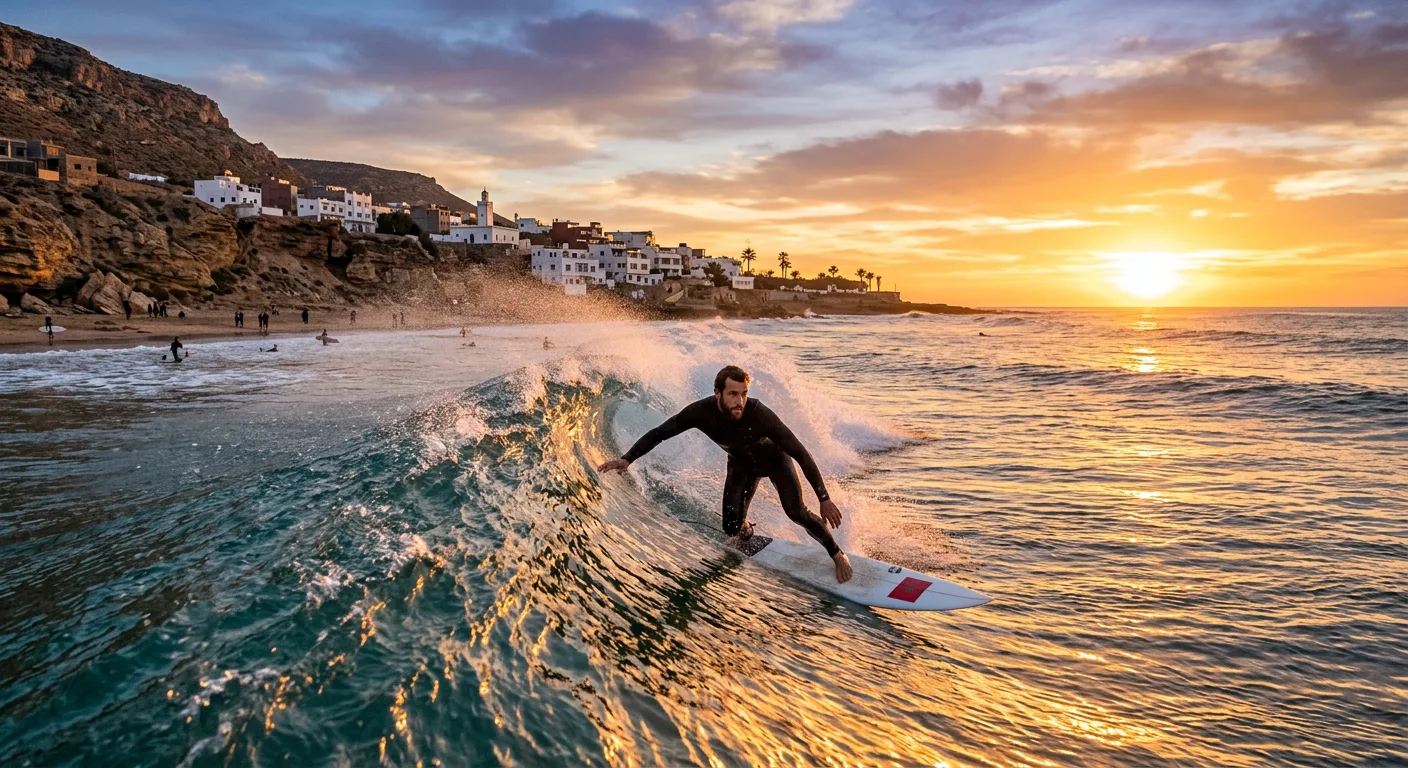
Taghazout
Where the Anti-Atlas meets the Atlantic — a surf village of point breaks and argan oil, with Paradise Valley's gorge an hour into the foothills.
Ifrane
The Middle Atlas at 1,665 m — cedar-forest walking, winter snow at Michlifen and wild Barbary macaques, an hour south of Fes into the mountains.
Dakhla
Far beyond the Atlas, where the desert reaches the ocean — a wind-blown Saharan lagoon at Morocco's southern limit, 550 km south of Agadir.
Skoura
Where High Atlas snowmelt feeds the desert — a palm oasis of earthen kasbahs below the southern slopes, on the kasbah road east of Ouarzazate.
Tinghir
An oasis below the southern Atlas wall — base for the Todra Gorge, where the river carves a 300 m slot canyon and climbers work its limestone.
Oualidia
A sea-level wind-down far from the peaks — a sheltered oyster lagoon of tidal flats and flamingos on the Atlantic, between Casablanca and Essaouira.
Volubilis & Moulay Idriss
A heritage day off the trail in the Zerhoun hills — Roman mosaics beneath a holy hilltop town, north of Meknes on the road to the Middle Atlas.
Midelt
The crossroads where the Middle Atlas meets the High — apple country at 1,508 m, gateway to the Cirque Jaffar below Jbel Ayachi (3,757 m).
Sidi Ifni
Where the Anti-Atlas runs down to the surf — a faded Spanish-era Atlantic town below the southern ranges, near the red sea arches of Legzira.
El Jadida
El Jadida is Morocco's UNESCO Portuguese city — a 16th-century Atlantic fortress with a miraculous cistern, 90 minutes from Casablanca.
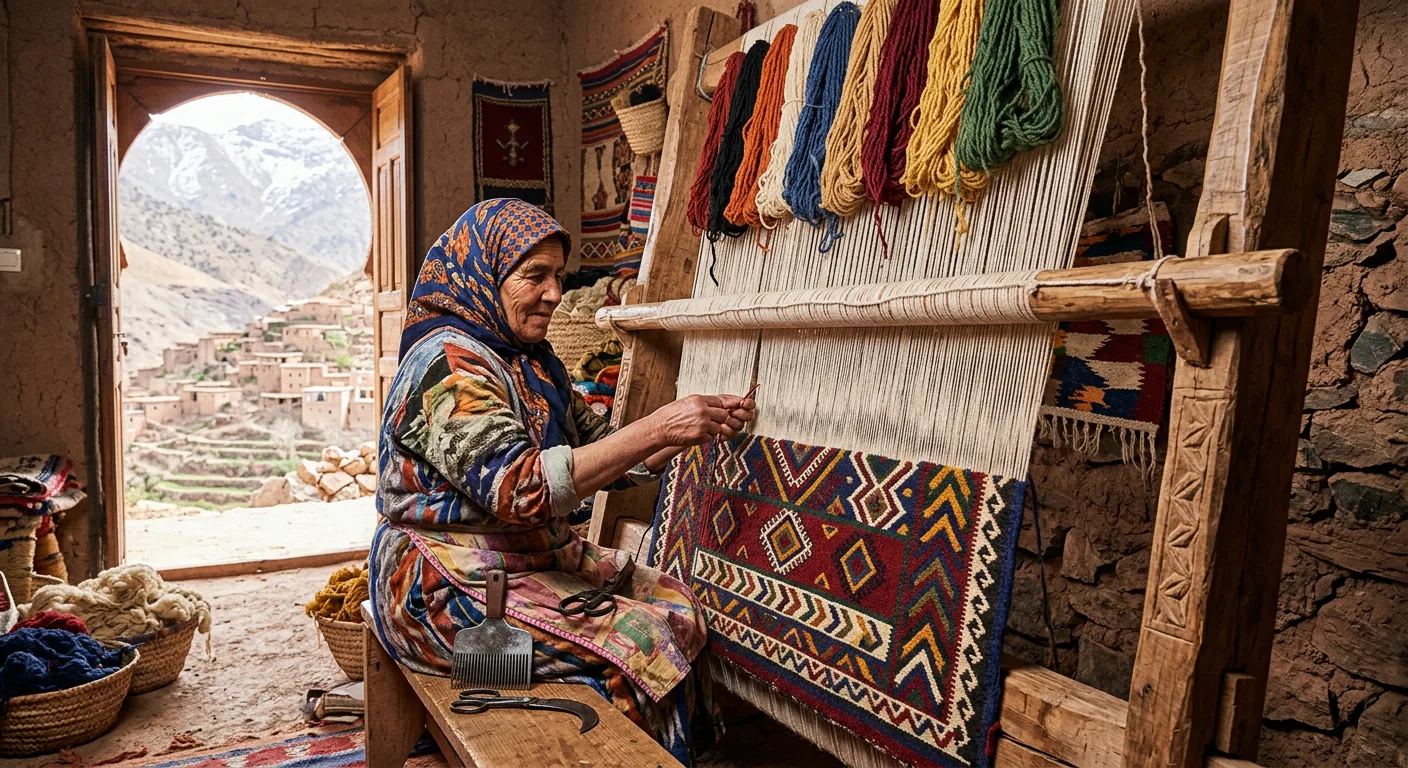
Azrou
Cedar-forest walking in the Middle Atlas at 1,250 m — ancient Cedrus atlantica groves and wild Barbary macaques, an hour south of Fes into the hills.
Moulay Bousselham
Moulay Bousselham is Morocco's premier birdwatching lagoon — the Merja Zerga wetland draws tens of thousands of wintering waterbirds to a sleepy fishing village between Rabat and Tangier.
Tétouan
An Andalusian city on the northern slopes of the Rif — a UNESCO medina of whitewashed lanes, an hour from Tangier on the way to the Talassemtane trails.
Tafraout
Trekking country in the Anti-Atlas at 1,200 m — a granite-ringed oasis below Jbel Lkst, with Berber villages and mule tracks threading the Ameln valley.
Mirleft
Cliff-path walking where the Anti-Atlas drops to the sea — a string of wild Atlantic coves below the argan-forest plateau, between Agadir and Sidi Ifni.
Larache
A quiet Atlantic port north of the Rif foothills — a Spanish-era medina above the Loukos estuary, beside the Phoenician and Roman ruins of Lixus.
Béni Mellal
Foothill base of the central Middle Atlas at 465 m — the Ain Asserdoun springs, the turquoise Bin el-Ouidane gorges and the cedar highlands above.
Rissani
Where the southern Atlas roads run out into the Tafilalt — ancient Sijilmassa capital and Alaouite cradle, last market town before the Merzouga dunes.
M'Hamid el Ghizlane
Where the Atlas drains away into sand — the road's end at the Draa's last palms, the final town before Erg Chigaga and the deep Sahara.
Aït Bougmez Valley
The 'Happy Valley' at the heart of the central High Atlas — terraced Berber villages at 1,800 m and the trailhead for the M'Goun traverse (4,068 m).
Akchour
The finest trail day in the Rif — a forested gorge of emerald cascades and the God's Bridge rock arch, the Talassemtane trailhead 30 km from Chefchaouen.
Saïdia
Sea-level recovery far east of the Atlas — 14 km of blue-flag Mediterranean sand below the Beni-Snassen hills, near the Algerian border.
Frequently asked
Frequently asked questions about High Atlas destinations.
Which High Atlas valleys are best for trekking?
The most popular gateway is the Imlil valley, the usual starting point for Jbel Toubkal (4,167m), the highest peak in North Africa. The Ourika valley is a closer, gentler option for day walks from Marrakech, while the remote Aït Bougmez valley in the central High Atlas is known for longer, quieter treks among Berber villages and high pastures.
How do I reach the Atlas trekking trailheads from Marrakech?
Marrakech is the main gateway to the High Atlas. Imlil, the trailhead for Toubkal, is a road journey of roughly an hour and a half south of the city, and the Ourika valley is a similar distance. From these villages the trekking begins on foot, with mules carrying gear on multi-day routes.
When is the best season to trek the High Atlas?
Late spring through autumn (roughly April to October) is the main trekking season, with the longest settled weather. Summer is hot in the valleys but the high ground stays cooler. In winter the upper peaks, including Toubkal, hold snow and ice, which turns a summit attempt into a mountaineering objective needing the right equipment and experience.
How difficult is climbing Jbel Toubkal?
In summer conditions the standard route up Toubkal is a strenuous walk-up on steep, rocky ground rather than a technical climb — no ropes are normally needed — but it is long, high and demands good fitness. The main challenges are the altitude and the sustained ascent. In snow it becomes a more serious undertaking requiring crampons and an ice axe.
Do I need a guide and mules for an Atlas trek?
A qualified local mountain guide is standard practice and is required for Toubkal, both for safety and to support the Berber communities of the valleys. On multi-day routes, mules with a muleteer typically carry tents, food and the bulk of your kit between camps and gîtes, so you walk with a light daypack. Day hikes can often be done with just a guide.