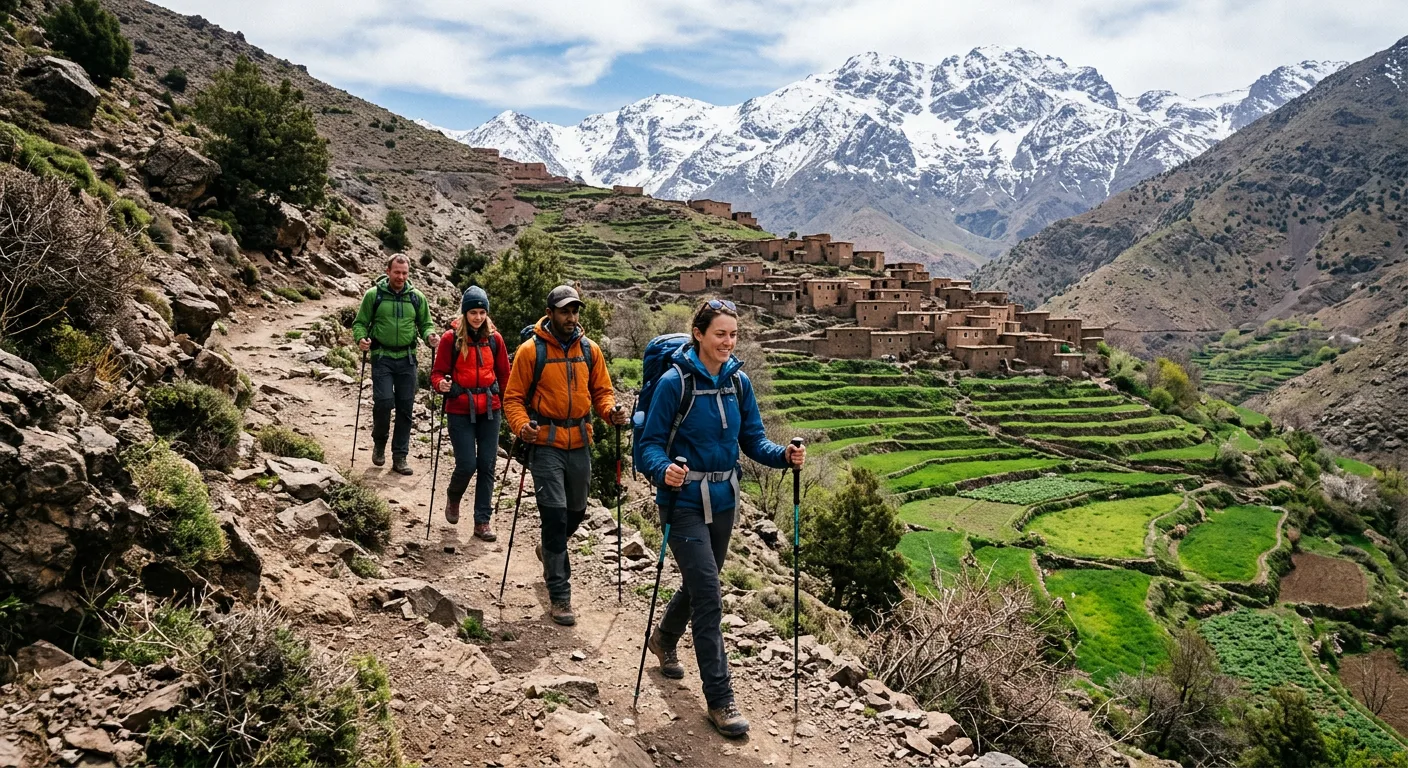
High Atlas · from Marrakech
Atlas Mountains Trekking from Marrakech
Guided High Atlas treks that start at your Marrakech riad — easy Berber-village day hikes, the classic Toubkal summit (4,167m) and week-long traverses, all with a mountain guide and mule support.
The short answer
The High Atlas begins about 90 minutes south of Marrakech at the Berber village of Imlil (1,740m), the trailhead for Jbel Toubkal — North Africa's highest peak at 4,167m. From there you can do an easy guided day hike or a multi-day trek; the Toubkal summit is a 2-day trip with a refuge night, and every route runs with a Berber mountain guide and mules carrying your kit.
We collect you from your Marrakech accommodation, drive to the trailhead and bring you back — so you trek the real mountains without arranging a single transfer yourself. Trips range from £75 day hikes to week-long traverses, and all are private.
What's included
Guide, mule and refuge — handled
Every guided trek from Marrakech is fully supported. You bring your boots and a day-pack; we organise the people, the pack animals and the places you sleep.
Berber mountain guide
English/French/Berber-speaking
Mules carry the heavy kit
You walk with just a day-pack
Private return transfer
Door-to-door from your Marrakech riad
Refuge & Berber gîte nights
Plus a cook on multi-day treks
The treks we run
Which Atlas trek from Marrakech?
Six real itineraries, from an easy day in the foothills to the roof of North Africa. Every one starts and ends in Marrakech.
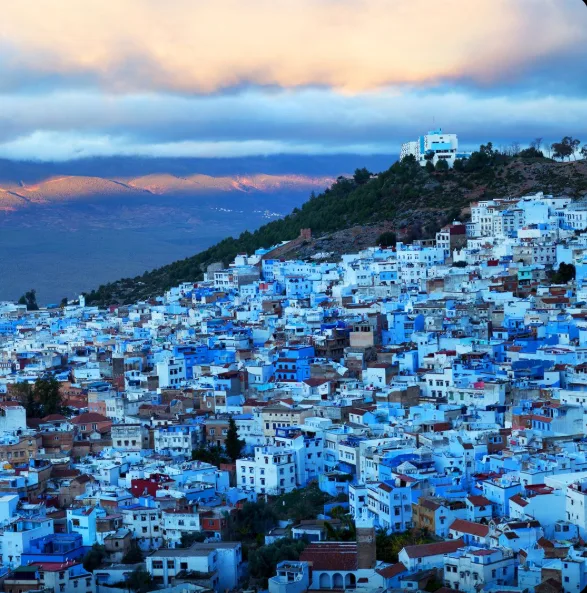 Easy
Imlil & Berber Villages Day Hike
A relaxed guided day hike from Imlil (1,740m) through walnut groves and Berber villages with tea in a local home. Easy walking — about 3–4 hours and 300–400m of gentle ascent; suitable for most fitness levels.
ChallengingMount Toubkal 2-Day Summit
The classic express Toubkal trek: hike from Imlil (1,740m) to the refuge, then a pre-dawn alpine start to the 4,167m summit. Challenging, high-altitude — strong day-walkers only; mule-supported.
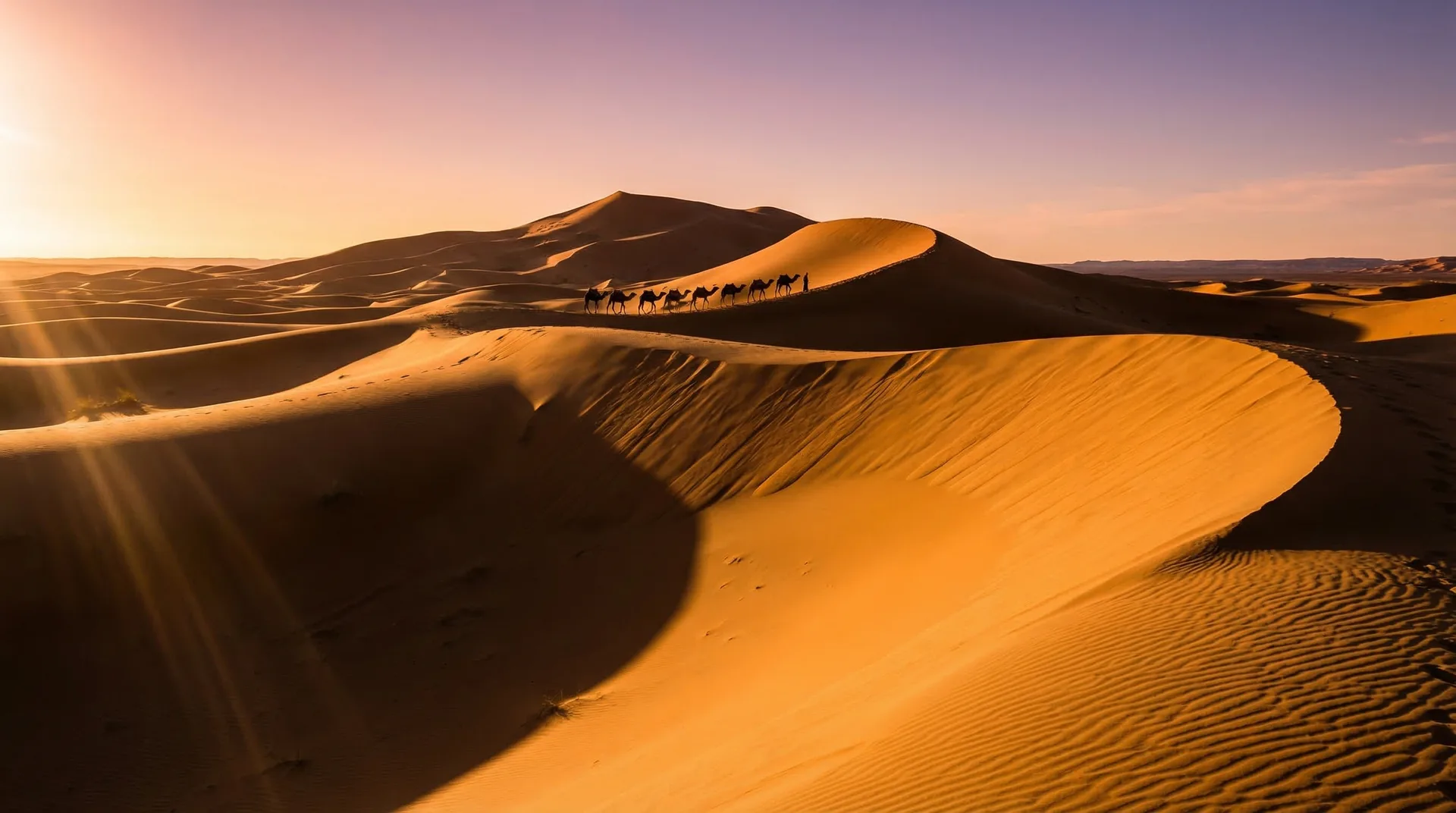 Moderate
Aït Bougmez 'Happy Valley' Trek
Four moderate days in the green Aït Bougmez 'Happy Valley', staying in Berber gîtes and walking high pastures and side valleys. Moderate trekking at 1,800–2,900m with no summit pressure; mule support throughout.
ChallengingToubkal Circuit 5-Day Trek
A five-day acclimatised circuit of the Toubkal massif crossing passes over 3,500m before summiting Jbel Toubkal (4,167m). Challenging high-altitude trekking; full mule support and refuge/gîte nights.
ChallengingM'Goun Traverse
A six-day traverse of the remote M'Goun massif in the central High Atlas, summiting Jbel M'Goun (4,068m) and walking the famous river gorges. Challenging high-altitude trekking far from the crowds; mule-supported camping and gîtes.
ChallengingToubkal Winter Ascent
A three-day winter mountaineering ascent of Jbel Toubkal (4,167m) on snow and ice using crampons and an ice axe. Challenging — requires good fitness and a willingness to learn winter skills; led by qualified guides.
Grades & fitness
How hard is it — and which suits you?
Atlas trekking ranges from gentle valley walks to a high-altitude summit. There is no technical climbing outside winter, but the higher routes are genuinely strenuous. Pick by honest fitness, not ambition.
2–4 hours on good paths, gentle ascent, no altitude. Imlil and Ourika day hikes.
4–6 hours a day up to ~2,900m, steady ascents, no summit pressure. Aït Bougmez 'Happy Valley'.
5–7 hours a day, passes over 3,000m and summits to 4,167m, pre-dawn starts. Toubkal and M'Goun.
Are the dates right?
Best seasons to trek the Atlas
April–June & September–October — the prime window. Stable weather, wildflowers or crisp autumn light, and the high routes are clear of snow. Best for Toubkal, the circuits and M'Goun.
July–August — hot in Marrakech and the valleys, but pleasant at altitude. Early starts and high camps make summer treks comfortable; the central Atlas stays cooler.
November–April — winter on the high peaks. Toubkal becomes a snow-and-ice mountaineering climb needing crampons and an ice axe. Foothill and valley walks (Imlil, Ourika, Aït Bougmez) remain rewarding year-round.
Safety, honestly
The High Atlas is real mountain terrain. Altitude affects everyone above 3,000m, weather changes fast, and we will move a summit day or turn around if conditions aren't safe — your guide's call is final. We keep group ratios low and carry a first-aid kit; you should bring travel insurance that covers mountain trekking.
Who it suits
Is this trip for me?
- Marrakech visitors who want a real mountain day, not a coach-tour viewpoint.
- Walkers chasing the Toubkal summit with proper guide and mule support.
- Families and beginners — the Imlil and Ourika day hikes are genuinely easy.
- Experienced trekkers after remote, multi-day traverses like M'Goun.
- Travellers who value privacy: every trip is yours alone, never pooled.
Practical notes
Before you book
- Bring broken-in boots with ankle support — the single most important kit decision.
- Layers matter: Atlas mornings are near-freezing, midday warm. A shell is essential.
- Mules carry your main bag on multi-day treks; you only carry a day-pack.
- Refuges and gîtes are simple and shared — dorm beds, hearty cooked food, mountain plumbing.
- Crampons and ice axes can be rented in Imlil for winter Toubkal climbs.
Planning the wider trip too? See our Atlas trekking guide, best time to trek and the Imlil trailhead guide.
Questions
Atlas trekking from Marrakech — FAQ
How much does Atlas Mountains trekking from Marrakech cost?
An easy guided day hike from Imlil starts around £75 per person including the private return transfer from Marrakech, a Berber guide and lunch. Multi-day treks run roughly £160–£190 per person per day, which covers your guide, mules, all mountain meals and refuge or gîte nights — for example the 2-day Toubkal summit is from £320 and the 5-day Toubkal circuit from £720. Every trip is private, so the exact figure depends on group size and dates; we confirm a fixed price in writing before any deposit.
How do I get to the mountains from Marrakech?
We collect you from your Marrakech riad or hotel by private vehicle. The Toubkal trailhead village of Imlil is about 90 minutes' drive south; the Ourika and Asni valleys are roughly an hour; the central Atlas (Aït Bougmez, M'Goun) is a longer 5–6 hour scenic transfer. The return transfer is included in every trek, so you never have to arrange grands taxis or buses yourself.
How fit do I need to be to trek the Atlas from Marrakech?
It depends on the trek. A day hike around Imlil is easy — a few hours on good paths suitable for families. A multi-day traverse means 5–7 hours of walking a day over mountain terrain, and the Toubkal summit climbs to 4,167m with a pre-dawn start, so it is challenging and needs good general fitness and a head for long ascents. There is no technical climbing outside winter. We grade every trek (Easy, Moderate, Challenging) so you can match it to your fitness.
Do I need a guide to trek in the High Atlas?
For the higher routes, yes — a qualified Berber mountain guide is required on Jbel Toubkal and strongly advised across the massif for navigation, weather judgement and altitude safety. A guide also unlocks the cultural side: tea in village homes, the right paths and honest local knowledge. Every trek we run from Marrakech includes a mountain guide, and the bigger treks add muleteers and a cook.
What is included in a guided Atlas trek?
Private return transfer from Marrakech, your Berber mountain guide, mules (and a cook on multi-day trips) to carry the heavy kit and prepare fresh meals, all mountain meals as listed, and refuge or Berber gîte accommodation. You walk with just a day-pack. Not included: tips, travel insurance, and personal kit such as boots — though crampons and ice axes can be rented in Imlil for winter climbs.
When is the best time to trek the Atlas Mountains from Marrakech?
April to October is the main trekking season, with stable weather and snow-free high routes — late spring and autumn are ideal. July and August are hot at lower altitude but pleasant high up. From November to April the high peaks hold snow and ice: Toubkal becomes a winter mountaineering objective requiring crampons and an ice axe, while valley and foothill walks (Imlil, Ourika) stay enjoyable year-round.
Can I do the Toubkal summit as a day trip from Marrakech?
No — Toubkal cannot safely or realistically be summited in a single day from Marrakech. The standard route is two days with a night at the Toubkal refuge (3,207m) before a pre-dawn summit push, which also helps with altitude. If you only have a day, an Imlil Berber-villages walk or the Ourika waterfalls give you a real taste of the mountains and a return to Marrakech the same evening.
Are the treks private or shared group tours?
Every Atlas trek we run from Marrakech is 100% private — just you and the people you book with, your own guide, mules and pace. We never pool separate travellers together. You can adjust the itinerary, start date and difficulty, and we re-quote within 24 hours.
Ready when you are
Let's get you into the High Atlas
Tell us your dates, fitness and how long you have. We'll match you to the right trek, confirm a fixed private price in writing, and collect you from your Marrakech riad.