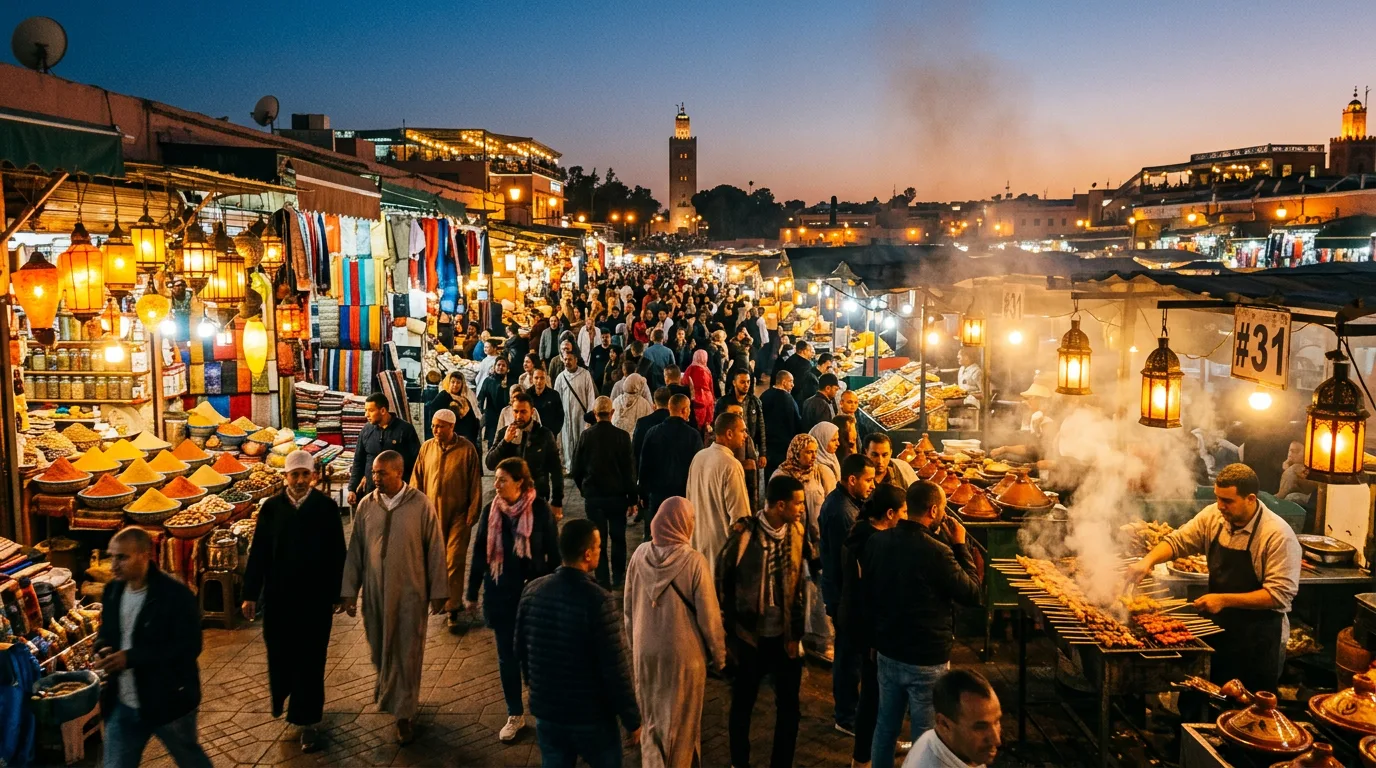
Itineraries · planned by our team
Morocco itineraries, day by day.
Real city-by-city day plans for first trips and returns — Marrakech, Fes, the blue city, the coast and the capital. Every route is private and fully adjustable; we price it around your dates.
Toubkal itineraries
3 plans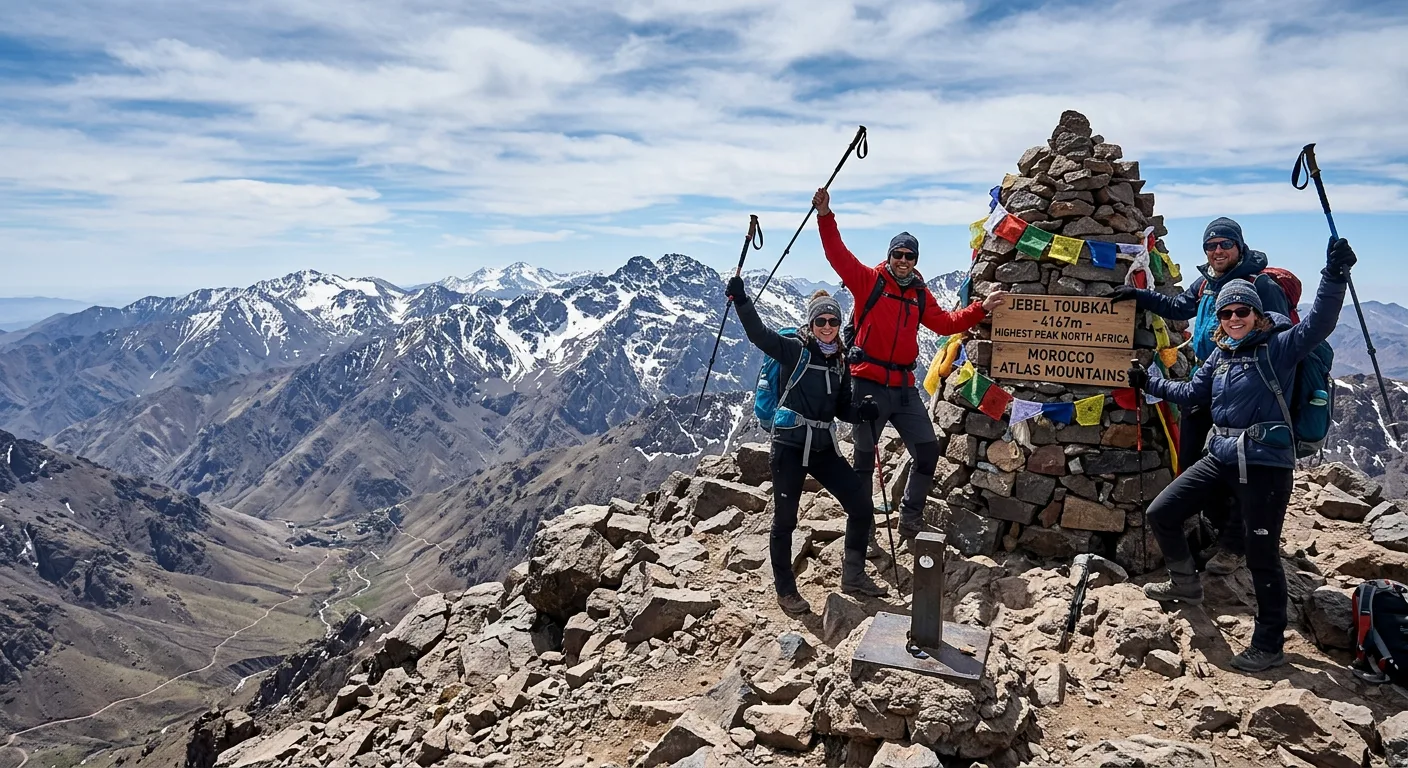 2 days
Toubkal
Toubkal Trek: 2 Days to the Summit (4,167m)
The fastest realistic Toubkal trek: a day from Imlil up to the refuge, then a pre-dawn summit of Jbel Toubkal (4,167m), North Africa's highest peak. A real, mule-supported 2-day high-atlas trekking plan.
See the plan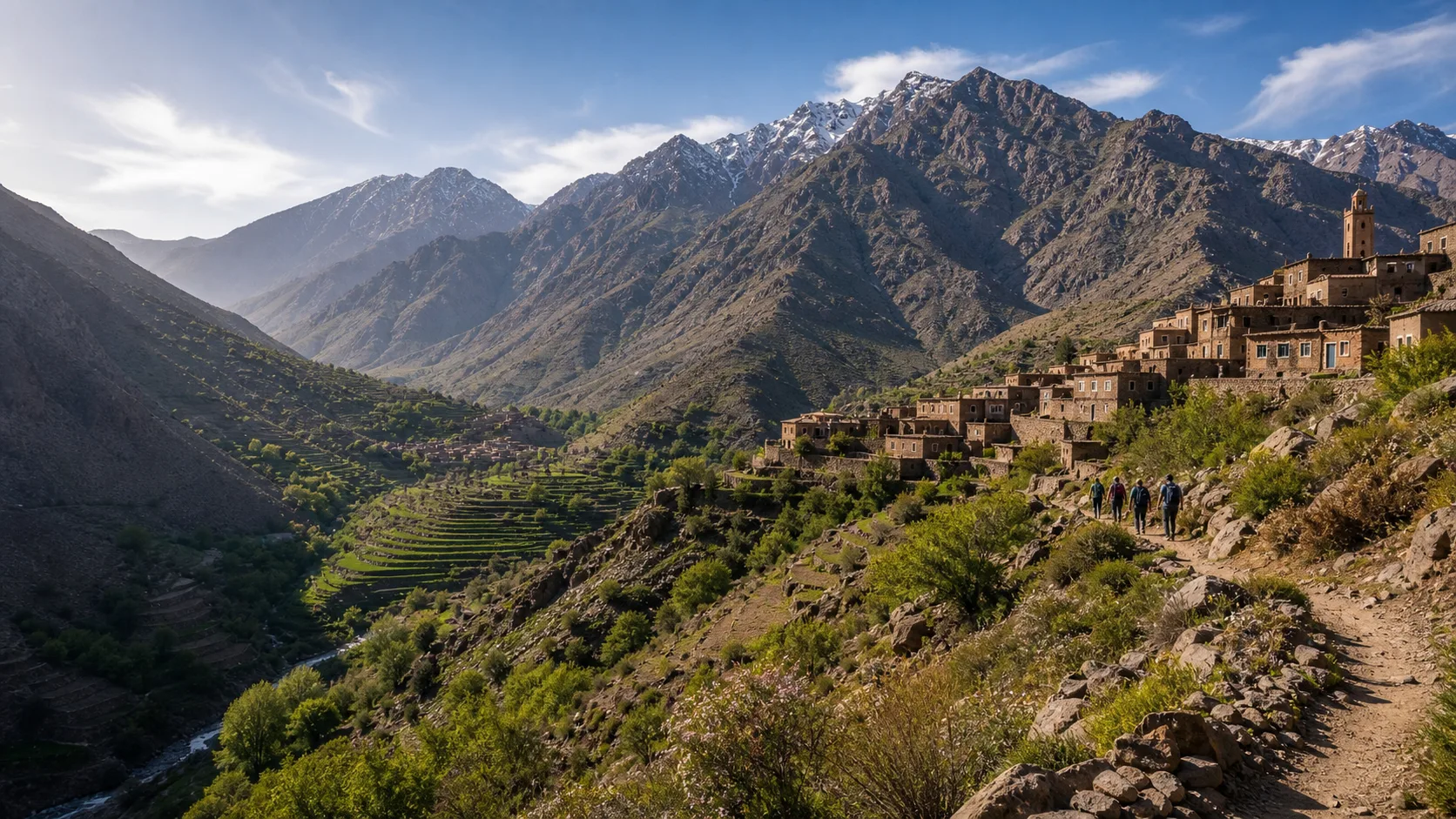 5 days
Toubkal
Toubkal Circuit Trek: 5 Days Around the Massif
A five-day circuit of the Toubkal massif — crossing high passes and the remote Lac d'Ifni before summiting Jbel Toubkal (4,167m) properly acclimatised. The complete high-atlas trekking loop.
See the plan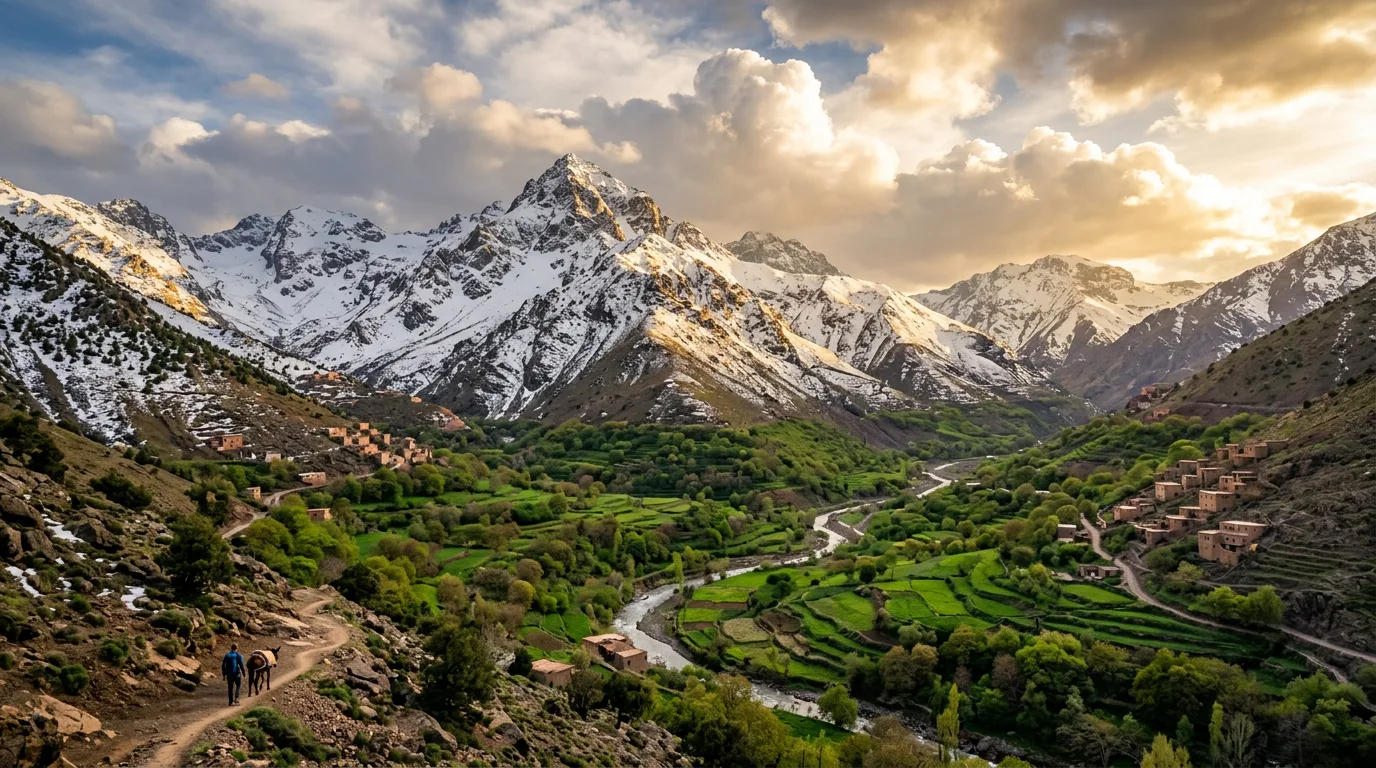 3 days
Toubkal
Winter Toubkal Trek: 3 Days on Snow & Ice
A three-day winter ascent of Jbel Toubkal (4,167m) on snow and ice with crampons and an ice axe, including a skills session at the refuge. Challenging winter high-atlas trekking, December to April.
See the plan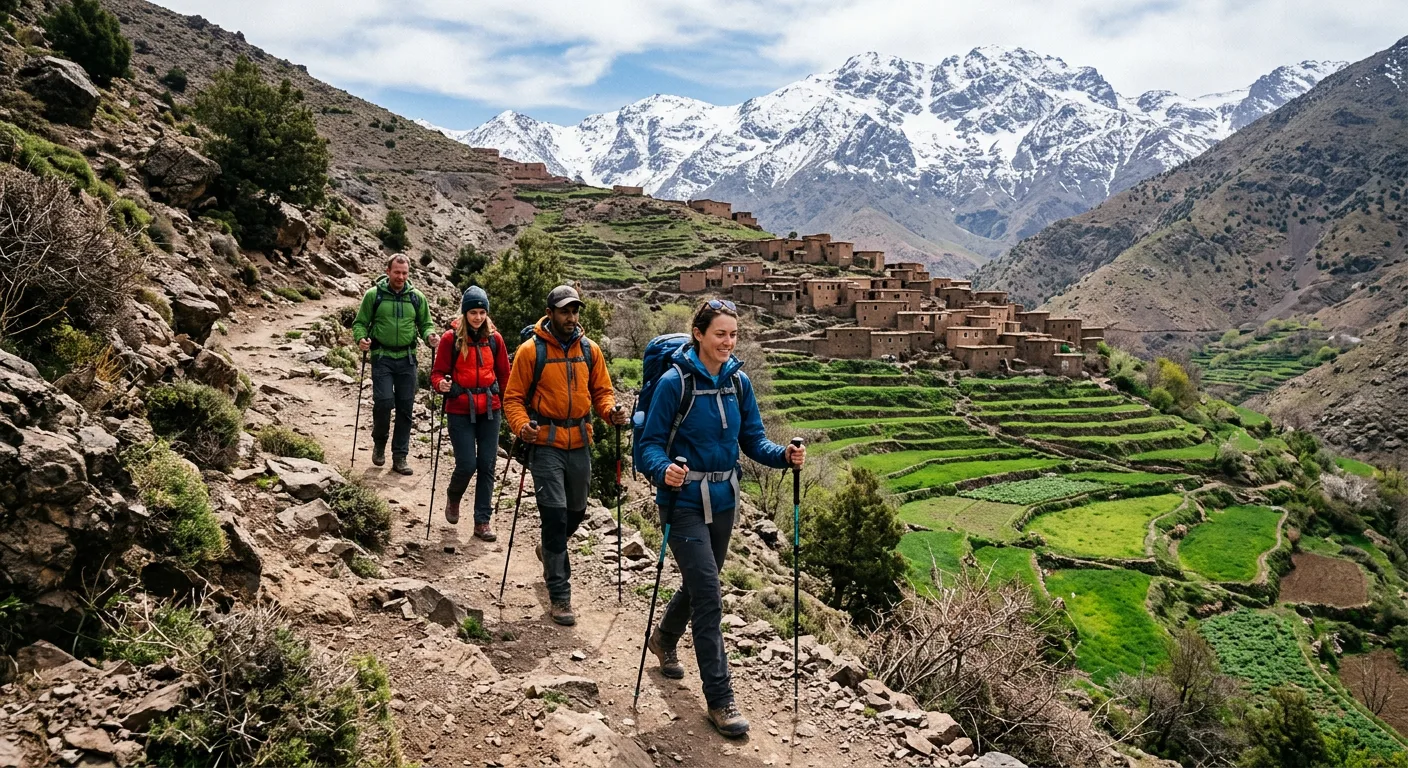
Frequently asked
Planning your Morocco trekking itinerary.
How many days do I need for a Morocco trekking itinerary?
It depends on the route and how much else you want to see. A short Atlas taster — a guided day walk or a one- to two-night loop from a valley like Imlil — can sit inside a long city weekend. Climbing Jbel Toubkal is most often done over two or three days to allow a night at altitude before the summit. Longer valley-to-valley traverses run a week or more. If you also want a city or the desert either side of the trek, allow extra days for travel.
How fit do I need to be, and which season suits the trek?
Atlas trekking ranges from gentle valley walks to the strenuous high-altitude ascent of Toubkal (4,167m), so we match the itinerary to your fitness rather than the other way around. For multi-day or summit routes you should be comfortable walking several hours over rough, steep ground on consecutive days. Late spring through autumn (roughly April to October) is the main trekking season; the high peaks hold snow and ice in winter, which turns a summit into a mountaineering objective needing proper equipment.
Are these itineraries private and can they be customised?
Yes. Every itinerary here is a private trip run by our team, and each one is a starting point rather than a fixed package. You can change the dates, adjust the daily distances, add an acclimatisation day, swap a gîte or refuge, shorten or extend the route, and pair the trek with a city or the coast. Tell us your fitness, dates and travel style and we send a written day-by-day plan built around them.
What does a typical day on a trek look like, and what's included?
On a multi-day route you usually walk for several hours with a qualified local mountain guide, with a packed lunch and rest stops, ending at a gîte or camp before dusk. Mules and a muleteer typically carry tents, food and the bulk of your kit between stops, so you walk with a light daypack. Guiding, mule support, meals on the mountain and refuge or camp accommodation are normally included; we set out exactly what's covered in your written quote.
How far ahead should I book, and how do I get a price?
Earlier is better for the main season and for a Toubkal summit, when guides and refuge space fill up, but shorter lead times can often still be arranged. Pricing depends on your exact dates, group size, route length and the level of support and accommodation you want, so we quote each itinerary individually rather than listing a fixed figure. Send us your plan and we reply with an itemised written quote within 24 hours.
Private & tailored
Don't see your exact trip? We'll build it.
Tell us your cities, dates and travel style. We'll send a written day-by-day plan and an itemised quote within 24 hours — no templates, no pressure.
Contact us for pricing