The best months on the mountain
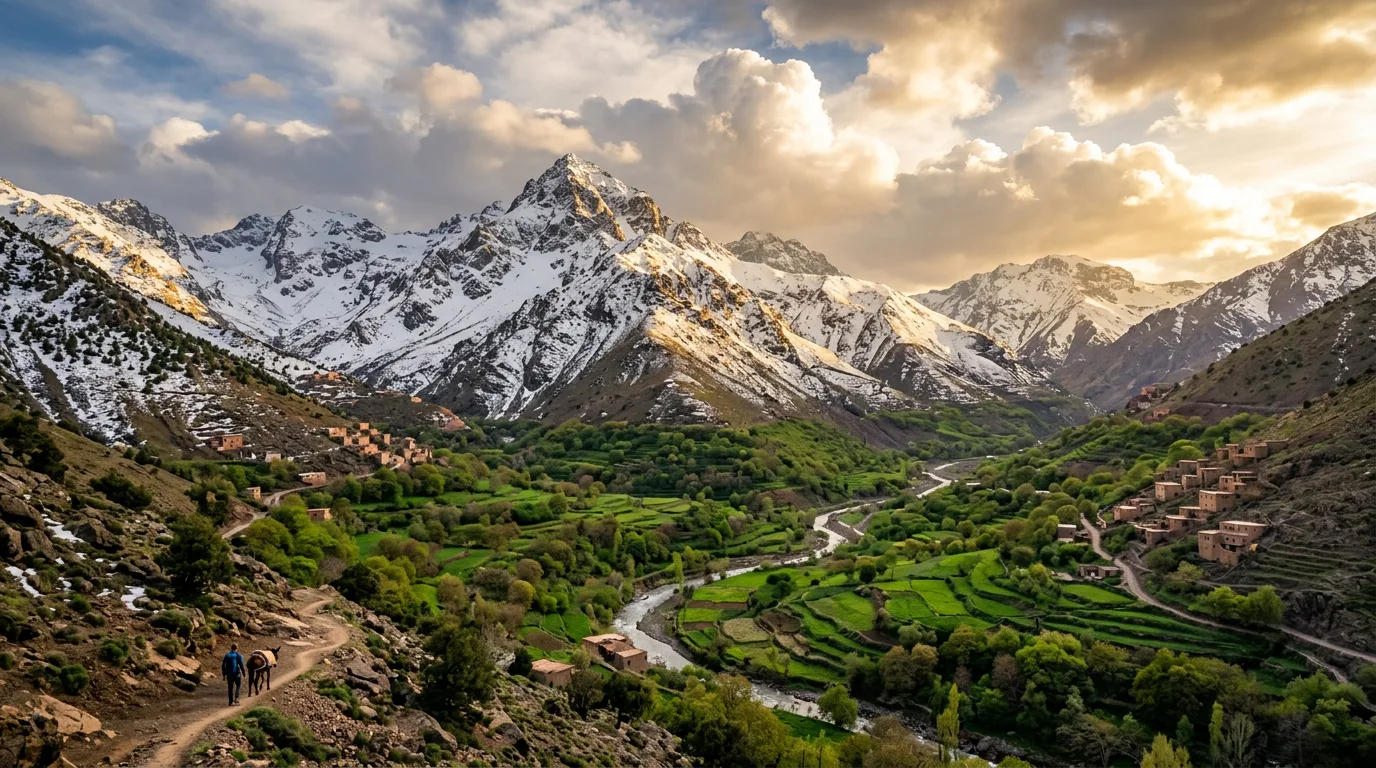
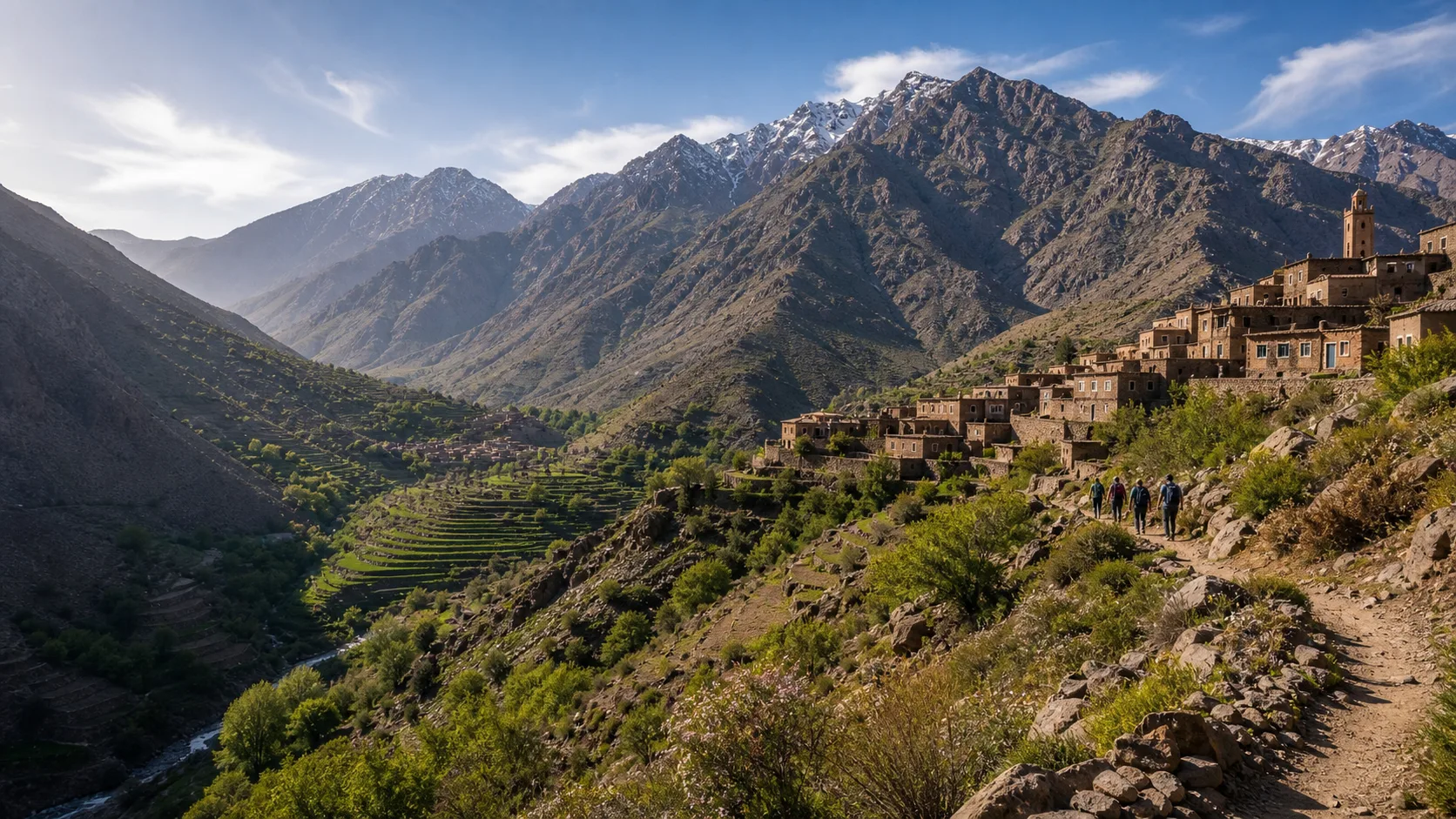
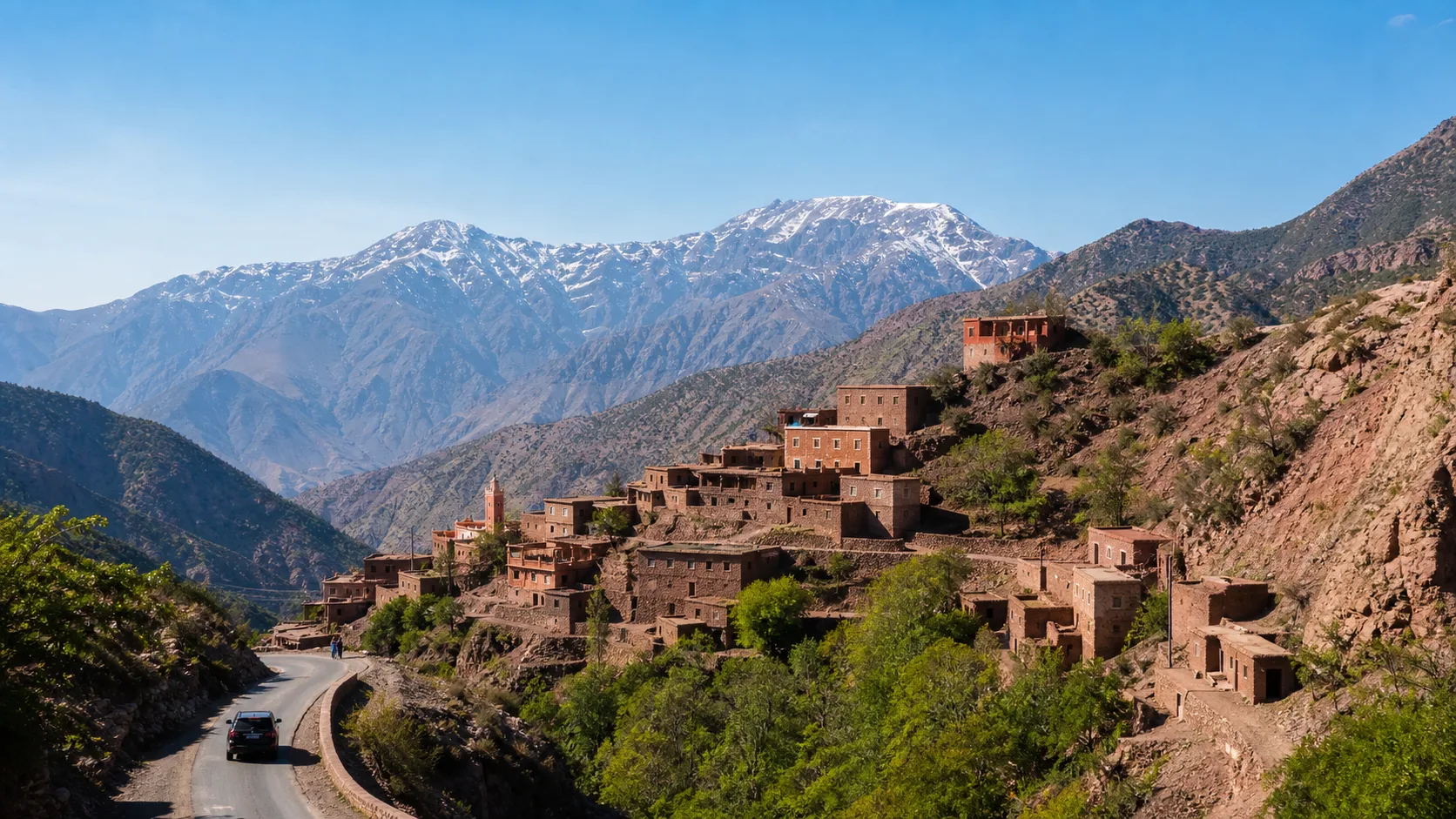
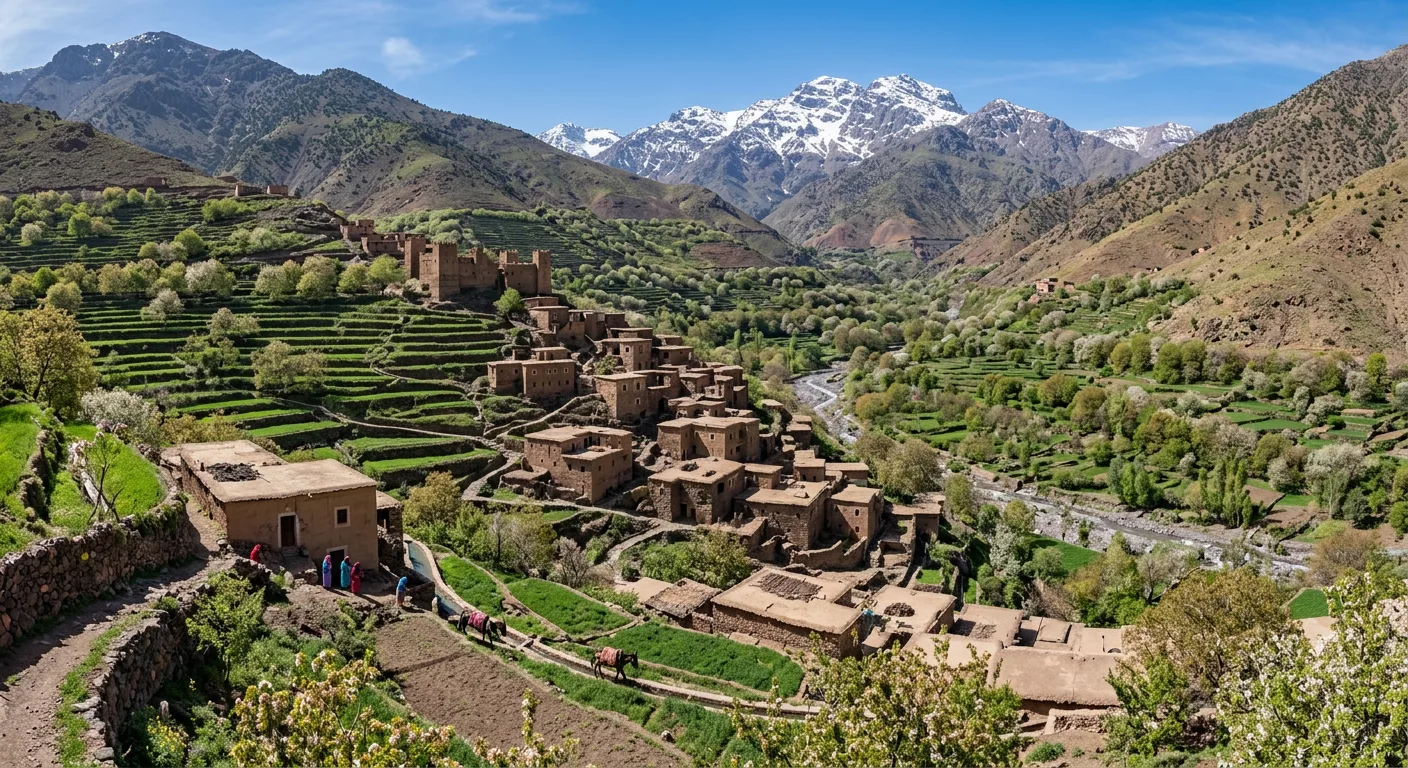
The High Atlas has two seasons that matter. April to October is the summer trekking window: the snow has cleared above 3,500m, the Toubkal and M’Goun summits are walk-ups, and the gîtes in Imlil and Aït Bougmez are open and warm. November to March is winter mountaineering — crampons, ice axe and a qualified leader on the summit ridge. Spring adds wildflowers in the Ourika valley; autumn gives the clearest summit views of the year.
Which route to do first
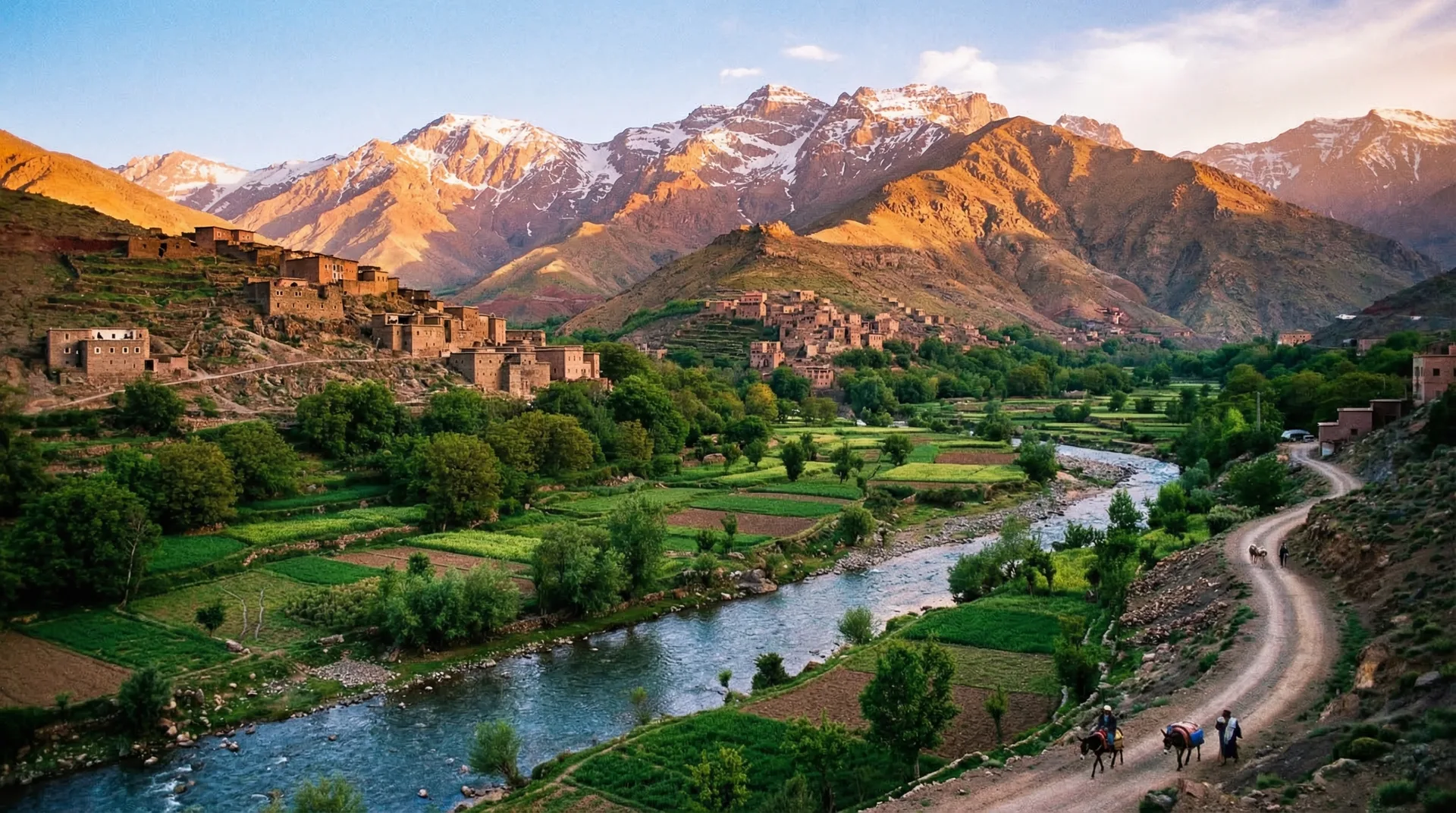
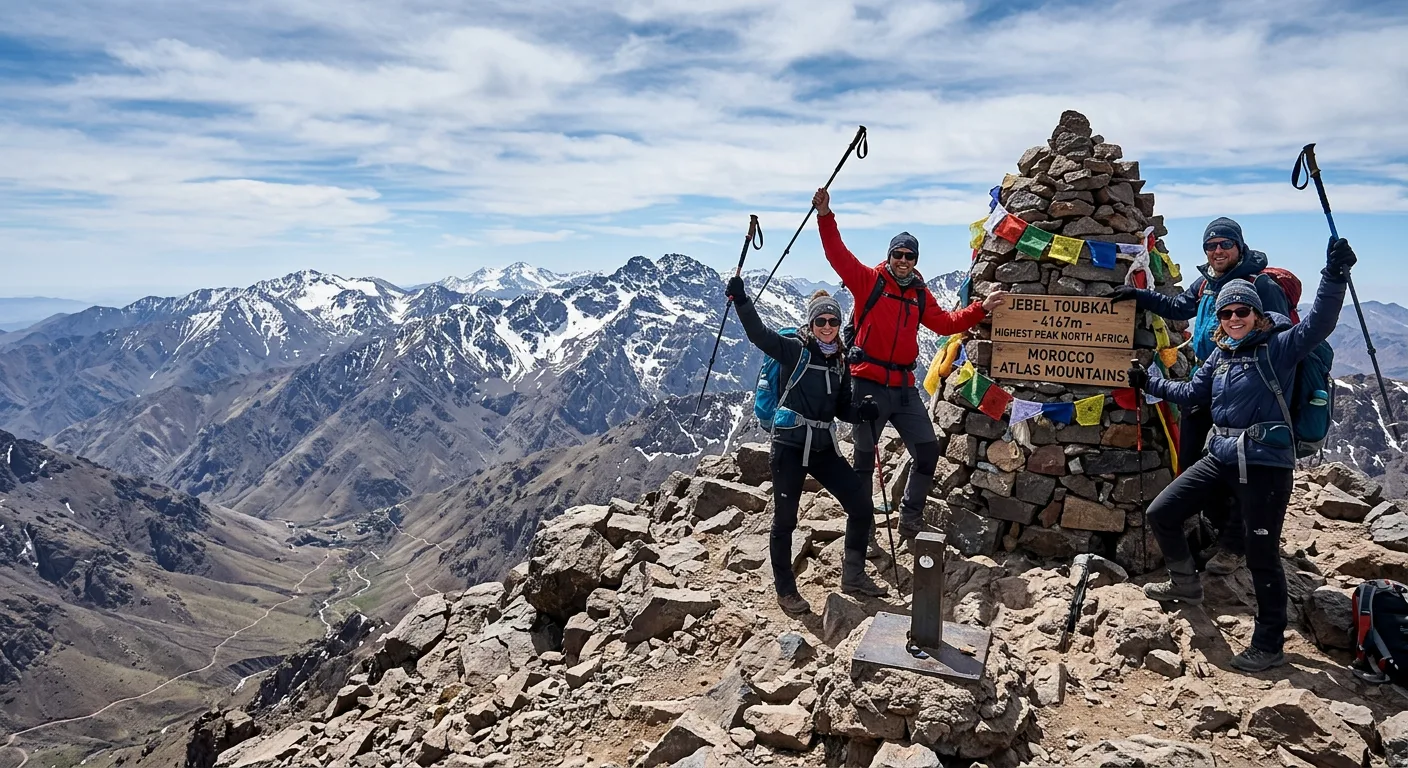
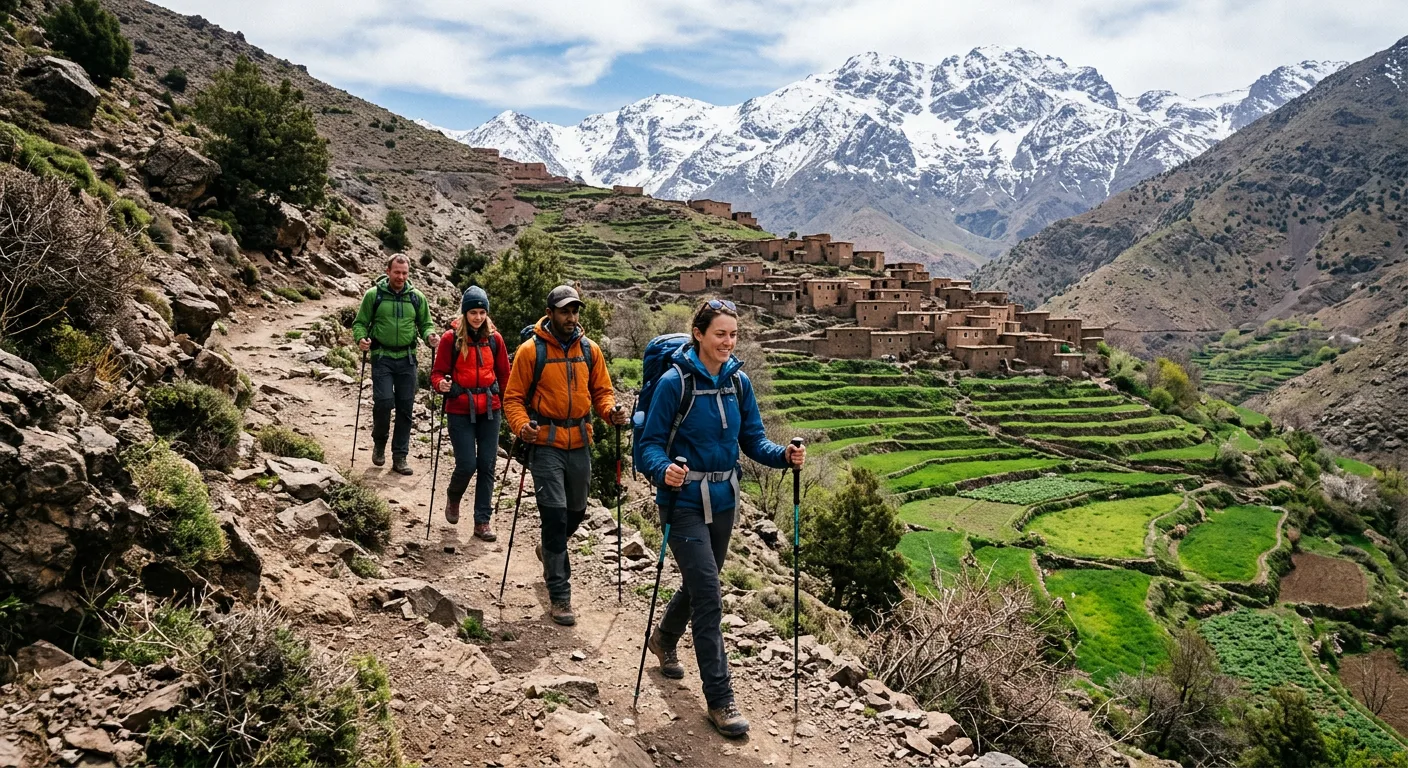
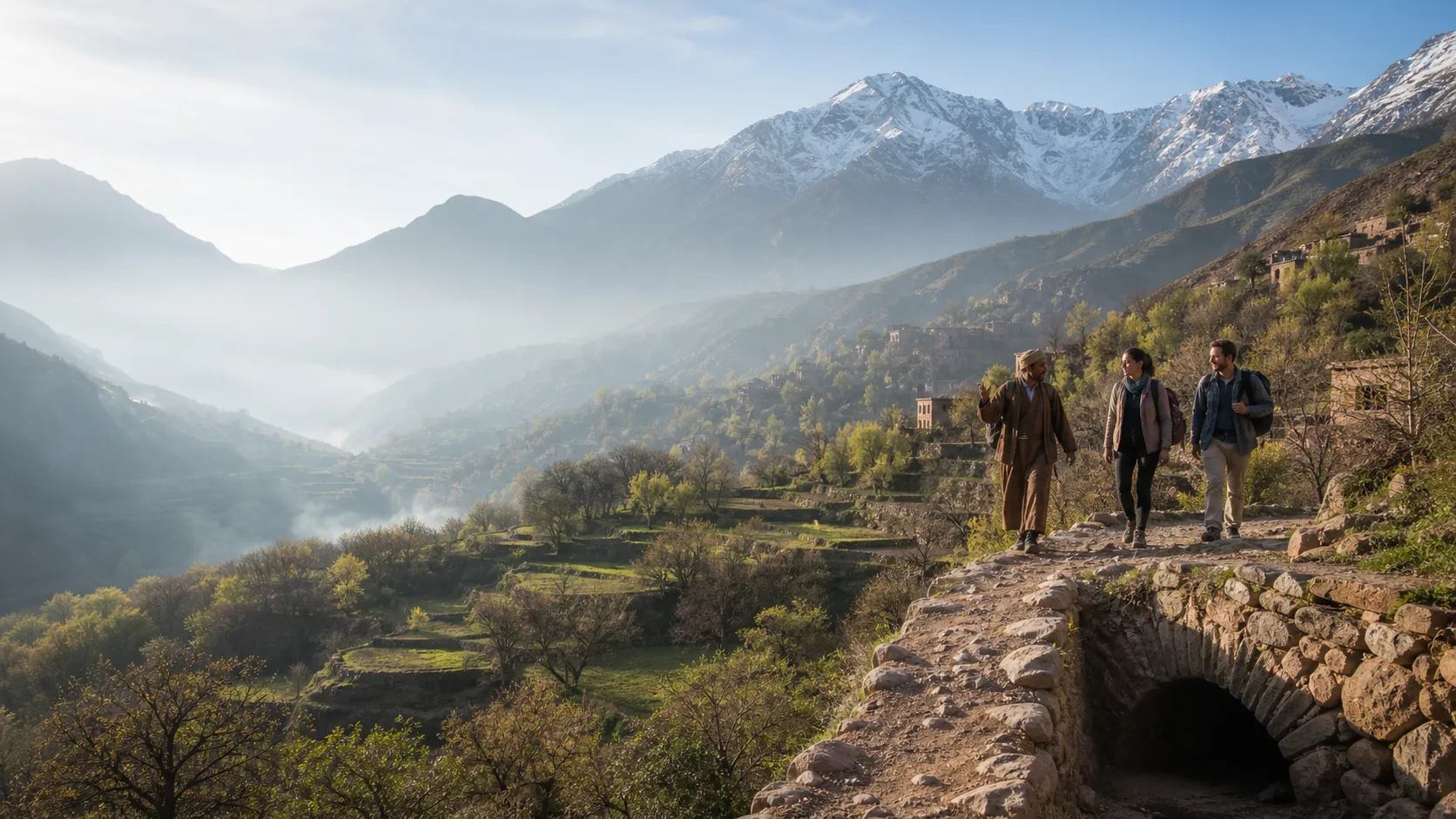
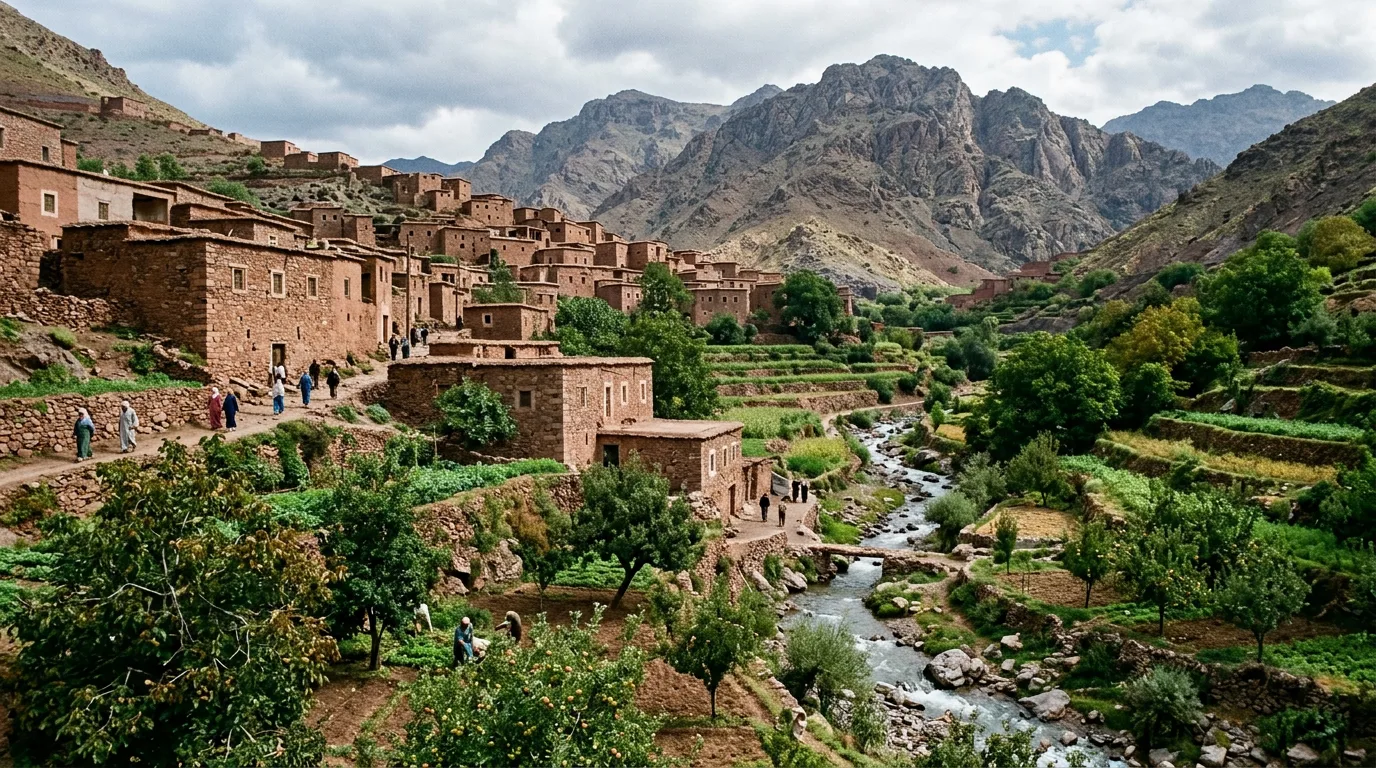
If you have a weekend and good hill fitness, the 2-day Toubkal summit from Imlil is the classic — one night at the 3,207m refuge, a pre-dawn push to 4,167m, down for lunch. With a week, the 5-day Toubkal circuit crosses three high passes and sleeps in Berber villages before the summit. Want quiet over altitude? The Aït Bougmez ‘Happy Valley’ trek is gentler, greener and far off the tourist line.
What we wouldn’t do
- A single-day dash at Toubkal. The altitude needs a night at the refuge — rushing it is how people get sick and turn back short of the top.
- Winter summits without crampons, an ice axe and a guide who knows the avalanche conditions. The summer walk-up becomes a serious climb.
- Brand-new boots on day one. Break them in at home — a week on Atlas scree is the worst place to learn what a blister feels like.
- Skipping acclimatisation to save a day. Two extra hours of ascent profile is cheaper than a failed summit.
A note on budget
A guided High Atlas trek with a mountain guide, gîte or refuge nights, full board and the mules to carry your bags generally runs $75 for a day hike to around $980 per person for a week-long traverse — all in on the ground from Marrakech. Winter ascents and private departures move that number; larger groups bring it down. We will always tell you the truth before you book.