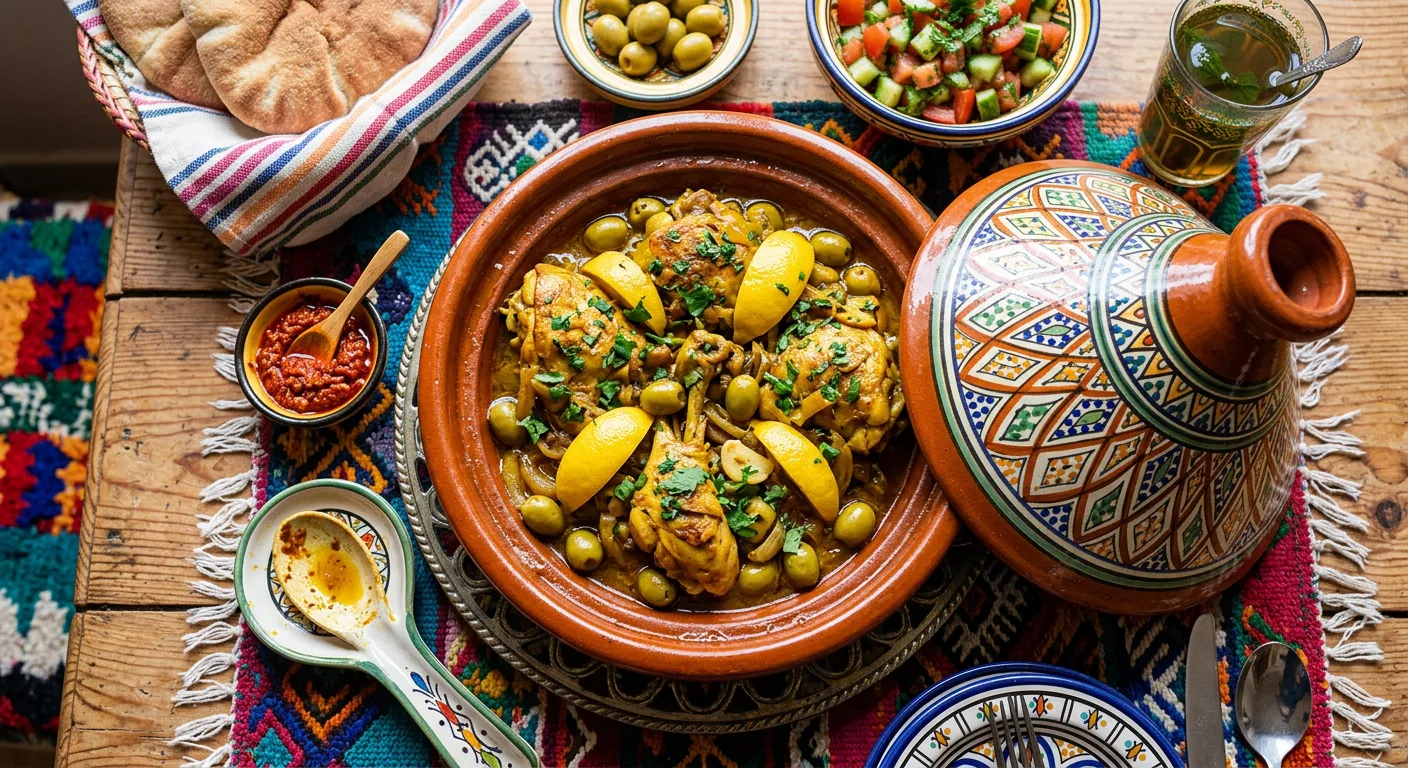
Mountain food is some of Morocco's best: a steaming tagine cooked over a wood fire in a Berber gîte after a long day's walk, bread baked that morning, and endless glasses of sweet mint tea. The same tagine-and-couscous tradition runs from the Marrakech souks to the highest village kitchens.
In this guide
What you'll eat on the trail
Trekking days in the Atlas revolve around hearty, simple food: a big communal tagine at the gîte, bread and olive oil, lentils and fresh fruit for energy. Beyond the trail staples, these specialities reward the curious eater.
- Tagine — the muleteer's and trekker's staple, slow-cooked over coals (lamb with prunes, chicken with preserved lemon, vegetable).
- Couscous — traditionally the Friday family meal, steamed with seven vegetables; a frequent gîte dinner.
- Berber omelette — eggs cooked in a tagine dish with tomato and onion, a classic mountain breakfast or lunch.
- Harira — the hearty tomato-lentil soup; warming after a cold day above the refuge.
- Amlou — almond, argan oil and honey paste eaten with bread, dense trail fuel from the Souss and mountain regions.
The tea ritual
Mint tea — green tea, fresh mint and plenty of sugar, poured from height — is the thread running through Berber hospitality. On a trek you will be offered it in villages, at rest stops and at every gîte, and accepting it graciously is part of the mountain experience. The sugar, incidentally, is welcome calories at altitude.
Eating well and safely while trekking
Morocco is largely Muslim, so pork is rare and alcohol is essentially unavailable in the mountain villages — carry your own if you want a summit-night drink. Drink only treated water on the trail: village taps and streams should be purified with tablets or a filter. Food cooked fresh and hot at gîtes and refuges is generally safe and very welcome. Vegetarians do well — vegetable tagines, couscous, lentil soups and bread are everywhere on the mountain.
Frequently asked
What food do you eat while trekking in the Atlas?
Mostly tagine cooked over a fire at village gîtes and the Toubkal refuge, plus bread, Berber omelette, lentils, soups and fresh fruit. Guides and muleteers carry supplies; on supported treks a cook prepares hot meals at each stop. It's simple, filling food well suited to long days on the mountain.
Can you get alcohol in the mountain villages?
Generally no. The Atlas villages are conservative and Muslim, and alcohol is not sold there. If you want a drink to mark a summit, buy it in Marrakech and carry it up discreetly — and be mindful of altitude, which amplifies its effects.
Is Moroccan trekking food good for vegetarians?
Very. Vegetable tagines, couscous, lentil and bean soups, Berber omelettes, bread and fruit are staples in the mountains. Tell your guide in advance and gîtes will happily cook meat-free.
Planning a trip?
Let our team handle the details.
Tell us your dates and style and we'll send a written itinerary and a transparent quote within 24 hours.
Request an itineraryKeep reading
Culture
Morocco Etiquette & Customs
A little cultural awareness goes a long way in the Berber villages of the High Atlas. Dress modestly, greet warmly, ask before photographing people, use your right hand, tip your guide and muleteers fairly, and embrace the unhurried pace of mint tea and mountain hospitality.
Planning
The Best Time to Visit Morocco
For trekking the High Atlas, April–June and September–October are the prime windows — snow has cleared from the Toubkal trails, the valleys are green and the nights are crisp rather than brutal. The rest of Morocco shifts season by season, but the mountain calendar is what should anchor a trekking trip.