For active couples, Morocco offers a rare honeymoon: trek a Berber valley in the High Atlas by day and return to a candlelit riad or mountain lodge by night, then add desert dunes or the Atlantic coast. Here is how to blend adventure and romance into one unforgettable trip.
In this guide
Why Morocco works for an adventurous honeymoon
Few destinations let a couple summit a snow-tinged peak and dine under lanterns the same week. On a single Morocco honeymoon you can walk valley to valley through the High Atlas, sleep at a romantic mountain lodge above Imlil, soak in a palace hammam back in Marrakech, and end on a luxury desert camp or the Atlantic ramparts of Essaouira. The hospitality is woven through it all — you'll be looked after whether you're in a riad or a remote gîte.
The sweet spot is a private, tailor-made trip: your own pace on the trail, a guide who carries the logistics, and the freedom to linger over an Atlas sunset. Tell your riads and mountain lodges it's a honeymoon and most add thoughtful touches — rose petals, pastries, a private terrace dinner.
The most romantic bases
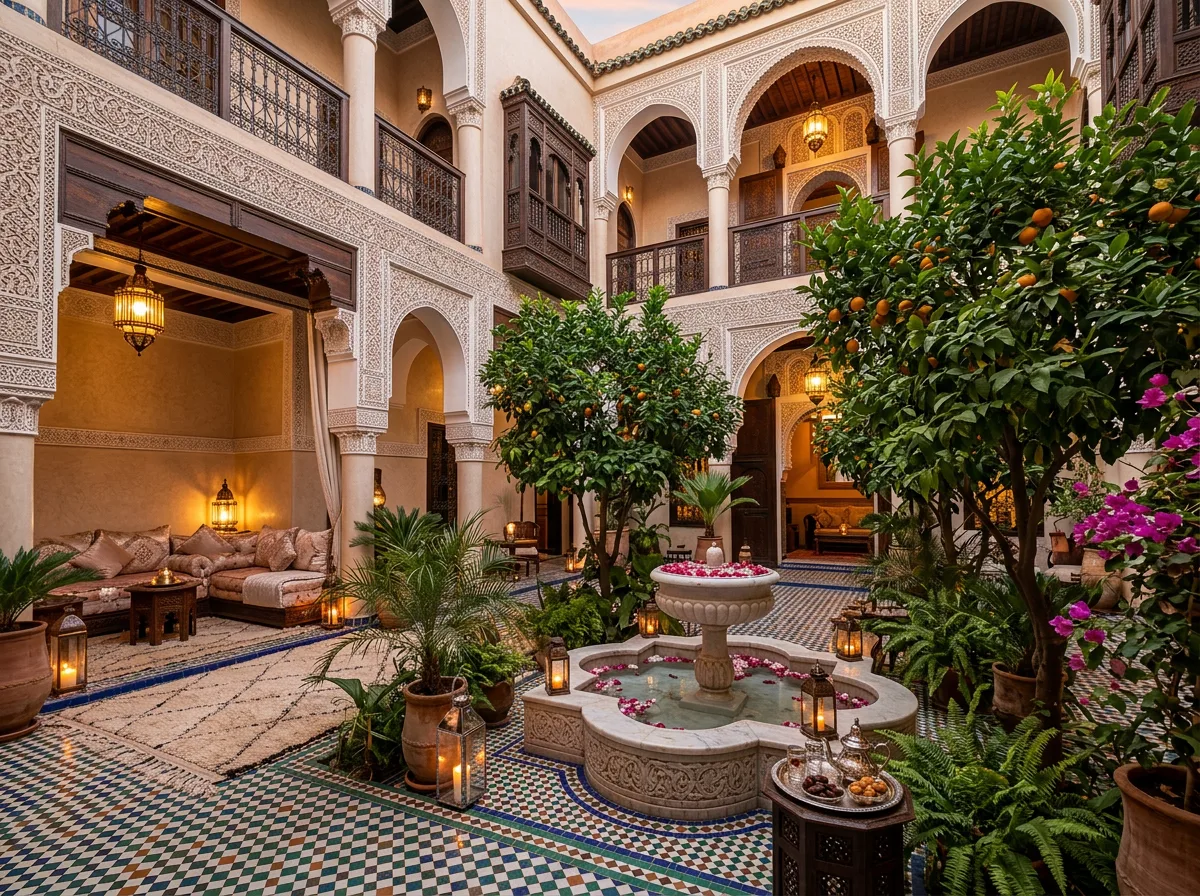
Marrakech has the greatest concentration of luxurious riads — plunge-pool suites, terraces with Atlas views, in-house hammams and private chefs — and is the natural base before and after the mountains. Look to the northern medina near Mouassine or the Bab Doukkala quarter: quieter than the tourist core, walkable to everything. For the mountain nights of the trip, a handful of beautiful kasbah lodges around Imlil and the Toubkal foothills offer fireside dinners and terrace views straight onto the peaks — a romantic counterpoint to the city.
Beyond the Atlas, Essaouira on the Atlantic — wind-blown, bohemian, brilliant for seafood — and the quieter beaches south of Agadir give a couple genuine downtime after the trekking. Fes adds medieval-medina atmosphere for those who want a culture day between walks.
Desert luxury camps
A night at a luxury desert camp — at Erg Chebbi near Merzouga, or the wilder Erg Chigaga near M'Hamid — is consistently cited as the most memorable experience of a Morocco honeymoon. The best camps offer permanent ensuite tents with proper beds, private fire pits, candle-lit dinners under the stars and private sunrise camel rides before the tour groups arrive. We work with a small number of camps where the balance of isolation, service and genuine luxury is right — ask us to match you with the appropriate one for your style.
- Erg Chebbi (Merzouga): the most accessible Sahara — 8–9 hours from Marrakech; closest camp to a luxury-hotel standard of comfort.
- Erg Chigaga (M'Hamid): wilder, more remote, fewer people — involves a 4WD transfer across the piste, which is an adventure in itself.
- Both: book an ensuite tent or a private dome; the difference between budget and luxury camps is significant.
A suggested 7–10 day romantic trekking route
For 7 days: two nights in Marrakech (riad, hammam, medina dinner); two nights trekking valley to valley above Imlil with a mountain-lodge stay; one night over the Atlas at Aït Ben Haddou; one night at a luxury desert camp; back to Marrakech. For 10 days: add two nights in Essaouira at the end — the Atlantic wind, the white ramparts and the seafood are perfect decompression for tired legs.
- Marrakech (2 nights): riad with plunge pool; hammam for two; rooftop dinner.
- High Atlas trek (2 nights): a Berber-village walk above Imlil; fireside lodge dinners with peak views.
- Atlas crossing (1 night): over the Tizi n'Tichka to Aït Ben Haddou.
- Sahara (1–2 nights): afternoon dune sunset, private camp dinner, sunrise camel ride.
- Essaouira (1–2 nights, optional): ramparts, fresh seafood and a slower pace.
Frequently asked
When is the best time for a Morocco trekking honeymoon?
Spring (April–June) and autumn (September–October) are ideal: the Toubkal-area trails are snow-free and green, city weather is comfortable, and the desert nights are cool and photogenic. Winter suits the Sahara and the cities but the high mountains need snow skills. Avoid the inland heat of July–August.
What are the most romantic riads in Marrakech?
We don't list specific properties on commission, but the riads that consistently deliver for honeymoon couples share certain traits: a private plunge pool or hammam, no more than eight rooms so it feels genuinely intimate, an in-house chef for private dinners, and a terrace with Atlas views. Ask us for a curated shortlist matched to your style and budget.
Is Morocco expensive for a honeymoon?
A private Marrakech–Atlas–Sahara honeymoon (luxury riads, private driver, luxury camp) realistically runs from around US$300–600 per couple per day in-country. A 7-day trip for two runs approximately US$2,500–5,000 excluding international flights, depending on the standard of accommodation and camp chosen.
Do riads offer honeymoon packages?
Most will add romantic touches — rose petals, a bottle of wine (Morocco is a wine-producing country), a private terrace dinner — when told in advance. Very few have formal packages; it is more organic than that. Let your riad know the occasion before arrival.
Is Morocco suitable for LGBTQ+ honeymooners?
Same-sex relationships are criminalised under Moroccan law, and public displays of affection between same-sex couples can attract unwanted attention or legal risk. Morocco is not currently a recommended destination for LGBTQ+ couples seeking an open, celebratory honeymoon — the experience in the medinas and smaller towns would require significant discretion.
Planning a trip?
Let our team handle the details.
Tell us your dates and style and we'll send a written itinerary and a transparent quote within 24 hours.
Request an itineraryKeep reading
Planning
The Best Time to Visit Morocco
For trekking the High Atlas, April–June and September–October are the prime windows — snow has cleared from the Toubkal trails, the valleys are green and the nights are crisp rather than brutal. The rest of Morocco shifts season by season, but the mountain calendar is what should anchor a trekking trip.
Planning
Morocco Travel Costs & Budget
An Atlas trek can be done on almost any budget. The core costs are predictable: a licensed mountain guide runs roughly MAD 500–800 (US$50–80) per day, mules around MAD 150–200 per day, and refuge or gîte nights are modest. Budget independent trekkers manage on US$60–100 per day; fully supported private treks with transfers and full board run US$150–300+ per day.