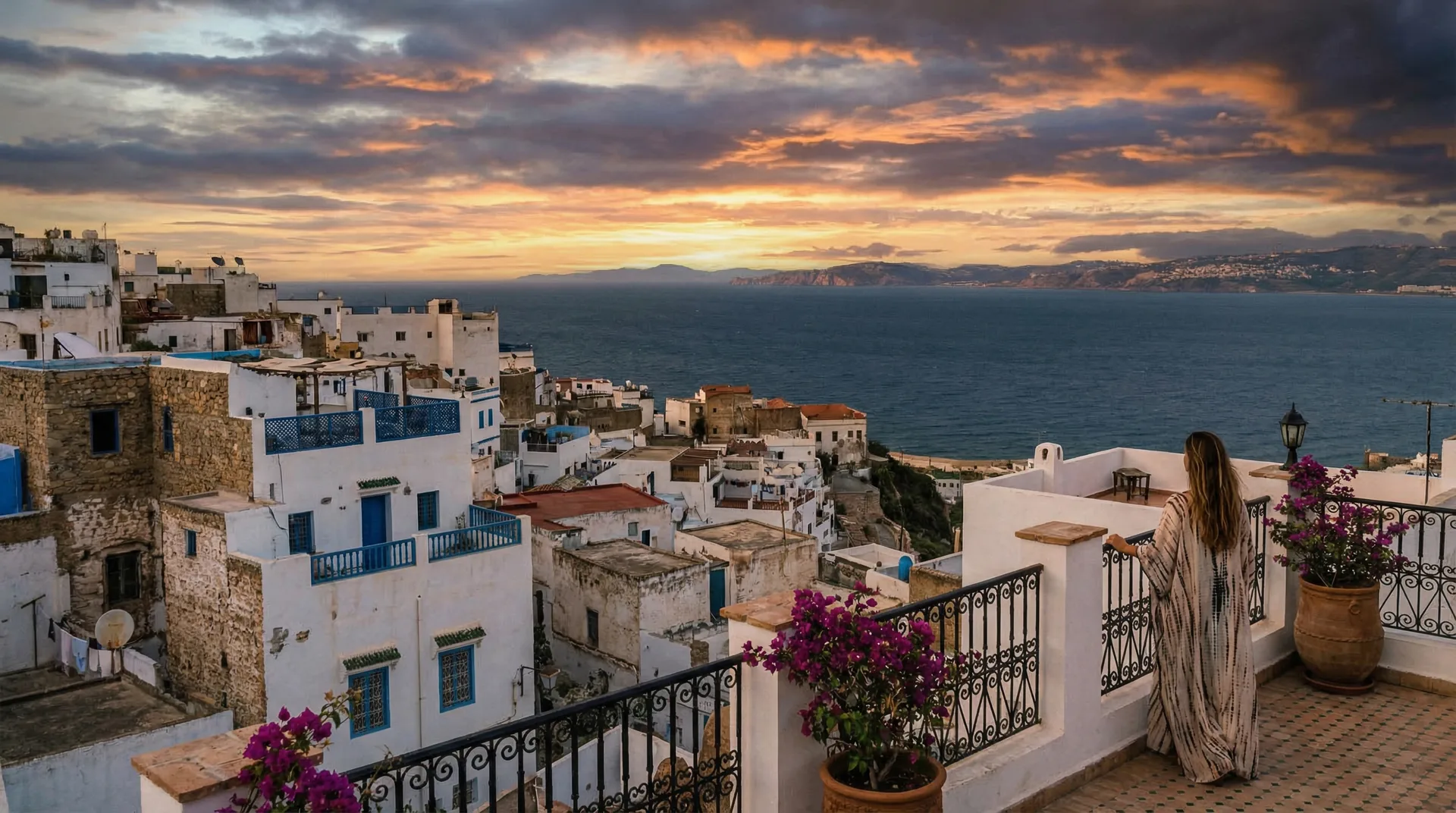
Two weeks is the ideal length to put a proper High Atlas trek at the heart of a full Morocco loop: a multi-day Toubkal-area traverse, the imperial cities, the kasbah road, a Sahara night and the Atlantic coast — all at an unhurried, well-acclimatised pace.
In this guide
Why is 14 days ideal for a trekking trip?
Fourteen days gives you what shorter trips force you to choose between: a genuine 3–4 day mountain trek with time to acclimatise and summit, plus the cultural sweep of the cities and the desert. You can begin in the north, trace Fes, Meknes and Chefchaouen, then base in Imlil for the High Atlas trek before crossing to the kasbah road and the Sahara and finishing in Marrakech — a full circle with the walking given the days it deserves.
The driving between regions is real but beautiful — the Azrou cedars, the Dadès and Todra gorges, the Drâa Valley — so the transfers feel like part of the trip. Spaced across two weeks, the trek sits comfortably in the middle, with rest days on either side rather than a rushed dash up and down.
Day-by-day: the grand circuit
This outline assumes arrival in Casablanca (CMN) and departure from Marrakech (RAK), a classic open-jaw routing that removes all backtracking. Days can be adjusted for flights, pace and personal interests.
- Day 1: Arrive Casablanca — Hassan II Mosque and the corniche; overnight near the port.
- Days 2–3: Fes — the Chouara tanneries, Bou Inania madrasa and the souks with a guide.
- Day 4: Meknes (Bab Mansour, the granaries) and Roman Volubilis at golden hour.
- Day 5: Chefchaouen — the blue medina and a Rif foothills warm-up walk.
- Day 6: South via Azrou cedars to Marrakech; gear check, early night.
- Day 7: To Imlil (1,740 m); acclimatisation walk; Berber-village gîte.
- Day 8: Village traverse to Tacheddirt over the Tizi n'Tamatert.
- Day 9: Trek to the Toubkal Refuge (3,207 m); rest and acclimatise.
- Day 10: Pre-dawn summit of Jbel Toubkal (4,167 m); descend to Imlil.
- Day 11: Over the Tizi n'Tichka to Aït Ben Haddou and Ouarzazate.
- Day 12: Dadès and Todra gorges to the desert edge.
- Day 13: Erg Chebbi dunes — camel trek, camp night, sunrise on the sand.
- Day 14: Long drive back to Marrakech — medina, hammam, departure.
How much driving and walking does the trip involve?
On the driving days the circuit covers a fair distance, but they're spaced around the four-day trek so the rhythm stays comfortable — typically 2–5 hours of road on transfer days, with the long Sahara return being the exception. The trek itself is the physical core: 4–7 hours of walking a day over rough terrain, with the summit day the longest and highest. A mule carries the heavy kit, so you walk with only a daypack.
Variants and add-ons
If you'd rather not summit, swap the Toubkal days for a longer, gentler valley traverse through the Azzaden and Ourika valleys — same villages and gîtes, no altitude push. If Essaouira calls, trade the final Marrakech evening for two coastal nights (3 hours west) to rest tired legs by the Atlantic. For a wilder desert, add a night at Erg Chigaga, the remote alternative to Erg Chebbi reached by a 4WD piste.
Frequently asked
Is 14 days enough to trek and tour Morocco?
Yes — two weeks is ideal. It accommodates a full 3–4 day High Atlas trek with proper acclimatisation, plus the imperial cities, the kasbah road, the Sahara and Marrakech, without feeling rushed. The trek sits in the middle with rest on either side, which is exactly how altitude should be managed.
What is the best 14-day trekking route in Morocco?
An open-jaw circuit from the north (Casablanca or Fes) to Marrakech, via Chefchaouen, then a Toubkal-area trek from Imlil, the kasbah road and the Sahara. Putting the trek roughly mid-trip lets you acclimatise during the early cultural days and recover on the desert leg afterwards.
What is the best time of year for a 14-day trekking trip?
April to June and September to October. Spring and autumn give snow-free Toubkal trails, comfortable city weather and walkable desert days. Summer bakes Marrakech and the dunes, and winter turns the summit into a mountaineering objective requiring crampons and a guide.
Should I fly open-jaw for a two-week trekking trip?
Yes — fly into Casablanca or Fes and out of Marrakech (or vice versa). The open-jaw removes 1–2 days of backtracking and leaves more time on the mountain. Open-jaw fares are usually comparable to returns.
Can I do the trek and circuit by public transport?
The northern cities are well linked by train and CTM bus, and you can reach Imlil from Marrakech by grand taxi. But the trek itself needs a licensed guide and mule, and the southern gorges and Sahara are poorly served by public transport — a private driver is strongly recommended for that half.
Planning a trip?
Let our team handle the details.
Tell us your dates and style and we'll send a written itinerary and a transparent quote within 24 hours.
Request an itineraryKeep reading
Itineraries
Morocco Itinerary: 10 Days
Ten days is the sweet spot for a trekking-led Morocco trip — long enough to summit Toubkal, traverse Berber valleys and still add the Sahara's contrast, with breathing room to acclimatise and recover.
Planning
The Best Time to Visit Morocco
For trekking the High Atlas, April–June and September–October are the prime windows — snow has cleared from the Toubkal trails, the valleys are green and the nights are crisp rather than brutal. The rest of Morocco shifts season by season, but the mountain calendar is what should anchor a trekking trip.