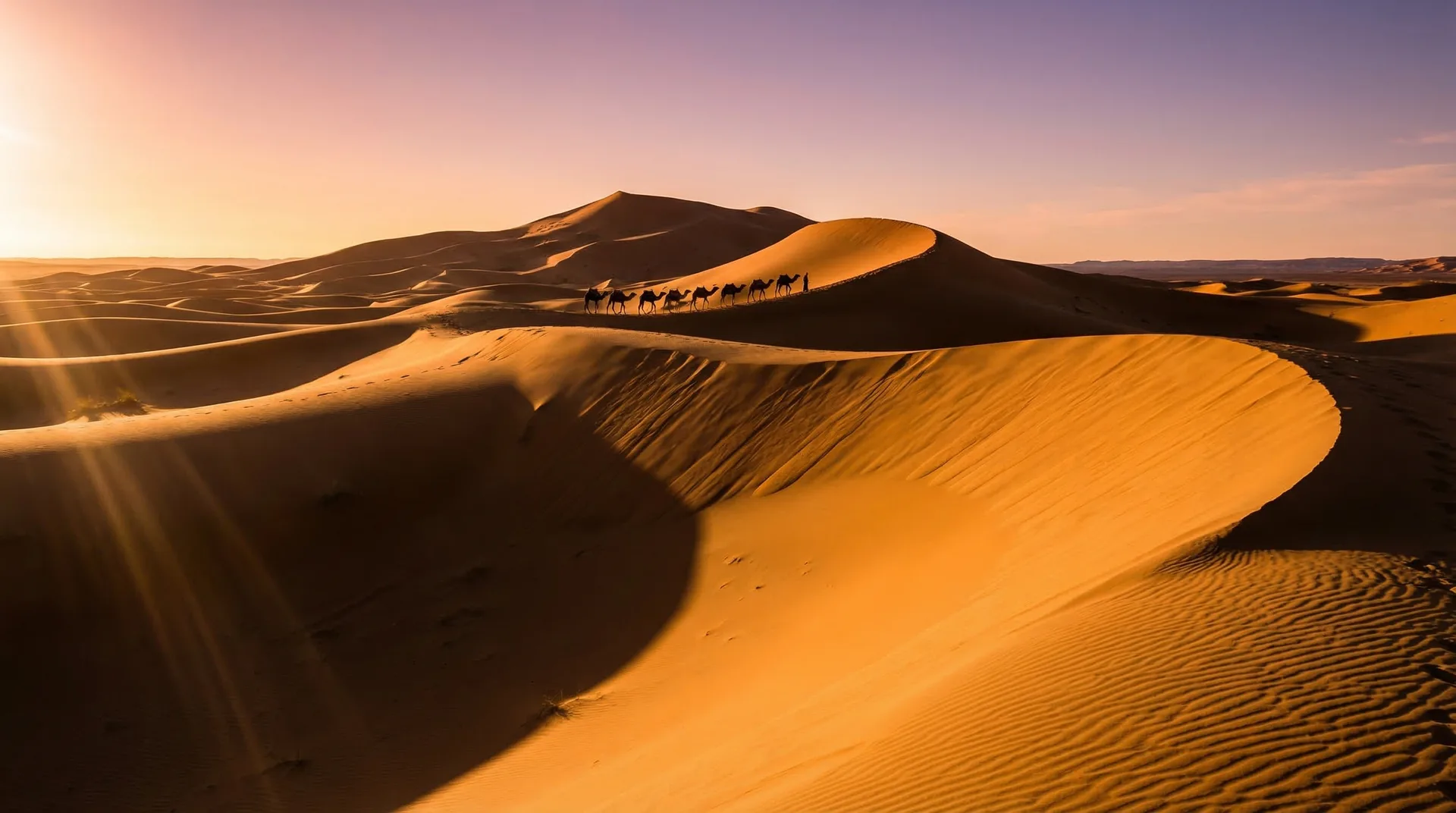
On a clear Marrakech morning the High Atlas stands right there on the southern skyline — a snow-streaked wall that looks far closer than it has any right to. What surprises most visitors is that it is genuinely only an hour away. Of all the ways to break up a city stay, a day in these mountains is the one we push hardest: the altitude shaves about 10 °C off the heat, the country changes completely, and the Amazigh (Berber) villages of the valleys carry their own language, building style and rhythm of life.
Two valleys, two moods
Two classic routes leave Marrakech for the range — the Imlil valley and the Ourika valley. They run side by side, split by a ridge, and feel entirely different. Imlil, at 1,740 m, is the launch point for Toubkal, North Africa's highest peak — smaller, quieter and far more dramatically set. Ourikais greener, its river road stringing village after village together up to the Setti Fatma waterfalls — busier at weekends but lush. Choose by appetite: Imlil for height and Berber culture, Ourika for colour and an easy day.
For the wider picture, from Toubkal to the Amazigh villages, see what the Atlas Mountains are famous for.
Imlil: what to do once you arrive
You can walk the length of Imlil in fifteen minutes, but the real reward is the walking above it. The stone path up to Aroumd (Aroum), a Berber village at 1,940 m, takes around 45 minutes, and the views back down the Ait Mizane valley repay the modest effort many times over. Aroumd is a cluster of flat-roofed stone houses whose families have worked these terraces since before the Almohad dynasty.
With more in the tank, the path pushes on another two hours to the Tizi n'Tamatert pass at 2,279 m, where the whole range opens out in front of you. That needs solid footwear and a guide alongside — we fold it into a longer trekking programme.
Ourika and the Setti Fatma waterfalls
The Ourika road runs 66 km out of Marrakech, gaining height gradually up a gorge of red earth and terraced walnut and apple orchards. It ends at Setti Fatma, a village at 1,500 m where the valley pinches in and a chain of seven waterfalls spills down the rock. The first fall is a twenty-minute walk from the village; the upper falls mean a rougher scramble of perhaps forty minutes more, so wear proper shoes.
Come on a weekday if you can — at weekends Marrakchi families pour in and the riverside restaurants fill fast. The late-summer moussem (religious festival) at Setti Fatma pulls in crowds from across the region.
Lunch in a Berber home
The meal is, without fail, a high point of any Atlas day. We arrange it in a family home rather than the tourist restaurants packed around the car parks. Expect harira (slow-cooked chickpea and tomato soup), a shared lamb-and-vegetable tagine, khobz baked that morning, olive oil pressed from the valley's own trees, and whatever fruit is in season. It comes to about US$12–15 a head, eaten low at a cushioned table on a roof terrace with the valley falling away below you.
Practical logistics
A standard day leaves Marrakech at 08:00 and returns by 18:00, which is full without ever feeling rushed. We always run a driver-guide who pairs the driving with real mountain knowledge — guides hired cold at the trailhead can be good value but need arranging separately. Bring layers whatever the month: the Marrakech heat does not climb the mountain with you, and the sun bites harder at altitude, so pack sun cream.
On vehicles: the Ourika road to Setti Fatma is sealed the whole way and fine in an ordinary saloon. The Imlil road asks for nothing more than a comfortable 4x4, though the last stretch into the village can get dusty. Both routes are well worn and safe.
Combining both valleys
Give it two nights out of Marrakech and you can link both valleys with a night in a mountain gîte (a simple village lodge) — a far richer experience than a day trip. The Imlil gîtes are well kept, wood-warmed through winter and astonishingly still after dark. We offer this as an option within several of our itineraries from Marrakech.
Frequently asked
How far is Imlil from Marrakech?
Imlil lies 63 km south of Marrakech — usually one hour to one hour fifteen in a private vehicle on the P2017 through Asni. The road climbs steadily from roughly 450 m up to 1,740 m at the village. Public minibuses from Bab er Rob run to Asni in about 40 minutes with onward transport to Imlil, but the timings get unpredictable, which is why we always run our own vehicle to the trailhead.
Is the Ourika Valley worth visiting?
Yes — especially if you are after colour and village life rather than serious altitude. The Ourika road threads through Berber settlements, terraced fields and walnut groves up to the Setti Fatma waterfalls. Weekends draw Marrakchi families picnicking by the river, so go midweek for calm. Pair it with a Berber lunch at one of the riverside houses and it makes a lovely, gentle day.
Do I need to be fit to do a High Atlas day trip?
Not for the standard circuit. The drive to Imlil and the walk up to Aroumd is an easy hour on a good stone path. Fitter walkers can take on tougher half-day legs in the Ait Mizane valley. A full Toubkal ascent (4,167 m, the highest peak in North Africa) is a different animal — two days with a guide, and not something to attempt as a day trip.
What is the best time of year to visit the Atlas Mountains?
April to June and September to November are the pick. Spring brings wildflowers and snowmelt thundering down the waterfalls; autumn delivers clear air and harvest colour. Winter (December–February) is cold up the valleys and the Imlil road can ice over or close briefly after heavy snow — stunning if you come prepared. July and August are warm but pleasant at altitude, and a relief after the Marrakech heat.
Can you visit a Berber village on a day trip?
Yes. Most of our day programmes include Aroumd (say 'Aroum'), perched above Imlil at 1,940 m. Quieter and less trodden than Imlil itself, it shows you genuine Amazigh (Berber) life — flat-roofed stone houses, shared water channels, weaving done in the doorways. We set up lunch in a family home rather than a tourist restaurant.
How much does a private Atlas Mountains day trip from Marrakech cost?
A fully private day with a licensed driver-guide usually runs US$120–180 per vehicle (not per person), depending on the route and the vehicle. That covers transport and guiding; lunch is on top, around US$10–20 per person at a good Berber table. Shared tours come in at US$25–40 per person but lock you into a fixed route and clock.
Ready to leave the medina behind?
We'll build your ideal Atlas day.
A morning in Imlil with a Berber lunch, a waterfall walk up the Ourika, or a two-day push to Toubkal base camp — Atlas Trekking Co. takes care of every piece: private vehicle, mountain guide, and the family home no guidebook will point you to.
Plan an Atlas excursion