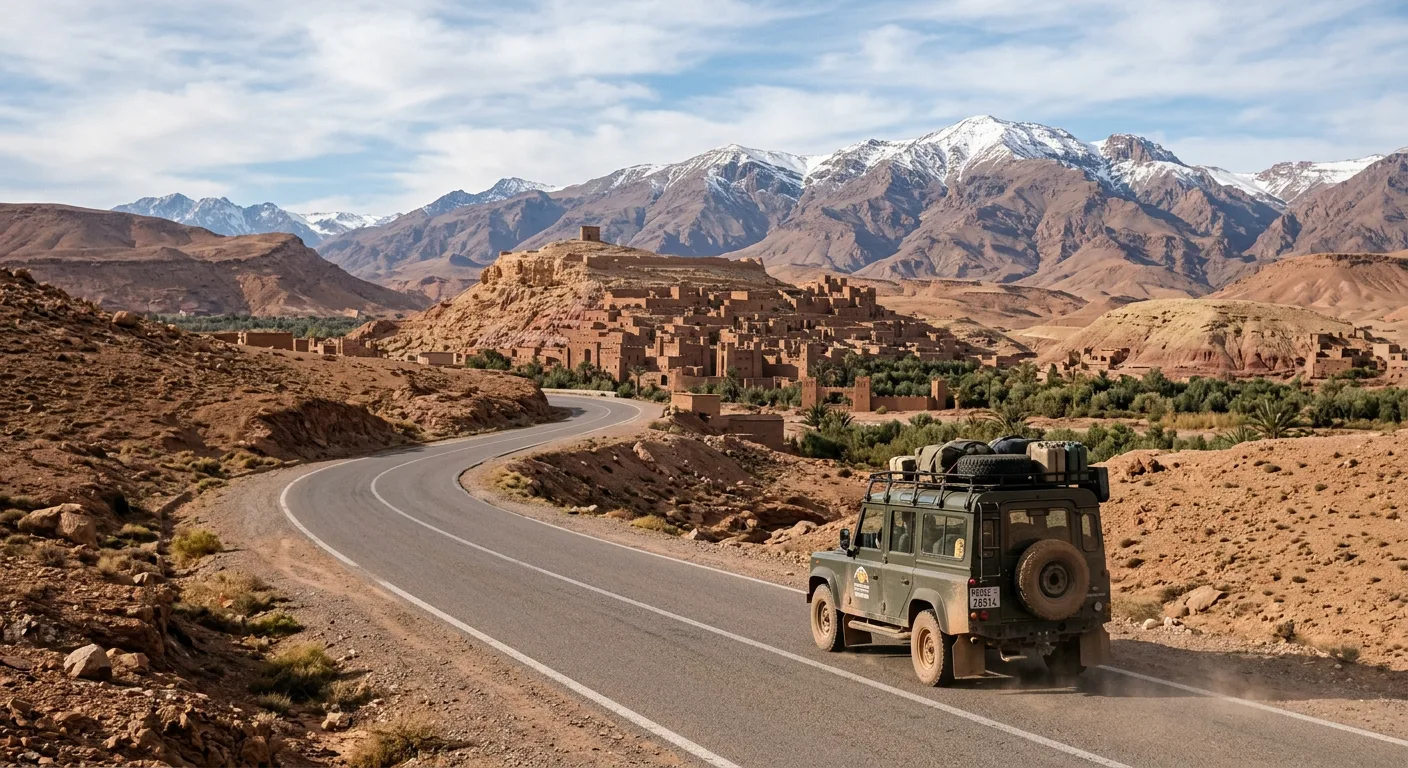
Most trekkers — including US, Canadian, UK, EU/Schengen, Australian, New Zealand and Japanese passport holders — enter Morocco visa-free for up to 90 days, far longer than any Atlas itinerary needs. You need a passport valid for at least six months beyond arrival, ideally with the off-mountain admin sorted before you fly so day one can be a trailhead day.
Who can enter visa-free
Morocco grants visa-free tourist entry, typically up to 90 days, to citizens of a long list of countries — among them the United States, Canada, the United Kingdom, Ireland, all EU/Schengen states, Australia, New Zealand, Japan and many more. You arrive, clear immigration and receive an entry stamp. A two-week Toubkal-and-traverse trip sits comfortably inside that allowance.
Always confirm your specific nationality's status before booking, as policies can change. If your country is not on the visa-free list, apply for a visa or an e-visa in advance — and leave margin so a delay doesn't eat into your mountain dates.
At the border
Have these ready and entry is quick, even at busy arrival points like Marrakech (RAK), the usual gateway for the High Atlas, and Casablanca (CMN).
- A passport valid for at least six months beyond your arrival date.
- Proof of onward or return travel (occasionally requested).
- Your accommodation or trek-operator address for the arrival card.
- An entry stamp — keep it; you'll need the matching exit stamp when you leave.
Staying longer
The standard tourist entry is 90 days — ample even for a long mountain season. To stay beyond it, apply for an extension at a local police station before your stamp expires, rather than relying on a quick border exit-and-return, which is at the officer's discretion.
Frequently asked
Do I need a visa to trek in Morocco?
Most nationalities — including US, Canadian, UK, EU, Australian, NZ and Japanese passport holders — do not. You enter visa-free for up to 90 days, well beyond any Atlas trekking itinerary. Confirm your specific passport's status before you travel.
How long can visitors stay in Morocco?
Up to 90 days on the standard visa-free entry. Extensions are possible through a local police station before your entry stamp expires.
What passport validity does Morocco require?
A passport valid for at least six months beyond your date of arrival is the safe standard, with at least one blank page for the entry stamp.
Planning a trip?
Let our team handle the details.
Tell us your dates and style and we'll send a written itinerary and a transparent quote within 24 hours.
Request an itineraryKeep reading
Planning
The Best Time to Visit Morocco
For trekking the High Atlas, April–June and September–October are the prime windows — snow has cleared from the Toubkal trails, the valleys are green and the nights are crisp rather than brutal. The rest of Morocco shifts season by season, but the mountain calendar is what should anchor a trekking trip.
Planning
Morocco Travel Costs & Budget
An Atlas trek can be done on almost any budget. The core costs are predictable: a licensed mountain guide runs roughly MAD 500–800 (US$50–80) per day, mules around MAD 150–200 per day, and refuge or gîte nights are modest. Budget independent trekkers manage on US$60–100 per day; fully supported private treks with transfers and full board run US$150–300+ per day.
Practical
Getting Around Morocco
For a trekking trip the key journey is Marrakech to the trailhead — usually the 90-minute road up to Imlil for Toubkal, or the Ourika valley for day walks. The ONCF trains serve the cities, but the mountains run on private transfers and shared grand taxis. The right mix depends on your route and pace.