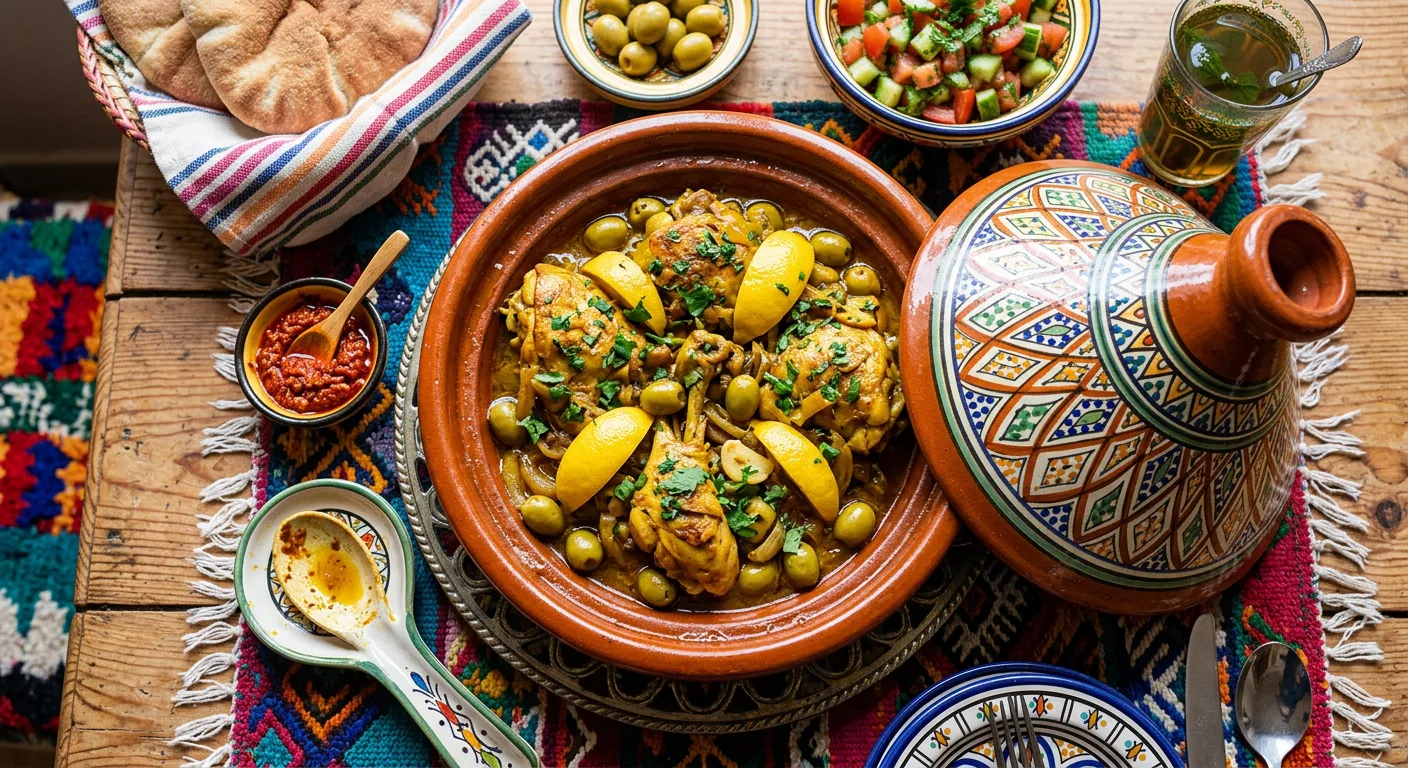
Marrakchi cooking rarely matches what visitors picture. The tagine and couscous you have met in restaurants back home are the genuine article — but they sit alongside dishes that seldom leave the country: lamb braised low and slow in aged butter and honey, wafer pastry packed with pigeon and almond, and a bread culture so woven into daily life that the ovens still glow past midnight. After a few hard days on the Toubkal trails, this is the table you have earned. Here is where to start.
The dishes worth hunting down
Pastilla (b'stilla) is the one guests most often call a revelation. A broad round pie of paper-thin warka pastry, stuffed with braised pigeon (or chicken) shredded through egg, cinnamon and almonds, then dusted with icing sugar — that sweet-and-savoury collision is pure Andalusia. It is feast-day food, rarely cooked at home, and a fair measure of any serious Moroccan kitchen.
Mrouzia is lamb shoulder braised with smen (a sharp, aged butter), honey, almonds and a layered spice blend. It belongs to Eid al-Adha by tradition but turns up on good menus all year. The sweetness is gentler than it sounds; the smen lends a depth nothing else in the Moroccan repertoire quite reaches.
Mechoui — whole or half lamb roasted slowly in a clay pit until the meat slides off the bone — is sold from dedicated mechoui cellars in the medina, usually through the afternoon ahead of the evening cut. You buy by weight, eat with your fingers and a dab of cumin salt, and wash it down with cold water. Few meals in Morocco land better with a tired trekker. Our guides know exactly where to go.
Charcoal grills on Jemaa el-Fna
The square's food stalls rise out of nowhere at dusk and trade past midnight. It is pure theatre: numbered pitches, vendors hollering, charcoal smoke, trays of raw kefta, merguez and brochettes. Ordered straight and at a price you have agreed, the food is genuinely good. Grilled kefta (minced lamb with parsley and cumin) with flatbread and a smear of harissa is the order to measure the rest against.
Wave off the set tourist menus pushed at new arrivals; per-item prices are reliably fair once you say exactly what you want. Snail soup, ladled from huge cauldrons, and makouda (potato fritters) are the local fast snacks — cheap, filling and worth a go, particularly when you are still rebuilding after the mountains.
Medina kitchens and the riad dinner
The medina's best sit-down spots gather around Mouassine, Rue Riad Zitoun el-Qedim and the lanes running off Bab Doukkala. A good tell: skip the places fronting a wall of menu photographs. Their absence usually marks a kitchen that trusts its cooking over its passing tourist trade.
A riad dinner is another thing altogether. Many riads put out a set evening meal cooked by their own household — rarely a chef, more often a woman from the neighbourhood who has been making these dishes her whole life. It frequently outshines any restaurant: proper harira, couscous rolled by hand, a tagine that has been ticking over since noon. Reserve ahead, always. We build riad dinners into every private itinerary.
Bread, olive oil and argan
Bread carries real reverence in Morocco — what is left over is never binned but set on a ledge for whoever needs it. The medina's communal ferran (wood-fired oven) still bakes the morning dough that families bring round by hand. Tourists rarely find it; your guide can lead you there.
Culinary argan oil — pressed from roasted argan nuts — runs deep and nutty, superb over warm bread or trickled across couscous. The version to chase is amlou: a thick paste of argan oil, almonds and honey that works as Morocco's answer to peanut butter and turns up at breakfast. Source it from a women's argan cooperative in the Mellah or the souks; street-seller grade is a gamble.
Drinks: mint tea, coffee and juice
Moroccan atay (mint tea) is gunpowder green steeped with fresh spearmint and a serious dose of sugar, poured from height to froth it — and it is exactly the restorative you want after a long day on your feet. Accepting it is a social gesture; turning it down in someone's home reads as a small rudeness. In souk cafés a glass runs 5–10 MAD and rents you a table for as long as you like.
Juice stalls in and around Jemaa el-Fna pour orange, pomegranate and mixed-fruit blends for 8–15 MAD a glass — the orange, pressed to order, is exceptional and a quick way to claw back some energy. Morocco is largely dry; alcohol appears in tourist restaurants and hotels but not in local medina cafés. Read our full Marrakech destination guide.
Frequently asked
What is the must-eat dish in Marrakech?
Mrouzia — lamb shoulder braised slowly with smen (aged butter), honey and a ras el hanout spice mix — almost never leaves Moroccan kitchens or the finest Marrakchi tables, and it is exactly the meal we point trekkers toward on their first night down from the mountains. Pastilla, the flaky pie of pigeon or chicken laced with almonds, egg and icing sugar, is the other dish guests most often call a revelation.
Is Jemaa el-Fna safe to eat at?
The square's stalls are broadly fine — everything is grilled to order over live charcoal and the throughput is enormous. Your main exposure is a price squabble, so settle the figure before you sit and make clear you are not taking the tourist set menu unless you actually want it. The grilled kefta, merguez and brochettes are first-rate, and just the refuel a hungry trekker is after.
What are the best streets for food in the Marrakech medina?
For sit-down places, aim at Rue Riad Zitoun el-Qedim and the lanes threading off Mouassine. The Mellah near Place des Ferblantiers turns out superb fried fish from its stalls. Rue Bab Doukkala hides several solid local kitchens the guidebooks have not caught up with yet.
Are there good vegetarian options in Marrakech?
Plenty — Moroccan cooking leans heavily on vegetables to begin with, which suits trekkers wanting to load up without meat. Zaalouk (smoky aubergine), taktouka (tomato and pepper salad), bissara (dried broad-bean soup) and the spread of small dishes called 'salade marocaine' are all meat-free and excellent, and a vegetable tagine turns up on every menu.
What is argan oil and should you buy it in Marrakech?
Argan oil is pressed from the nut of the argan tree, which grows nowhere on earth but south-western Morocco. The roasted, culinary version is deep and nutty, brilliant over couscous or torn bread; the unroasted, cosmetic grade goes on skin and hair. Buy from a cooperative shop in the medina or a reputable grocer rather than a street seller, where grade and price swing wildly.
When should you eat in Marrakech — are restaurant hours different from Europe?
Meals here run later than in northern Europe — handy to know when you roll back into town off a long trek. Lunch sits around 12:30–3 pm; dinner gets going from 8 pm, with locals often at the table by 9 or 10. Many of the best riads serve an evening meal by reservation only, opening from 7:30 pm for early-eating visitors. During Ramadan, restaurants stay shut until iftar at sunset and then fill in minutes — book ahead.
Eat like you live here
Our food walks reach past the restaurants — into homes, cooperatives and the ferran.
Atlas Trekking Co. runs half-day and full-day food experiences in Marrakech — the perfect soft landing before or after a trek — for guests who want to understand what is on the plate, not just photograph it.
Enquire about a food experience