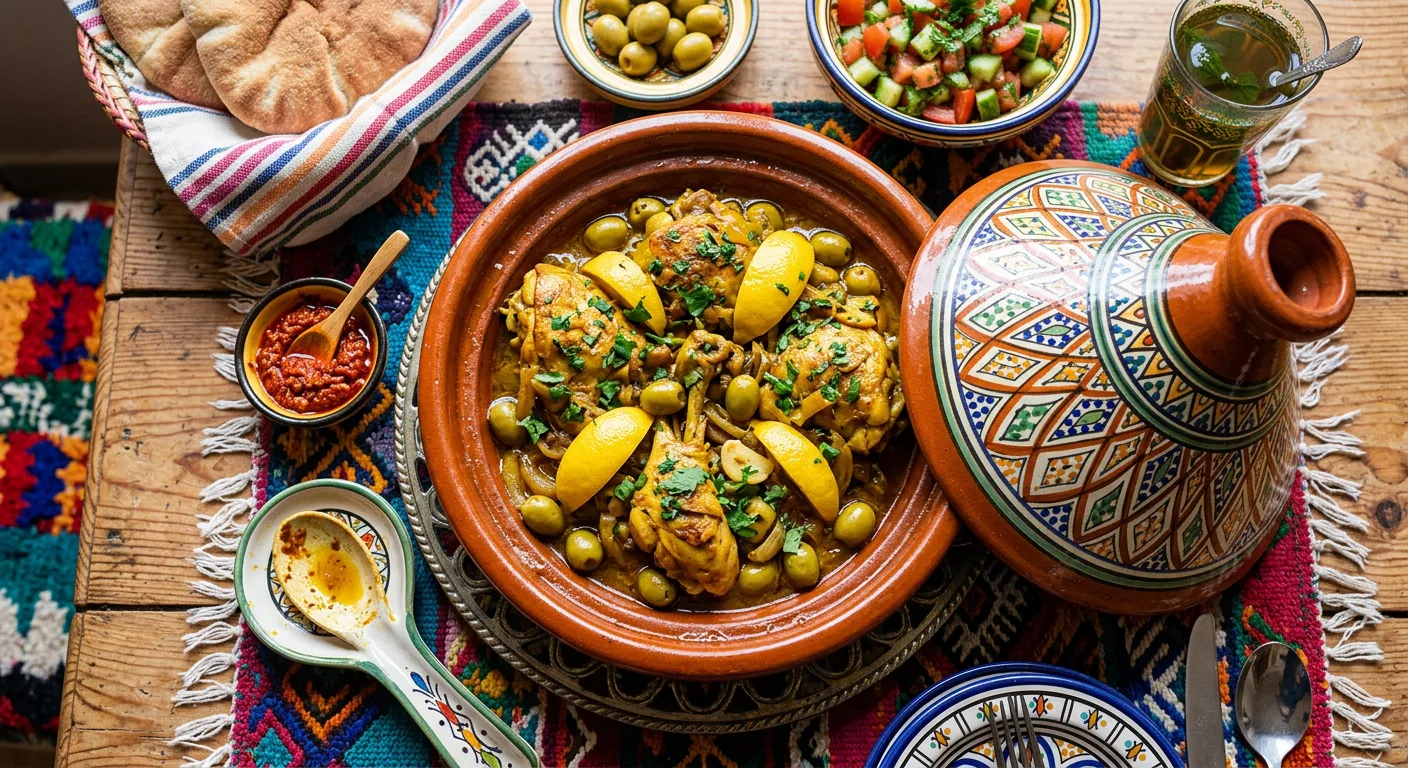
Ask any walker who has come off the Toubkal trail what they remember and food lands near the top of the list, right beside the summit. A tagine carried up to a gîte by your muleteer, eaten on a terrace as the light drains off the peaks, becomes part of the mountain itself. But the clay pot is only the opening chapter. Across two decades of guiding we have eaten our way through the valleys and the cities — here is the real map.
The trail tagine, properly understood
Tagine names both the vessel and the meal. That conical lid is clever engineering: it traps rising steam and drips it back down, so even tough hill mutton turns silky over a low charcoal fire — exactly the kind of slow cooking that suits a cook working out of a village kitchen with limited fuel. The standards you will meet on an itinerary are mutton with prunes and almonds (mrouzia), chicken with preserved lemon and cracked green olives, and kefta — spiced minced beef baked with eggs. The lemon chicken is gentlest and the one most first-time trekkers fall for.
The finest versions rarely come from a restaurant menu. They come from a Berber home in Imlil or Aroumd where the pot has been ticking over since dawn. Walk with us and you eat in those houses; or book a cooking experience in a mountain kitchen to learn the method yourself.
Pastilla — the showpiece for a celebration dinner
If tagine is the everyday workhorse, pastilla is the dish reserved for honour and occasion — the meal a Berber family might lay on to mark the end of a successful climb. Sheets of gossamer warqa pastry wrap slow-cooked pigeon or chicken with egg, saffron and coriander, and the finished dome is dusted with icing sugar and cinnamon. Savoury and sweet in the same mouthful. Fes perfected it and still does it best, though good riads everywhere will produce one for a special table; on the Atlantic at Essaouira you will find a seafood version worth the detour.
Couscous — the Friday meal in the mountains
If a Friday falls in the middle of your trek, you are in luck. Couscous is the dish that pulls a Berber household together after the week's main prayer — domestic, generous and unhurried, never really a restaurant affair in its own villages. The semolina is steamed in stages over a simmering broth, then heaped into a mound and crowned with soft turnip, courgette, carrot and cabbage plus mutton, chicken or simply more vegetables. Tell your cook in advance and a Friday couscous can become the highlight of the week.
Street food for your nights in Marrakech
Most treks bookend with a night or two in Marrakech, and Djemaa el-Fna after dark is the place to fuel up. Once the grills light around 18:00 the square fills with charcoal smoke and the calling of stall keepers. The babbouche stands ladle out a cumin-laced snail broth you fish through with a pin — strange, cheap and oddly restorative. Add merguez in a crusty baguette, msemen griddle bread slicked with argan honey, and a glass of pressed-to-order orange juice, and you have the perfect pre-trek supper.
Up in Fes, head for Rcif among the spice sellers, where bissara — a thick fava bean soup with cumin and a glug of olive oil — is breakfast eaten standing, bread torn straight into the bowl. It is exactly the kind of warming, cheap fuel a long walking day calls for. On the coast at Essaouira, sardines split and charred over the port grills are the signature bite.
Vegetarian and vegan trekkers
Mountain cooking treats plant-based walkers well, though veganism as a concept still needs spelling out — which is why we brief crews before departure. The cold starters do most of the work: zaalouk (smoky aubergine and tomato), taktouka (roasted pepper and tomato), cumin-spiked carrot, beetroot with chermoula, all arriving without asking. A plain vegetable tagine with olives and preserved lemon is on offer in every valley. Vegans should flag smen, the aged butter that slips into couscous and some breads, and note that the starters occasionally hide an egg.
A cooking class on a rest day
A half-day at the stove is one of the best ways to spend a recovery day between climbs. Our preferred shape starts with a walk through the souk to gather what you need — watching a merchant grind ras el hanout to order is worth the morning by itself — then moves into a home or riad kitchen to build three dishes you sit down and eat with mint tea and a quiet sense of accomplishment. We weave it into our cultural tours and can set it up as a standalone for independent walkers.
What to drink on and off the mountain
Morocco is a Muslim country and alcohol turns up only in licensed places, never in a village gîte. The constant companion is atay — gunpowder green tea with mint, poured from a height for froth and handed over in three successive glasses (the first for life, the second for love, the third for death, as the saying goes). It is also the single best thing for tired legs. Fresh orange juice, almond milk and avocado smoothies fill in elsewhere. As for water: treat it, every time, whatever the source.
Frequently asked
Will Moroccan mountain food be too spicy after a long trek?
No — and this is good news at the end of a hard day on the trail. Berber cooking leans on warmth and aroma, not heat: cumin, cinnamon, saffron, ginger and the layered blend ras el hanout do the work. Harissa, the fiery chilli paste, sits on the side for those who want it and is never cooked into the pot. Trekkers who dislike heat eat everything in the High Atlas without a second thought.
On the trail, what is the difference between a tagine and a couscous dinner?
In a refuge or a village gîte you will meet both. A tagine is a slow braise — meat and vegetables left for hours in the conical clay pot until everything yields. Couscous is steamed semolina mounded under a separately simmered stew, traditionally the Friday meal that draws families together after midday prayer. On a trek your muleteer-cook will usually serve tagine through the week; if a Friday lands mid-itinerary, ask for couscous and you will likely get it.
What can vegetarians and vegans eat on a High Atlas trek?
Mountain kitchens handle vegetarians easily. Zaalouk (smoky aubergine and tomato), taktouka (roasted pepper salad), bissara (warming fava bean soup laced with cumin and olive oil) and a plain vegetable tagine all turn up regularly in village homes and refuges. Vegans should flag it clearly with us before departure — smen, an aged butter, often finds its way into couscous and breads, so we brief the cook in advance.
What street food should I try in Marrakech before heading up to Imlil?
Spend your pre-trek evening at Djemaa el-Fna once the grills fire up after 18:00. Merguez tucked into a baguette, babbouche (snail broth) sipped from a cup, msemen griddle bread drizzled with argan honey and juice pressed to order are the classics. It is the perfect carbo-load the night before you drive south to the trailhead.
Can you arrange a cooking class around a trekking trip?
Yes, and we rate it as one of the best rest-day half-days you can book. The format we like starts with a souk walk to gather ingredients, then moves into a home or riad kitchen to cook two or three dishes you then eat. We slot it in before or after the mountains on several of our itineraries.
Is the water safe to drink in the mountains?
Treat all of it. Tap and spring water quality varies hugely between valleys and villages, so we issue purification tablets or filters and ask trekkers to stick to treated or bottled water for drinking and brushing teeth. Cooked food and properly boiled tea are never a problem; skip ice at roadside stalls.
Eat well on the trail
We'll feed you properly between the peaks.
From a Marrakech street-food night to a Berber tagine carried up to a refuge terrace, Atlas Trekking Co. treats food as part of the route — and we brief every cook on dietary needs long before you reach the trailhead.
Plan a trek with food at its heart