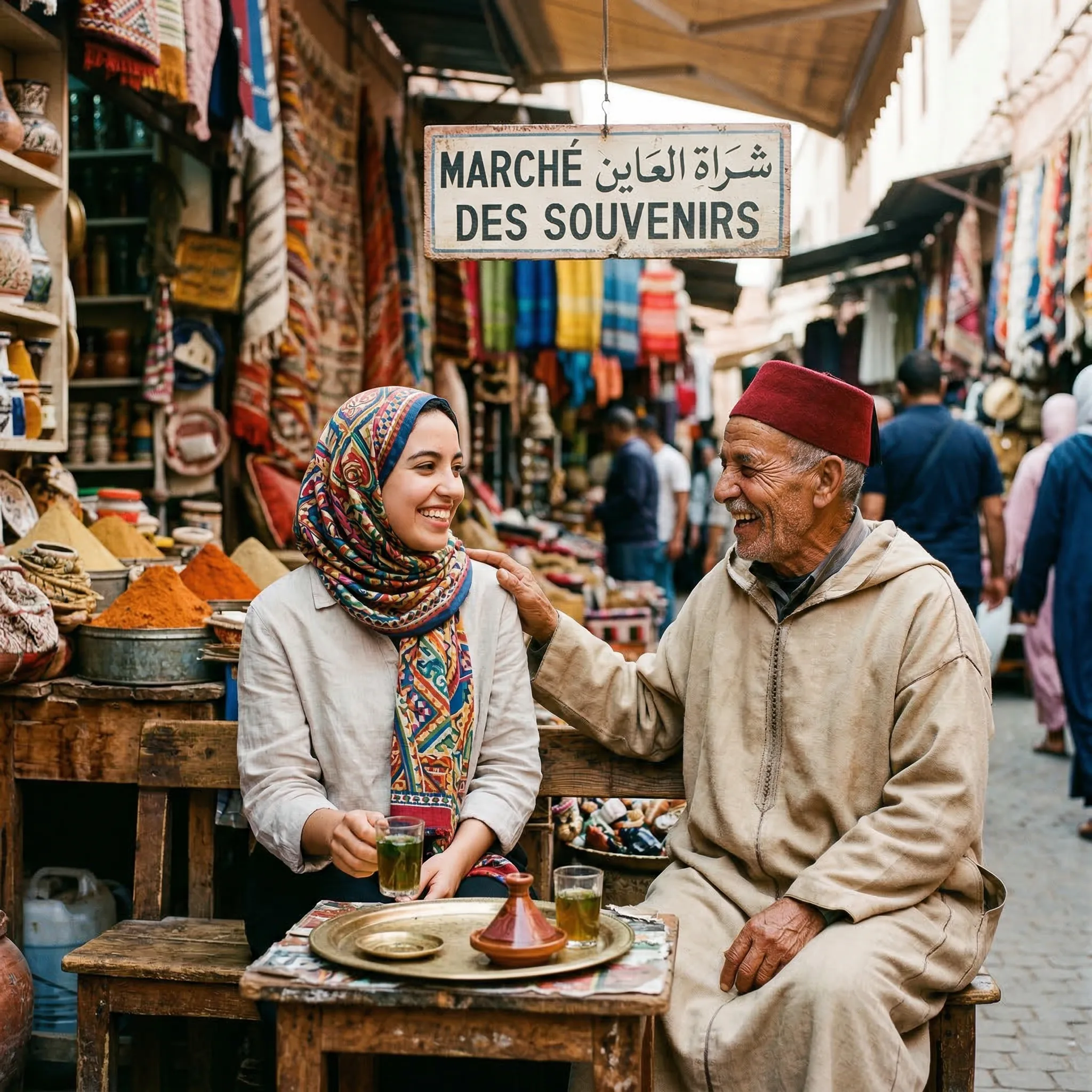
Reach a gîte after a long day under the Toubkal massif and the first thing that meets you is rarely a bed — it is a tray. Atay in Darija: gunpowder green tea, a fistful of mountain spearmint, more sugar than you expect, poured from on high into a small glass and passed to you with care. After hours on the trail it is the most welcome thing in the world. But it is more than a drink. It is how the Berber valleys say you are safe here.
How tea reached the mountains
Chinese gunpowder green tea arrived through British traders in the mid-18th century, as Britain pushed for a foothold in North African commerce. The Sultan took to it over coffee, and within a generation it had displaced the old herbal infusions and absorbed the ceremonial weight that hospitality had always carried here. The mint — spearmint,nana — was the local stroke of genius: it thrives in the irrigated terraces of the Atlas valleys and the gardens around Meknès, the country's mint heartland. Bitter leaf, cooling mint, generous sugar — the formula settled fast and has barely shifted since, which is why the glass handed to you in a remote village tastes much as it did a century ago.
How it is brewed at a gîte
Watch your host or muleteer at the stove and you will see a method, not a rush. A splash of boiling water goes over the loose leaves in the berrad — the steel teapot — is swirled and tipped away, rinsing off bitterness and waking the tea. Fresh boiling water follows, then a tight handful of spearmint stems crammed in whole. The sugar is heroic, four or five spoons to the pot, and back it goes onto the flame for a short simmer. The host pours a glass, tastes, adjusts, then lifts the pot high — thirty or forty centimetres — so the stream aerates and lays a rim of fine foam on the surface. Three glasses come from one pot, each a shade different as the mint keeps working. On the trail that ritual is also a rest: it forces everyone to sit down for ten minutes.
What 'Berber whisky' really means
The nickname is warm and knowing. Where mountain households keep no alcohol, mint tea does the social work a generous dram might do elsewhere — it greets the guest, eases the talk, marks respect. Try the phrase on a host at a gîte and you will almost always earn a grin of recognition. It has been in travel writing since the 1960s and Berbers use their own version of it too. Crucially it is no jibe — it is a small point of pride, a way of saying this ritual is theirs and theirs alone.
Etiquette for walkers
A handful of things are worth getting right when you are a guest in someone's home up a valley. Take the first glass with both hands or the right hand alone — never just the left. Do not gulp and go: the tea is scalding and the conversation is the point. Three glasses is the form; declining the first feels cold, but a warm 'baraka' after the third bows out gracefully. You needn't praise the tea — your host already knows it is good. Should a roadside trader press tea on you, accepting it obliges you to buy nothing, whatever the patter suggests; it is genuine welcome, and you can leave once the glass is done. In a family home, though, sit through all three rounds — slipping away early cuts the hospitality short.
How the tea changes valley to valley
It shifts as you move. Down in the Saharan south — Zagora, Tata, Guelmim — the Tuareg hand shows, with tea made in three distinct rounds, each sweeter and more concentrated than the last; the saying that rides with it, one glass for health, one for love, one for death, has spread far beyond there. In the Rif around Chefchaouen, walkers are often handed mint laced with wormwood (chiba, locally absinthe though unrelated to the European spirit) for a pleasant herbal bitterness. Atlantic households sometimes lift the pot with orange blossom water. In Fès the ceremony turns formal — the tray, the glasses, the pour all matters of pride — while in a Marrakech lane you can be handed superb tea in a plastic cup for 5 MAD that is every bit as good. On a High Atlas trek you mostly meet the unfussy mountain version: strong, sweet, and exactly what tired legs want.
Brewing it back home
With a little care, yes. Chinese gunpowder green tea (good tea shops stock it) and fresh spearmint are the two things you cannot skip. The high pour is technique rather than theatre — rehearse it over a sink. Go too light on sugar and you lose the balance against the bitter leaf; a heavy steel, narrow-spouted Moroccan pot is the right tool. Plenty of our trekkers carry one home from the Marrakech souk and swear it is the most-used thing they brought back.
Frequently asked
Why do trekkers hear mint tea called 'Berber whisky'?
It is a fond local pun. Traditional Berber households in the mountains do not serve alcohol, yet mint tea is poured with all the warmth and generosity a dram of whisky might carry in a Highland home. You will meet the joke around many a gîte fire, used affectionately by your guides and hosts themselves; it has been in circulation since at least the mid-20th century.
Which mint goes into the tea you drink on the trail?
Spearmint — nana in Darija — is the standard: cool, bright and a little sweet. It grows in the irrigated terraces of the High Atlas valleys, so your cook often picks it close to camp. In high summer some families fold in a sprig of wormwood (chiba) for a bitter, herbal lift, and Saharan crews fall back on hardy desert plants when fresh mint runs out. Peppermint never features — Moroccans find it too harsh.
How many glasses should I accept at a mountain home?
Three is the traditional count — one for life, one for love, one for death, after the Tuareg saying that travelled north into Berber custom. Turning down the first glass reads as cold; taking all three is the warm, respectful thing to do, especially when a village family has welcomed you in off the trail. After the third, a soft 'baraka' (enough, thank you) is well understood.
Can I ask for less sugar after a long day walking?
You can — 'bla sukkar, afak' (without sugar, please) — and most hosts will try, though purists find the request slightly puzzling. To many Berbers, unsweetened tea is a contradiction in terms. The easier middle ground is 'shwiya sukkar' (a little sugar), which lands gentler; honestly, though, after a high pass the sugar hit is part of the recovery.
Is there a set time for tea on a trek?
None at all. Tea suits any hour and punctuates the whole walking day: it greets you on arrival at a gîte, marks the rest stop on a long ascent, and closes every evening meal. On the trail it is the universal signal to stop, sit and let the legs recover. In a home it is simply the first thing offered to any guest. The ritual is about welcome, not the clock.
Experience it on the trail
Tea by the fire at a Berber gîte — your first night in the mountains.
Every Atlas Trekking Co. trek runs on tea: a welcome glass at the trailhead, a pause on the long climbs, a pot by the stove each evening. We can also set up a proper tea session with a village host who will walk you through the history and the pour.