Of everywhere we guide, the High Atlas is the part of Morocco we most often steer families toward — and the part most visitors overlook entirely. An hour above the heat of Marrakech, the mountains give children something a city break rarely does: a mule to ride, a stone path to scramble, a Berber farmhouse to share lunch in, and a night sky with no light pollution at all. It takes a little planning to do well. Below is what we have learned guiding families through these valleys season after season.
Where in Morocco is best for families with children?
Marrakech still earns three to four nights as your arrival base before the mountains. The Jemaa el-Fna comes alive at dusk — acrobats, storytellers, snake charmers best watched from a café terrace — and the square's organised chaos transfixes children. Tackle the souks with a guide and older kids who can keep up, and let the Bahia Palace and Saadian Tombs do their work on young imaginations before you head for higher ground.
The High Atlas is, for us, the heart of a family trip. Just over an hour from the city, Imlil sits at 1,740 m where the air is cooler and the walking gentle: short, well-graded valley paths to villages like Aroumd, mules that thrill any four-year-old, and walnut groves and irrigation channels that turn a stroll into a nature lesson. Several Imlil guesthouses and gîtes are set up for families, with wood-warmed rooms and patient hosts.
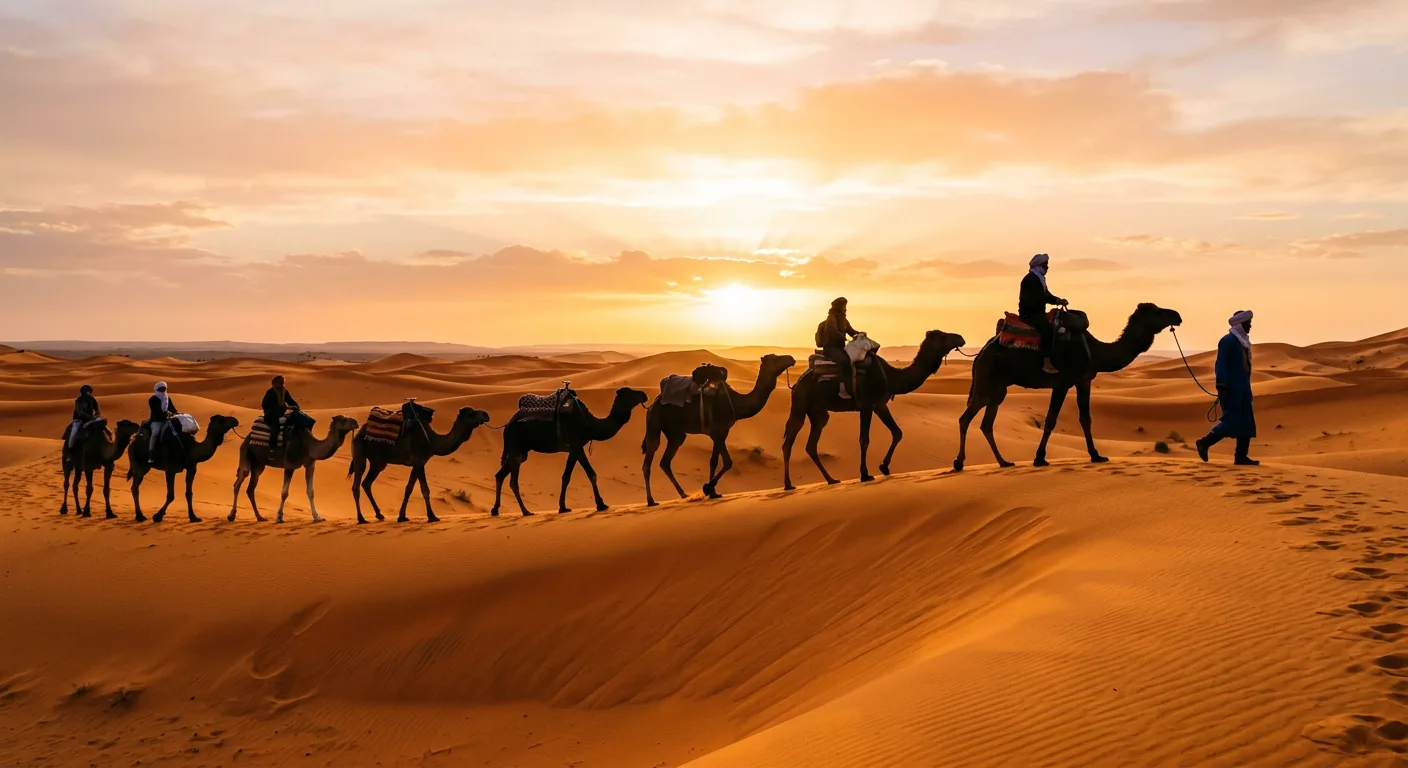
The Draa Valley and the Sahara make the big finale for families with the days to spare. The drive south over the Tizi n'Tichka, down through kasbahs and palm groves to the dunes at Merzouga, is a journey in its own right — and a child who has ridden a camel into a sunset and slept under desert stars will talk about it for years.
Essaouira on the Atlantic is the gentle counterpoint — a breezy, blue-and-white town by a long beach, with surf schools for older children and an unhurried rhythm that gives everyone room to breathe between the mountains and the medina.
How should you pace a family itinerary in Morocco?
The mistake we see most often is cramming too much in. Mountains reward an unhurried tempo. With children under ten, give each base two or three nights, plan a single active outing a day — one valley walk, one village visit — and leave a long, unstructured afternoon to recover. On the trekking side, a half-day on the path followed by tea and a doze at the gîte beats two big walks back to back every time.
A ten-day shape that works well from age six: three nights Marrakech, two nights in the High Atlas around Imlil, two nights at the Sahara (Merzouga), two nights returning via the Dades, one final night in Marrakech. For younger children, keep it simpler and lower: four nights Marrakech, two nights Essaouira, two nights in the Atlas foothills, two nights Marrakech.
What are the best places to stay with families?
In the city, the courtyard riad is hard to beat for families — the inner courtyard shuts out street noise, corridors and roof terraces invite exploring, and the staff-to-room ratio means real attention. Up in the mountains, look to the family-run guesthouses and gîtes of Imlil and the Ait Mizane valley: simple, warm, wood-heated rooms, home cooking, and hosts who genuinely welcome children. We walk into every place we recommend before we put a family in it. See our destinations guide for our current shortlist.
What should children eat and drink in Morocco?
The food works in a child's favour. Chicken tagine with olives and preserved lemon, couscous heaped with vegetables, harira soup, skewers of kefta and msemen griddle bread with honey and argan oil are all gently spiced and made fresh. In the mountains the cooking is even plainer and heartier — exactly what hungry legs want after a walk — and any gîte will rustle up grilled chicken, plain rice or eggs for a fussier appetite.
Water: stick to sealed bottled water throughout, and doubly so on the trail, where mountain stream water is never safe to drink untreated. Town tap water is chlorinated but its mineral balance upsets a good share of visitors' stomachs. Fresh-pressed orange juice from the Jemaa el-Fna stalls is a safe treat; skip café ice unless you know it was frozen from bottled water.
What practical tips make travelling with kids easier in Morocco?
- Travel by private vehicle — shared taxis and buses are fine for adults but draining with children, luggage and a trailhead to reach on schedule.
- Pack a child-rated SPF 50+ sun cream and reapply it on the trail; altitude sharpens the UV well before you feel the heat.
- Carry your own oral rehydration sachets. City pharmacies stock them, but they are not always to hand in a mountain village.
- A lightweight soft-structured carrier beats a pushchair everywhere that matters — medina lanes, village paths and gîte staircases.
- On walking days, dress children in layers: a fleece and a hat go in the daypack even in summer, because Atlas evenings turn cold fast.
- Give children small dirham notes to hand over themselves — to a village shopkeeper or a mule handler — so the day feels like theirs, not just yours.
Frequently asked
Is Morocco safe for families with young children?
It is, and the High Atlas in particular is an easy place to travel with kids. Mountain Berber communities dote on children, so a family on the trail tends to gather smiles and offers of mint tea rather than friction. The two things to manage are simple: drink only sealed bottled water to avoid stomach trouble, and stay on top of sun cover at altitude, where UV bites harder than the temperature suggests. A private vehicle and a guide who knows the valleys removes nearly all the day-to-day logistics worry.
What is the best age to take children to Morocco?
From roughly age five upward, children get enormous value out of a mountain trip — old enough to manage a short valley walk, ride a mule, and actually remember a night under Atlas stars. Toddlers are happiest based in an Imlil guesthouse with a courtyard rather than on long walking days. Teenagers tend to love it most: a sunrise above Imlil, a steep village path, or a Toubkal refuge night reads to them as a genuine adventure rather than another sightseeing stop.
What should children eat in Morocco?
Mountain cooking suits children well: tagines simmered low and slow, couscous, fresh khobz bread, harira soup and skewers of grilled meat are all mild and unfussy. Most guesthouses and gîtes will happily plate something plainer — eggs, bread, plain rice — for a smaller appetite on request. Steer clear of salads rinsed in tap water, uncooked street snacks and loose market dairy. Sealed bottled water is sold in every village shop along the trekking routes.
How long does it take to get to the Sahara with children?
From Marrakech the dunes at Merzouga are a nine-to-ten-hour drive one way, crossing the High Atlas over the Tizi n'Tichka and dropping through the Draa — a long haul for small legs. We split it across two days each way with a night in Ouarzazate or the Dades, which also lets families pause in the mountains en route. A fly-drive (Marrakech to Errachidia on Royal Air Maroc) trims the overland leg to around two hours.
Can children ride camels in Morocco?
Yes. A dromedary ride into the dunes is a clear highlight from about age four, and on the mountain side a short mule ride along an Imlil valley path is just as popular. Young children sit in front of a parent. Keep it to 30–60 minutes toward a sunset crest; full-day saddle time is for adults. Only ride with crews who keep their animals in genuinely good condition and use properly padded saddles — we check this before we book.
Do Moroccan riads have family rooms?
Most do, and the same is true of the better Imlil and Atlas guesthouses, which often have suites or connecting rooms that sleep two adults and two children with a private bathroom. Where a riad has an interior plunge pool, ask about fencing or a cover before you book if you are travelling with toddlers. Several mountain lodges keep cots, extra bedding and simpler children's plates on hand when asked in advance.
Family itineraries
We build mountain days children never forget.
Private transport, gentle valley walks, mule rides, family-vetted gîtes and an optional Sahara night — tell us the ages and we will shape the itinerary around them.
Plan our family trip