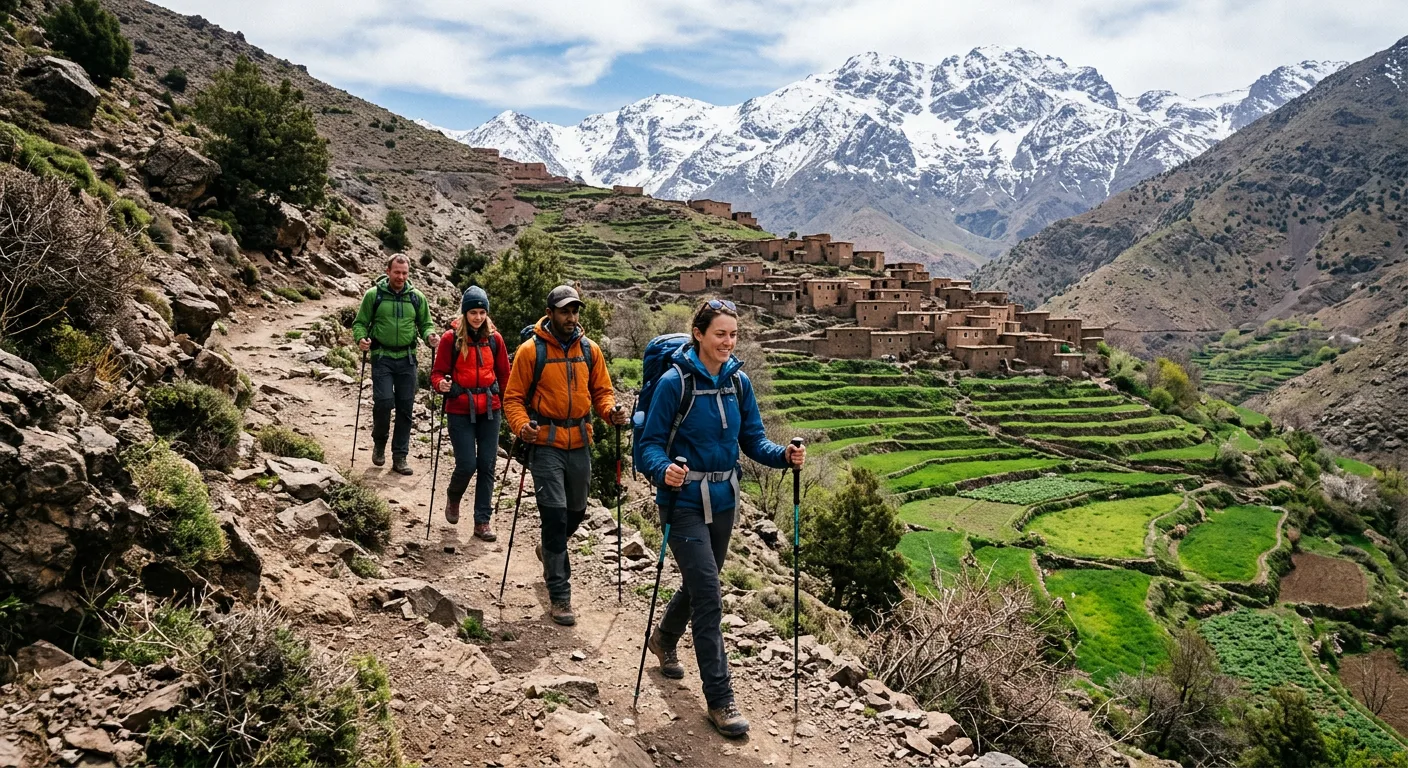
Some trekkers feel altitude sickness on Toubkal, but it is usually mild and almost always avoidable. The summit stands at 4,167 m — high enough for acute mountain sickness (AMS) to affect a meaningful minority of climbers — and the catch is that the standard ascent is fast: many people go from near sea level in Marrakech to sleeping at 3,200 m and summiting above 4,000 m in barely two days. Get the pacing right, hydrate, and respond honestly to your body, and the great majority of fit, healthy people reach the top with nothing worse than a headache. This is the guide we give our own guests before they go up.
The short answer
Toubkal is high enough to cause altitude sickness, and the two-day trek is fast enough to raise the odds. You avoid it by ascending gradually (sleep at Imlil first if you can), drinking plenty of water, going slowly, avoiding alcohol, and descending the moment mild symptoms get worse rather than better. Fitness does not protect you. Descent is the only reliable cure.
Why Toubkal causes altitude problems
The higher you go, the thinner the air and the less oxygen reaches your blood with each breath. Your body adapts — breathing faster, making more red blood cells — but adaptation takes time, and if you climb faster than you adapt, AMS sets in. As a rough rule, the risk becomes real above 2,500–3,000 m, and it climbs with both the altitude you reach and the speed you reach it.
On Toubkal the profile is the problem as much as the height. The trailhead village of Imlil sits at about 1,740 m; the refuges where you overnight are around 3,200 m; the summit is 4,167 m. Trekkers who drive up from Marrakech (about 450 m) in the morning and start walking the same day compress a huge altitude gain into very little time. That is the single biggest avoidable risk factor on this mountain — and the easiest to fix.
How common is altitude sickness on Toubkal?
Honestly, it varies enormously between people, and we are wary of throwing around exact percentages — susceptibility is individual and partly genetic, and good data for this specific trek is thin. What we see in practice is this: a fair number of guests get a mild altitude headache or a poor night's sleep at the refuge, a smaller number feel nauseous or lose their appetite, and serious cases are rare when the ascent is paced well and people are honest about symptoms. Most who feel rough at 3,200 m still summit slowly the next morning once they have rested and rehydrated. The cases that go wrong are nearly always the ones where someone pushed on through worsening symptoms to "not waste the trip."
Know the symptoms — mild, and serious
Recognising AMS early is what keeps it minor. Mild symptoms usually show up within 6–12 hours of reaching altitude, often as you settle into the refuge:
- Headache (the classic first sign)
- Nausea or loss of appetite
- Dizziness or light-headedness
- Fatigue beyond normal tiredness
- Disturbed, broken sleep
Mild AMS is uncomfortable but not dangerous; it is a signal to stop going up, rest and hydrate — not to push higher. The serious signs are different and demand immediate descent:
- Severe headache that painkillers will not shift
- Repeated vomiting
- Confusion, drowsiness or odd behaviour
- Loss of coordination — staggering, unable to walk a straight line (ataxia)
- Breathlessness at rest, with a cough or a wet, gurgling chest
Those last signs point to HACE (high-altitude cerebral oedema) or HAPE (high-altitude pulmonary oedema). Both are rare on Toubkal, both are life-threatening, and for both the treatment is the same and urgent: go down immediately. Do not wait for morning.
The golden rules of acclimatisation
None of this is exotic — it is mostly about slowing down and listening to your body:
- Ascend gradually. If you can, sleep a night in Imlil before heading up, rather than driving from Marrakech and climbing the same day. An extra half-day on the mountain is the best insurance there is.
- Walk slowly and steadily. A pace at which you can still hold a conversation is about right. Racing the refuge is how fit people make themselves ill.
- Hydrate hard. Dry mountain air and exertion dehydrate you fast, and dehydration mimics and worsens altitude symptoms. Drink steadily through the day.
- Skip the alcohol and go easy on heavy sleeping pills, at least until you are acclimatised — both blunt your breathing and your judgement.
- Climb high, sleep low where the itinerary allows, and never ascend to sleep higher with worsening symptoms.
- Tell your guide early. A good guide watches for this constantly, but you know how you feel before they can see it. Speak up at the first headache.
Want the full pre-trip checklist — fitness, kit, layers and seasonal kit? We cover it in the Toubkal trek preparation guide.
Descent is the cure — everything else buys time
This is the one thing every trekker should remember: the only reliable treatment for altitude sickness is to lose altitude. Rest, fluids, painkillers for the headache and supplementary oxygen can all help with mild symptoms or buy time, but if you are genuinely ill, going down — even a few hundred metres — almost always brings rapid relief. On Toubkal that is a real advantage: from the refuge, the valley and thicker air are only a few hours' walk below you, and Imlil and the road out are not far beyond. There is no shame in turning around. The mountain will still be there.
What about Diamox (acetazolamide)?
Acetazolamide, sold as Diamox, is a medication widely used to help prevent and treat AMS, and for a fast ascent like the two-day Toubkal trip some doctors do recommend it. But it is a prescription drug with side effects (tingling fingers, a metallic taste, more frequent urination are common), it is not a magic shield, and it must never be treated as licence to climb faster. We are mountain guides, not medical professionals — please discuss Diamox, and any personal health conditions, with a doctor or travel clinic before your trek. That advice is current as we write, but medical guidance changes, so check the latest with a qualified clinician.
Winter raises the stakes
The altitude is identical in January and July, but winter stacks extra hazards on top of it. Cold and wind make it harder to rest and rehydrate, so fatigue and dehydration — both of which worsen AMS — arrive faster. A forced descent is slower and more dangerous on snow and ice, exactly when you might most need to get down quickly. And from roughly November to April, Toubkal is a genuine winter mountaineering objective needing crampons, an ice axe and avalanche awareness. If you are weighing the seasons, our best time to trek the Atlas guide lays out the trade-offs.
How we manage altitude on a guided trek
On our trips a mountain guide sets the pace deliberately slow, keeps an eye on every member of the group, and is empowered to turn anyone — or everyone — around if the mountain says so. Where we can, we build in an extra acclimatisation night rather than racing the standard two-day clock, which is the most effective change most people can make. You can see how we structure the ascent, refuges and summit day in our two-day Toubkal itinerary, or talk to us about adding a day for a gentler, safer profile.
Frequently asked
Is Toubkal high enough to cause altitude sickness?
Yes. Mount Toubkal's summit is 4,167 m, and acute mountain sickness (AMS) becomes a real risk for many people above roughly 2,500–3,000 m. The Toubkal refuges sit at about 3,200 m and you sleep there before the summit push, so the altitude is high enough — and the standard two-day ascent fast enough — that a meaningful number of trekkers feel at least mild symptoms. It is rarely dangerous if you ascend sensibly and respond to symptoms, but it should never be dismissed.
How do you avoid altitude sickness on Toubkal?
Ascend gradually, hydrate well and do not rush. Ideally sleep a night in Imlil (about 1,740 m) before going up, walk to the refuge at around 3,200 m at a steady pace, and avoid alcohol. The single biggest mistake is treating Toubkal as a quick dash from sea-level Marrakech: adding even one acclimatisation night or an extra half-day on the mountain dramatically lowers your risk. Watch for headache, nausea and dizziness, tell your guide early, and descend if mild symptoms get worse rather than better.
What are the symptoms of altitude sickness on Toubkal?
Mild AMS typically brings headache, nausea or loss of appetite, dizziness, fatigue beyond normal tiredness, and broken sleep at the refuge. These often appear within 6–12 hours of arriving at altitude. The warning signs that demand immediate descent are different: severe headache that painkillers will not touch, vomiting, confusion, loss of coordination (staggering, unable to walk a straight line), or breathlessness at rest with a wet cough. Those last signs point to HACE or HAPE — rare on Toubkal, but life-threatening, and the only reliable treatment is to go down.
Should I take Diamox (acetazolamide) for Toubkal?
It is a medical decision, not a guide's call. Acetazolamide (Diamox) is widely used to help prevent and treat AMS and can be appropriate for a fast ascent like the two-day Toubkal trip, but it has side effects and is not a substitute for sensible acclimatisation. Discuss it with a doctor or travel clinic before you go, and never use it as permission to climb faster. We are mountain guides, not medics — for anything drug-related, please get qualified medical advice.
Does being fit protect you from altitude sickness?
No, and this surprises people. Fitness helps you cope with the long summit day, but it does not protect against AMS — strong, young, fit trekkers get altitude sickness as often as anyone, partly because they ascend faster and ignore early symptoms. Susceptibility is largely individual and somewhat genetic. The best protection is a gradual ascent and honesty about how you feel, not how many hours you can run.
Is altitude sickness on Toubkal worse in winter?
The altitude itself is the same year-round, but winter compounds the risk. Cold, wind and snow make it harder to rest and rehydrate, fatigue sets in faster, and a forced descent is slower and more dangerous on snow and ice. Winter Toubkal is a true mountaineering objective needing crampons, an ice axe and the skills to use them, so altitude problems arrive on top of technical hazard. Always go with a winter-qualified guide.
What should I do if I feel altitude sick at the refuge?
Stop ascending, rest, drink water and tell your guide straight away. Mild symptoms often settle overnight with rest and hydration, in which case you may still summit slowly the next morning. If symptoms worsen, or any severe sign appears (vomiting, confusion, loss of balance, breathlessness at rest), the correct response is to descend, even in the dark with a guide. Going down a few hundred metres almost always brings rapid relief. Never leave a sick trekker alone, and never push a summit through serious symptoms.
Climb it the safe way
We'll pace your Toubkal trek for the altitude.
A mountain guide, a deliberately gradual ascent, and the option to add an acclimatisation night — Atlas Trekking Co. plans Toubkal so the summit is a pleasure, not a gamble. Tell us your dates and fitness and we will build the right profile.
Plan a guided Toubkal trek